- Home
- Retail
- DFW Retail Commercial Real Estate Market Insights
- 2026 Retail Real Estate Trends in DFW: What Investors Need to Know
2026 Retail Real Estate Trends in DFW: What Investors Need to Know
The Dallas-Fort Worth retail market has done something remarkable. For the fourth consecutive year, it has set occupancy records while leading the entire nation in new retail construction. That combination sounds impossible until you understand the fundamental forces driving this market. With occupancy projected to reach 95.4% by the end of 2026 and 34 new grocery stores in the development pipeline, DFW is proving what many investors already suspected: this market plays by different rules than the rest of the country.
But success in 2026 will require more than simply owning retail property in DFW. The market is evolving rapidly, and investors who understand these 9 critical trends will be positioned to capitalize while others struggle to keep pace. As someone who owns and operates retail properties across this market, I can tell you that the opportunities have never been better for those who know where to look.
Trend No. 1: The Shift to Smaller, Compact Store Formats
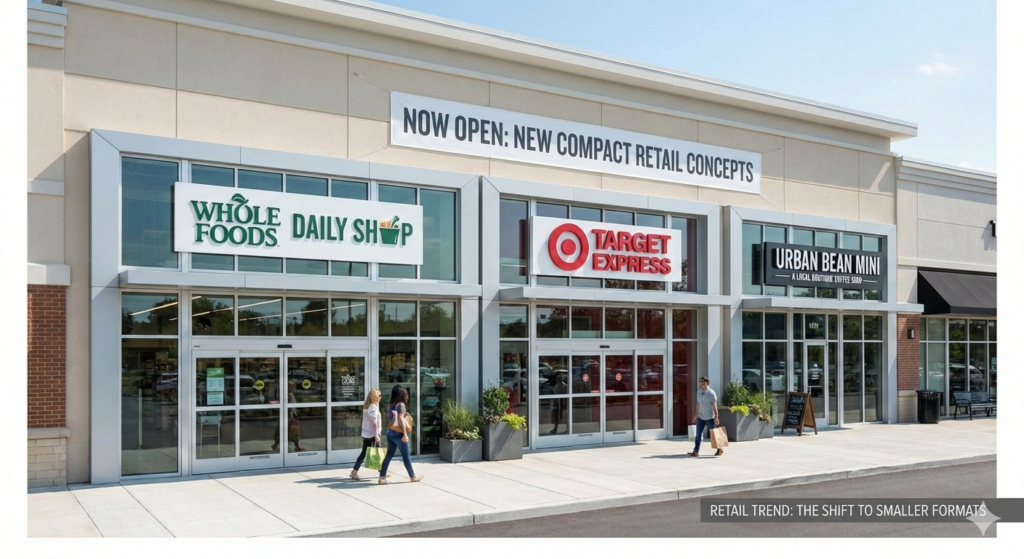
Retail is shrinking. Not the sales, the store footprints. This is one of the most significant trends we predict will drive retailer decisions throughout 2026, and shopping center owners need to pay attention.
We have noticed retailers across the country actively reducing their store sizes in ways that would have seemed impossible just a few years ago. Giants like Target, Kohl’s, and Macy’s are opening new locations that are roughly one-fifth the size of their traditional formats. IKEA is testing its Plan & Order Studio concept. Whole Foods launched the Daily Shop concept. Bloomingdale’s introduced Bloomie’s as a smaller format alternative. CVS is rolling out mini locations. The coffee drive-through segment led the way in 2025 with formats shrinking to just 600 to 800 square feet.
This is not just a national retailer phenomenon. We see the same trend with local business owners across DFW. A restaurant owner who would have called us looking for 2,500 to 3,000 square feet a few years ago now asks us to search for space in the 1,500 to 2,000 square foot range. The economics of smaller footprints work better for operators facing higher labor costs, elevated construction expenses, and the need for efficient operations.
So what does this mean for retail center owners and developers? If you are building new retail, design it in a way that allows flexibility to divide into smaller units. The demand is moving toward compact spaces, and your building design should accommodate that reality. If you own an existing shopping center, work with your team to identify ways to accommodate smaller tenants. Have a capital expenditure budget ready for splitting larger vacant spaces into multiple units. The property owner who can offer 1,500 square feet when that is what tenants want will outperform the one stuck with 12,000 square foot boxes that sit empty.
Trend No. 2: Annual Rent Increases Are No Longer Negotiable
With vacancy rates hovering near 4.7% across the metroplex and competition for quality space at historic highs, landlords finally have the leverage to demand meaningful annual rent increases. The days of flat rent structures or only increasing at renewal are long gone.
I recently helped a client negotiate a lease renewal for a national tenant at their North Dallas shopping center. We secured a 36% rent increase over the five-year term, front-loaded with a 10% bump at the point of renewal and annual increases after that. This was not luck. This was the result of understanding that in a market where less than 20% of the 7.8 million square feet under construction is available for lease, tenants need landlords more than landlords need tenants.
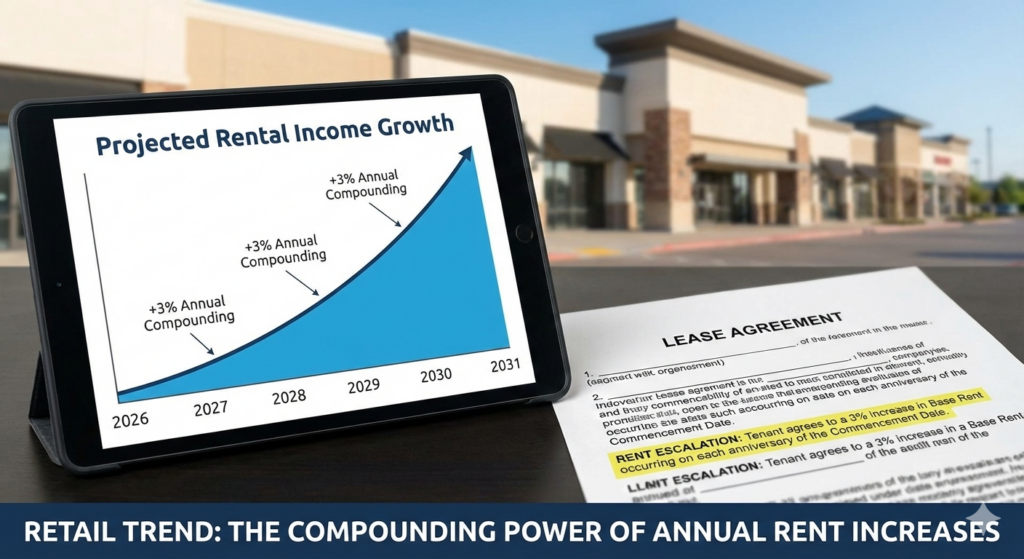
Investors should be scrutinizing lease structures carefully in 2026. Properties with built-in 3% annual escalations will significantly outperform those with flat rents over a typical hold period. If there is one thing you should take from this article it’s this: The compounding effect of annual increases transforms good investments into great ones!
Trend No. 3: Grocery Anchors and the HEB Effect
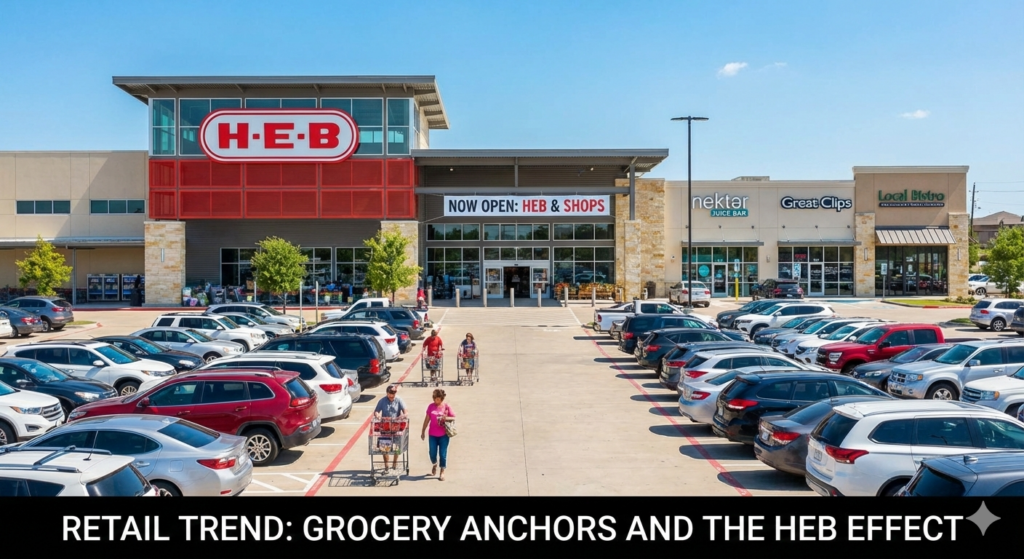
There is no way to discuss DFW retail trends without addressing the grocery revolution happening across this market. According to recent study, more than 82% of new retail space delivered in 2025 was tied to grocers. Another 34 grocery stores are expected to open in the next 24 months, making DFW the most active grocery market in the entire country.
The HEB expansion into North Texas represents a seismic shift. The San Antonio-based grocer broke ground on multiple locations throughout 2024 and 2025, with additional new stores already planned in Murphy, Euless, Bedford, Denton, and Dallas proper. HEB’s arrival creates a ripple effect across the retail ecosystem. Their stores generate substantial traffic that benefits every tenant in the center, from quick-service restaurants to personal services.
For investors, grocery-anchored centers have become the gold standard. These properties command premium valuations with cap rates in the high-5% to mid-6% range for quality assets. Community shopping centers anchored by strong grocers held steady at 96.4% occupancy last year. The message is clear: grocery anchors provide a stability that other retail formats simply cannot match.
Trend No. 4: Flight to Quality: Tenants Prefer Nicer Properties
Not all retail properties are performing equally. A clear divide has emerged between quality centers with strong locations, modern amenities, and attentive management versus older properties that have fallen behind on maintenance and tenant curation. Tenants are voting with their leases, and they are choosing quality.
This flight to quality creates both opportunity and risk for investors. Well-located centers that invest in parking lot improvements, facade updates, and common area enhancements are capturing the best tenants at premium rents. Centers that defer maintenance find themselves in a downward spiral of declining occupancy and weakening tenant quality.
The smart money in 2026 is focused on properties that can benefit from strategic improvements. A center with strong fundamentals but cosmetic challenges represents a value-add opportunity. The same center ten years from now, still suffering from deferred maintenance, becomes a liability. More on that in Trend No. 7.
Trend No. 5: The Rise of Medtail
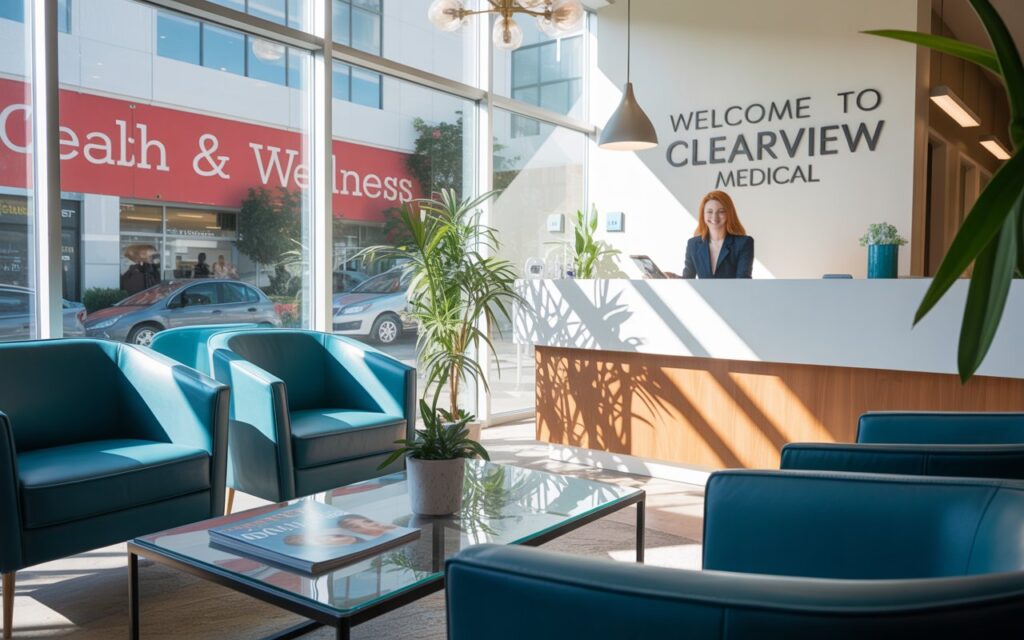
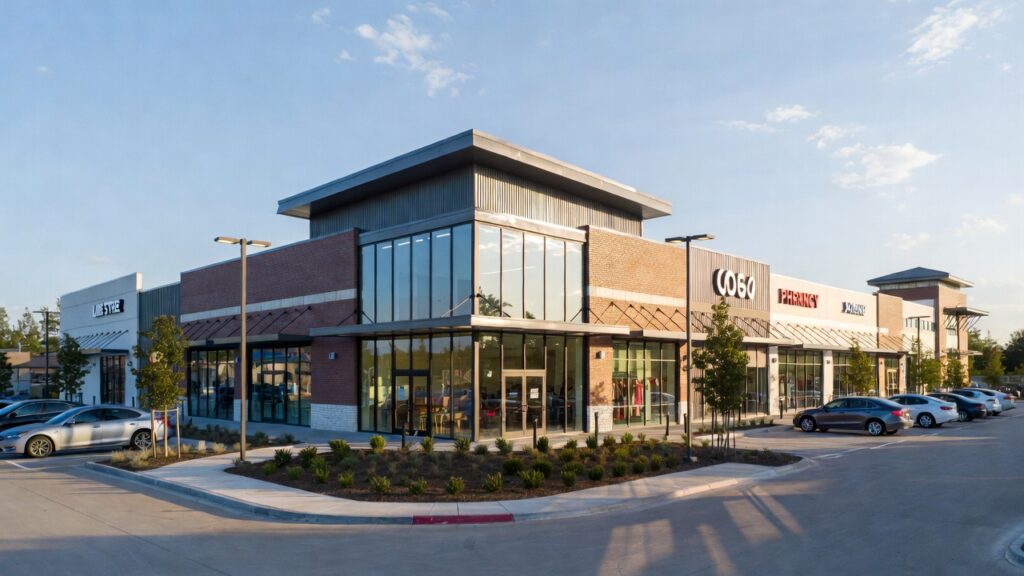
Medical retail, or Medtail as the industry has come to call it, represents one of the fastest-growing sectors in commercial real estate. Research from CoStar Group indicates that approximately 20% of leased medical space is now in retail buildings, up from 16% just a few years ago. This trend is accelerating as healthcare providers discover the advantages of retail locations.
The logic behind Medtail makes sense from multiple perspectives. Healthcare providers gain high visibility, convenient parking, extended operating hours, and proximity to where patients already shop. Patients appreciate the accessibility and the non-institutional environment. Landlords benefit from tenants who sign longer leases, face no e-commerce competition, and bring customers who often shop before or after appointments.
Urgent care centers, dental offices, physical therapy practices, dermatology clinics, and specialty medical practices are actively seeking retail space across DFW. The corporate healthcare revolution is well underway, with chains like Aspen Dental, OneMedical (now Amazon-owned), and various urgent care brands expanding into shopping centers throughout the metroplex. For investors, Medtail tenants often represent the ideal combination of creditworthy operators and long-term lease commitments.
Trend No. 6: Service Retail Replaces Soft Goods
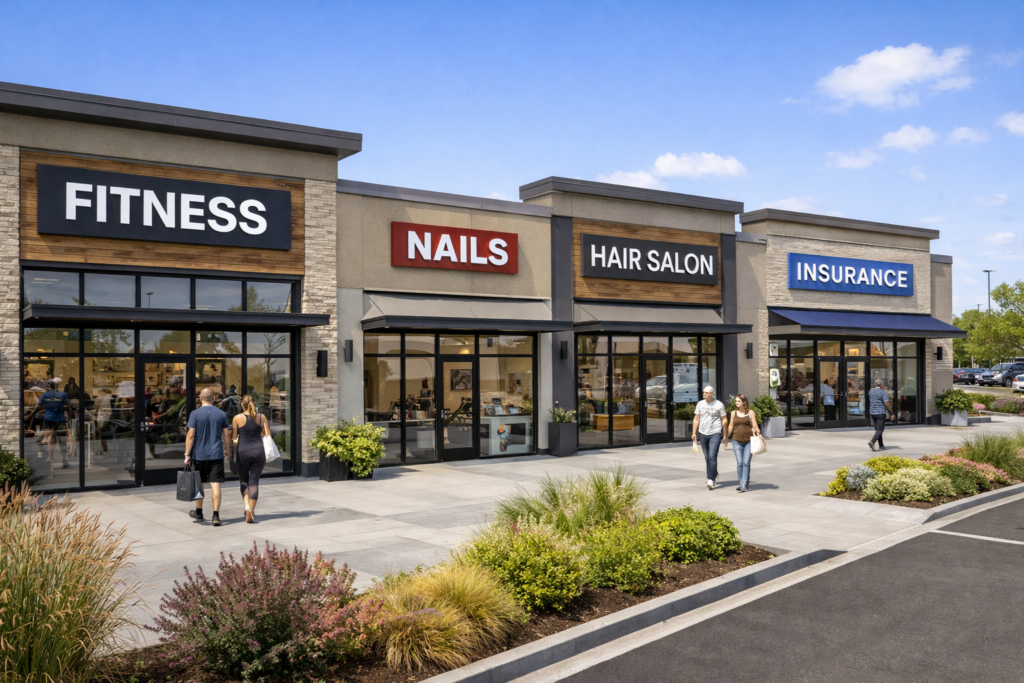
The tenant mix at successful DFW shopping centers looks dramatically different than it did ten years ago. Wellness studios, fitness centers, medical offices, dental practices, and personal service providers have replaced the apparel and home goods retailers that once dominated tenant rosters. This shift reflects a fundamental truth: you cannot get a haircut or have your nails done on Amazon….
Service-based tenants offer several advantages for property owners. They face virtually no competition from e-commerce. They generate consistent traffic throughout the day rather than peaks and valleys. They often sign longer lease terms because they invest heavily in building out their spaces. And they tend to attract employed, insured customers who also patronize nearby retailers.
EoS Fitness, Planet Fitness, Orange Theory, and boutique fitness concepts are expanding aggressively across DFW. Pet services from Petco to local groomers are thriving. Personal care from nail salons to med spas have become shopping center staples. Investors who understand this shift are curating tenant mixes that prioritize service over merchandise.
Trend No. 7: Adaptive Reuse and Redevelopment Beats Ground-Up
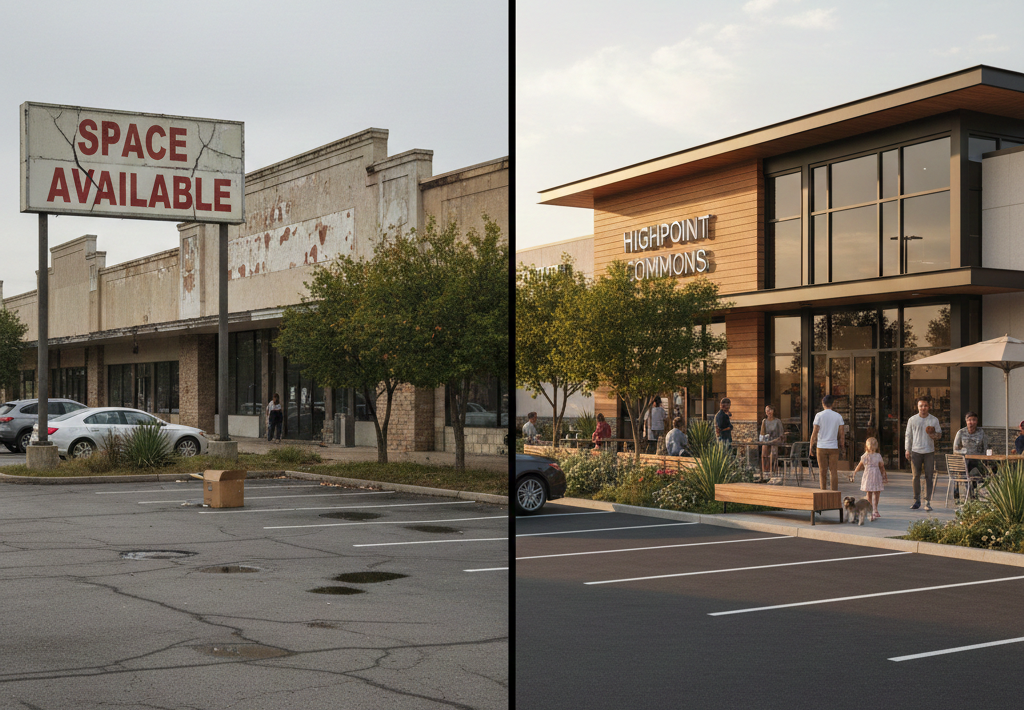
With construction costs still elevated and new development difficult to pencil without some form of subsidy, investors in 2026 are focused on adaptive reuse and strategic redevelopment rather than ground-up construction. The opportunities are substantial for those who know where to look.
Big box vacancies that seemed like liabilities have become opportunities. Brands like Sprouts, Grocery Outlet, Burlington, Savers, and others have been actively backfilling former anchor spaces across the market. Fitness centers have taken over former department stores and pharmacies. Medical groups have converted retail space into outpatient facilities. The creative landlord sees potential where others see problems.
Adding pad sites to existing centers represents another high-return strategy. A drive-through coffee shop or quick-service restaurant on an outparcel can generate premium rents while driving additional traffic to the main center. These pad developments often deliver better returns than the underlying shopping center because of their strong credit tenants and triple-net lease structures.
Trend No. 8: The Proliferation of Retailtainment
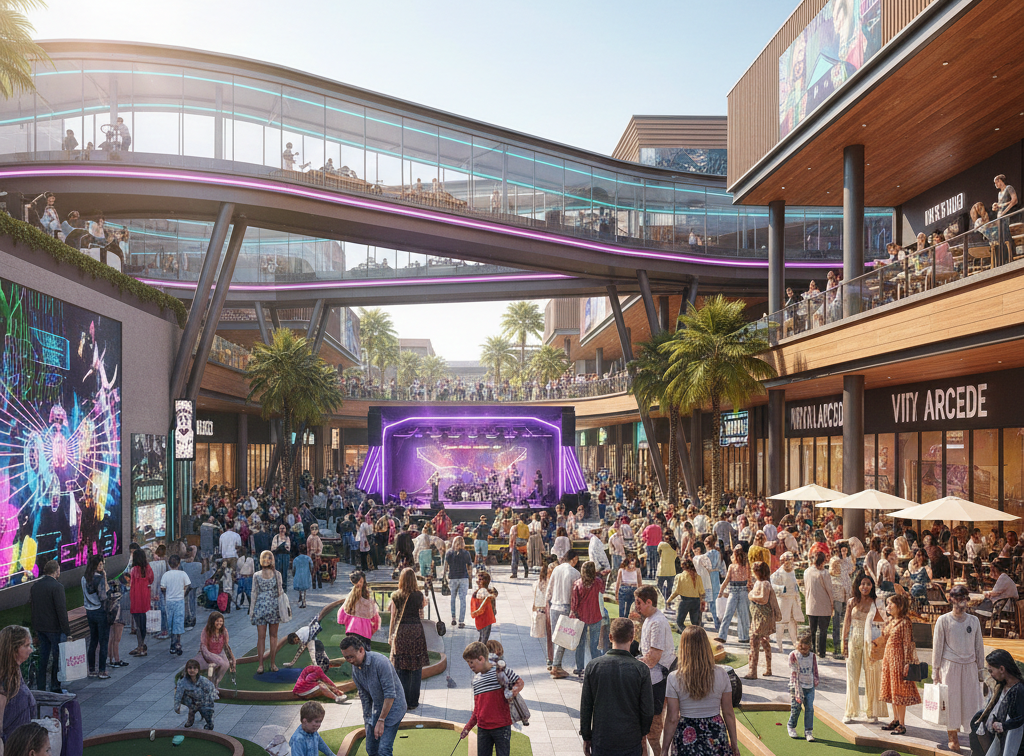
Walk through Legacy West in Plano or the Shops at Clearfork in Fort Worth and you will understand why experiential retail has transformed from trend to requirement. Customers no longer want to come in, make a purchase, and leave. They want an afternoon. They want an experience. They want a destination.
The Netflix House opening at Galleria Dallas represents the latest evolution of this trend. Entertainment concepts are becoming retail anchors in their own right, driving traffic that benefits the entire center. Malls are being viewed as platforms for reinvention rather than assets in managed decline.
For shopping center owners, this means thinking beyond traditional tenants. Food halls, entertainment venues, fitness concepts, and experiential retailers create the kind of destination appeal that drives repeat visits. The shopping center that feels like a community gathering place will outperform the one that feels like a row of stores.
Trend No. 9: Demographic Realignment and the Graying of Retail Demand
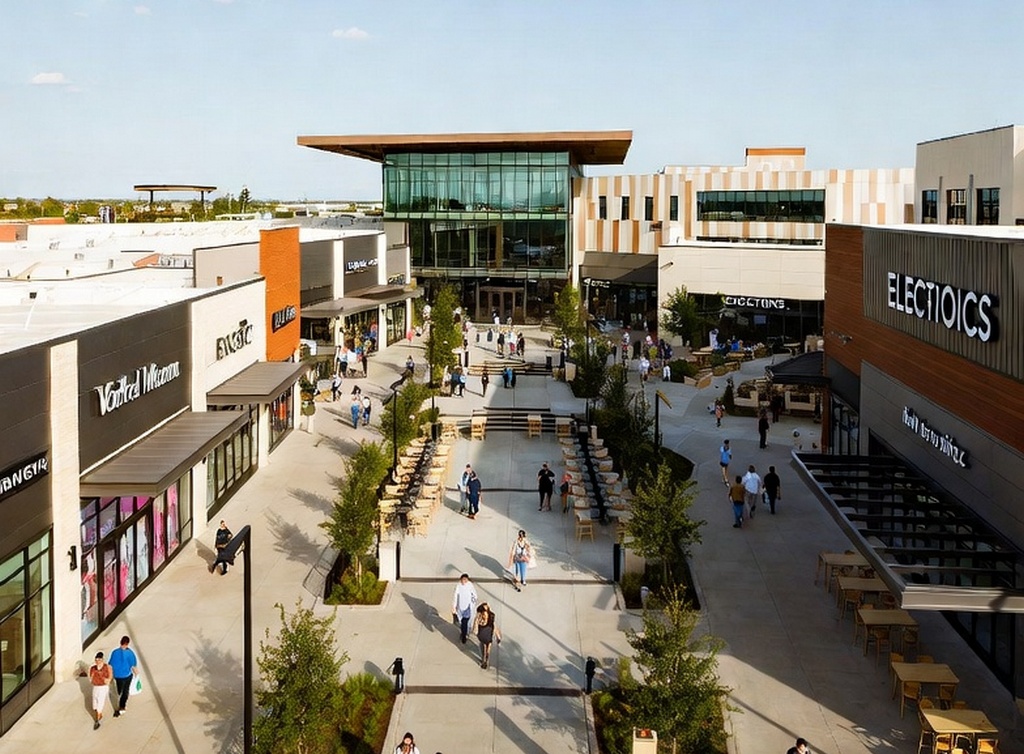
Baby Boomers represent one of the largest generations in American history, and they are increasingly requiring convenient medical care, accessible retail locations, and community-oriented shopping experiences. This demographic shift is reshaping retail demand across the country in ways that smart investors are already anticipating.
At the same time, Gen Z are driving demand for modern facilities with consistent branding and digital integration. These younger consumers appreciate retail experiences that blend online convenience with in-person service. They are drawn to centers that feel current rather than dated. The shopping center that appeals to multiple generations through thoughtful tenant mix and property updates will capture the broadest possible customer base.
DFW continues to lead the nation in domestic migration, with Northern suburbs like Frisco, Plano, McKinney, Prosper, and Celina expanding rapidly. These population flows create retail opportunities that are measured in decades, not years. Properties positioned in the path of growth today will benefit from strengthening fundamentals for years to come.
Positioning for Success in 2026
The DFW retail market has never been stronger in terms of balanced supply and demand. Vacancy rates remain at historic lows. Rent growth continues to outpace national averages. Construction activity reflects continued confidence from developers and retailers alike. The market that was ranked number one nationally for both commercial and homebuilding prospects shows no signs of slowing down.
But success in 2026 requires more than simply participating in a strong market. The investors who will outperform are those who understand these trends and position their portfolios accordingly. We are seeking grocery-anchored centers with strong rent escalations. We are prioritizing service tenants over merchandise retailers. We are looking at adaptive reuse opportunities rather than overpaying for stabilized assets. We are thinking about the demographic forces that will shape this market for the next decade.
As your Retail NavigatorTM in the Dallas-Fort Worth market, I help investors identify opportunities that others overlook and avoid pitfalls that destroy returns. The trends outlined here will separate successful investments from disappointing ones. Understanding them is the first step toward capturing the extraordinary potential this market offers.
What trends are you seeing in your retail investments? What questions do you have about positioning for success in 2026? I would love to hear your perspective and continue this important conversation.
#RetailNavigator #DFWRealEstate #RetailInvesting #CommercialRealEstate #EBG
