Commercial Real Estate News – Week of August 08, 2025

Commercial Real Estate News – Week of August 08, 2025

Click below to listen: 

Transcript:

 Welcome to the Deep Dive, your shortcut to being well-informed. That’s right. We take a stack of sources, articles, research, maybe even your own notes, and pull out the most important nuggets of knowledge. Exactly. Today we’re doing a deep dive into the well dynamic commercial real estate landscape.

We’re focusing specifically on the latest news and trends, August 1st through eighth, 2025. Yep. And our mission. To distill what’s truly important for you, we’ll have a particular eye on Texas and the Dallas-Fort Worth market. Always a fascinating place. Absolutely. This past week has been incredibly active.

It really showcases both the resilience and, the transformative pressures shaping commercial real estate right now. What truly stands out, I think, is seeing how broader economic shifts are intersecting with very specific regional and sector level activity, especially in these high growth areas like Texas, right?

Getting a handle on these granular movements amidst the larger currents is just crucial for navigating the market effectively. Let’s unpack this then when we talk about retail, commercial real estate, I think most of us, we hear the national headlines. Yeah. The doom and gloom. Exactly. Store closures, declining foot traffic, the whole retail apocalypse narrative.

But our sources for this deep dive, they seem to paint a much more nuanced picture for Texas, often surprising actually. So what’s the real story on the ground here? Is Texas truly an anomaly. It absolutely is. In many ways yes, national projections do point to about 15,000 store closures in 2025, which is a lot more than double 2024, right?

More than double the seven down 325 from last year. Yeah. But Texas’s retail market, it tells a distinctly different story. The key insight, I think, is that retail isn’t dead. It’s just evolving. Okay. We’re seeing this really powerful shift overall open air retail centers, particularly those anchored by popular dining lifestyle tenants.

They’re significantly outperforming traditional malls. And this isn’t just a feeling, it’s reflected right there in the numbers. Located Texas retail assets still in high demand shopping, center leasing velocity is hitting a 20 year high. Wow. 20 years. Yeah. And most quality centers are, near full occupancy.

That’s a powerful contrast to that national narrative we hear so much about. So for someone focused on Dallas-Fort Worth, can you give us some specifics, examples of this activity right in our backyard? Sure thing. What kind of properties are getting snapped up? Absolutely. We’ve seen really significant movement that highlights this DFW resilience take Mockingbird Central Plaza, for instance.

Okay. Nearly 80,000 square feet. Retail center in Dallas, right near Mockingbird in US 75, it was sold off market, private buyer, off market. Okay. And the notable thing, it was fully leased. That reflects really robust investor demand for these located community shopping centers. A fully leased center sold off market.

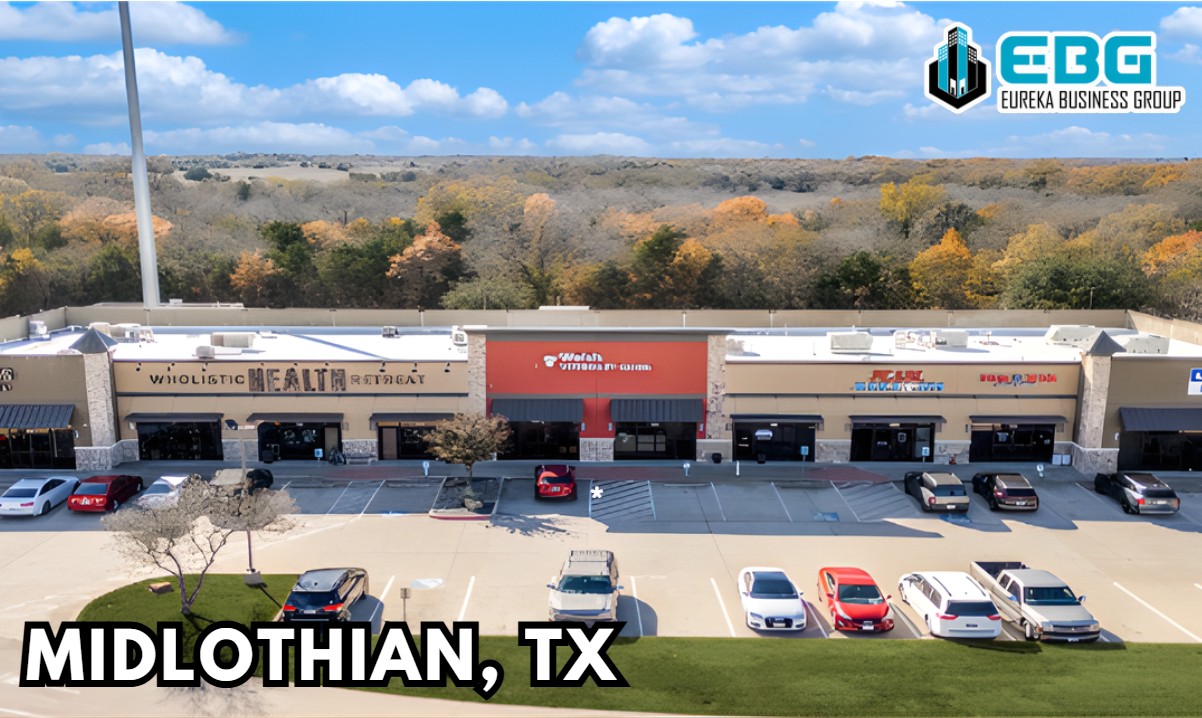
Yeah, that does sound like a strong signal for investor confidence. What else are we seeing in DFW? We also saw SRS Real Estate Partners facilitate a sale, three retail properties, about 55,000 square feet total. These were in the growing Dallas suburbs, Midlothian and Wax hii. Growth areas.

Exactly. And again, these centers fully leased mix of local and national tenants. It just underscores that continued appetite for retail assets, especially in these burgeoning suburban markets. Okay. And one more in DFW Keller Strings. Village Carrollton. Yep. A neighborhood shopping center, almost 40,000 square feet.

It was 100% least. To service oriented tenants when it’s sold. Just further solidifying that strong retail occupancy we’re seeing. So those DFW examples really drive home how specific locations and property types are thriving. Particularly it seems those catering to everyday needs convenience, especially in growing suburbs.

Okay but let’s look beyond DFW for a second. What other major retail shifts or significant transactions are happening across the broader Texas landscape? We’re definitely seeing similar patterns playing out across the state. Yeah. Take the JC Penney situation in a significant post-bankruptcy move.

The liquidating trust owning 119 JC Penney stores nationwide, including about 20 here in Texas. That’s right. About 20 in Texas. Yeah. That portfolio was sold to Onyx Partners, $947 million cash. Now, the critical detail here is that this changes the landlord. But the stores, they stay open, they keep operating.

That’s interesting. It’s almost ironic, isn’t it? A traditional chain like JC Penney, many thought was fading right now. Signals continued value in physical retail just under new ownership. That is a fascinating twist. What other sort of large scale deals show this trend down in the Houston area?

Bricks, more property group acquired Lasara at Cinco Ranch. Okay. This is a massive 409,000 square foot open air lifestyle center in Katy. They paid $223 million. Get this? Yeah. 97% occupied tenants like Trader Joe’s, a mini Ikea attracting over 5 million visits a. 5 million. Yeah. It stands as one of Texas’s largest retail deals of 2025, and it’s just a clear example of the premium being placed on these experience driven lifestyle oriented centers.

Okay. Any others? Yep. JLL also announced the sale to Southwest Retail Portfolio. Four shopping centers in Kill and Lufkin, Texas. Over half a million square feet total, also 97% occupied. High occupancy seems to be a theme. It really is. And Chase properties the buyer, they cited upside here because apparently many anchor rents are around 20% below market.

Ah, so a value add opportunity. Exactly. And it marks their first retail acquisition in Texas. So new players coming in, seeing opportunity, and we’re even seeing traditional booksellers making a comeback in physical spaces. I saw something about that precisely In Austin, Barnes and Noble is opening a 20,000 square foot store at South Park Meadows.

They’re backfilling an old office MAC space. Interesting use of space. Yeah. And it’s part of B and N’s renewed push into brick and mortar. It’s one of three new locations they announced just this summer. And it’s not just the major metro’s getting attention. Hawkins Crossing in Longview, that’s East Texas.

A retail center there was sold. So investor interest is definitely extending beyond the biggest cities. Even smaller suburban assets like Windcrest Village Square in Magnolia, north of Houston. Even those are finding buyers. Yes. Is demonstrates the the robustness and depth of the Texas retail market overall.

Okay. So for you, our listener navigating this retail CRE market. Yeah. What’s the big takeaway here? It really seems like it’s less about a general decline and much more about a strategic evolution in what makes a retail property valuable today. Precisely. That sums it up well. What’s truly evident is that while, yes, some national chains are contracting, the demand for physical retail space remains incredibly strong in Texas, especially for well located experiential or necessity based centers.

And this ties into successful repositioning projects we’ve seen elsewhere too. Like the ranch in Vacaville, California. Achieve 99% occupancy after a big renovation. Why or Mercado and Naples investing in a major refresh to create a more engaging community space? It’s just a clear signal.

This strategic capital investment adapting to consumer preferences, sure. Rather than sticking to traditional retail only approaches, that’s absolutely key to success in this new environment. So we’ve established retail isn’t just surviving, it’s actively thriving in Texas, particularly in specific formats.

But how does this localized success story fit into the, the broader economic picture? Let’s zoom out a bit and see how these larger forces are both challenging and propelling the commercial real estate market and where Texas fits into that bigger story. The macro environment. It definitely continues to present mixed signals.

But confidence is. Evident in certain areas. The Federal Reserve, they held interest rates steady at the late July meeting. Okay. But markets are now betting on a rate cut in September. Futures are indicating about a 90% probability of a 25 basis point cut a quarter point, exactly a quarter of a percentage point reduction.

That expectation came after a weaker July jobs report. However, we’re also seeing this phenomenon called maturity drag. Maturity drag. Okay. What’s that? It’s a growing pile, about $23 billion now. In commercial mortgages that are past the maturity dates, but have no resolution. Basically debt that’s just stuck in limbo.

Yeah. This was virtually non-existent back in say 2019 23 billion. That’s substantial. It is, and these are often tied to office properties. Some older multi-family assets. It definitely raises concerns about potential Writedowns, maybe defaults down the line. That maturity drag certainly sounds like a a looming challenge, but despite that, our sources also show the surprising rebound in overall CRE sales that seems to contradict the idea of widespread distress.

How can both be true? Indeed, it’s a bit counterintuitive, but US commercial real estate sales volume showed surprising strength in Q2 2025. It jumped 18%, year over year, hit $110 billion. Okay? Crucially, this was led by a 37% surge in retail property transactions. 37% in retail. Yeah. And a 15% rise in industrial deals too.

So this robust investor appetite for well leased retail and industrial assets, especially in markets like Texas, contributed significantly to this overall uptick. The key insight here, I think, is that while there’s definitely financial overhang in some specific sectors, older office, some multifamily oil.

The capital is clearly flowing into the resilient asset classes. Okay, that makes sense. And another factor with traditional banks may be pulling back a bit from CRE Finance. Private credit is booming. Ah, the non-bank lenders exactly active, private real estate debt funds worldwide. They’ve ballooned from maybe a hundred back total, 11 to over a thousand.

Today. They’re providing vital liquidity, really filling that funding gap. That’s a huge shift in the lending landscape. Okay, this broader picture rebounding sales in specific sectors, shifting capital flows. How does this impact Texas and DFW specifically? If we connect this to that bigger picture, Dallas-Fort Worth truly remains a powerhouse.

GFW actually topped all national commercial real estate markets in the first half of 2025. $13.5 billion in sales. 13.5 billion. Yep. That’s an impressive 89% year over year increase. 89%. Goodness. Yeah, and just for perspective, DFW generated 57% more investment volume than San Francisco during that same period.

Wow. That’s saying something. It really is. And this surge happened despite those elevated interest rates we talked about. Yeah. It signals that institutional investors. Are actively deploying capital here. They’re not just sitting on the sidelines waiting for rate cuts. Okay? Now, while multifamily properties drove a lot of that growth development site volume also jumped, wait for it.

681%, 681% for development sites. Incredible, right? Huge demand for land to build. Beyond these really impressive investment volumes. What are some of the other major developments happening in Texas? Things shaping the CRE landscape from, say, a growth perspective. We’re seeing a really significant impact from what’s known as Onshoring, right?

Bringing manufacturing back. Exactly. The return of manufacturing and production to the US and also massive technology investment. Experts are saying Texas is incredibly well positioned to withstand any potential downturn because of this tangible onshoring and manufacturing growth. We’re talking about moves by firms like Tesla, Samsung, apple, Nvidia.

They’re rapidly bolstering the state’s industrial base and Nvidia specifically announced plans to manufacture its AI supercomputers right here in the us. Including commissioning over a million square feet of new manufacturing space in Texas. Plants are planned for Houston and the Dallas area. A million square feet just for Nvidia.

Yeah, and the aim is thousands of high tech manufacturing jobs. That’s a huge boon for industrial CRE. Absolutely. And another major bet on data, Apollo Global Management. They agreed to buy a majority stake in Dallas based stream data centers. Stream data centers. Okay. This marks Apollo’s first big move into digital infrastructure.

It positions them to deploy billions, literally billions, into new AI driven data centers. The demand is just soaring, so it’s not just retail and multifamily driving things. Industrial and data centers are clearly huge drivers too. Any other big news on the industrial front specifically? Absolutely.

Dallas Base has two capital. They’re acquiring Fort Capital’s industrial platform over in Fort Worth that adds 11 million square feet of industrial assets under management. For them, it signals a really strategic expansion into this thriving sector. 11 million square feet. That’s a big move. It is, and Dallas keeps snagging new corporate headquarters too.

Globe Life is relocating. Its HQ to McKinney, just north of Dallas Globe life. Okay. They’re building a new 200,000 square foot class A campus. For over 3000 employees, 3000 employees. Wow. It just cements DFWs status as this magnet for corporate expansions. PWC and ULI even ranked DFW, the number one US market for real estate investment in 2025.

Number one. That’s quite the endorsement. It really is. And adding to that corporate confidence, at and t signed a significant 12 year lease renewal. This is for its large office and r and d campus up in Richardson in a telecom corridor. That’s a long commitment. 12 years. It’s seen as a huge vote of confidence in North Texas.

Yeah. And meanwhile, DFW in Dutch Row just keeps leading the nation. Still the busiest industrial development market over 28 million square feet under construction right now. 28 million. Yeah. The market’s pivoting more towards build to suit flexible spaces. That’s helped DFW actually surpass its average leasing volumes already by mid 2025.

That’s an overwhelmingly positive picture for DFW across multiple sectors, industrial data centers, corporate relocations. But you mentioned earlier that it’s not, uniformly positive across all sectors or even all locations in Texas. Can you elaborate on where some of those challenges are emerging?

While DFW and certain property types are definitely surging, it’s not uniformly positive everywhere. Particularly in other parts of Texas and in certain asset classes. For example, down in Houston, over 3000 apartment units, okay, across eight different complexes valued around a billion dollars total.

They’re headed to foreclosure auction, a billion dollars in multifamily, heading to foreclosure. Yeah, it’s tied to a single investor’s debt problems apparently, but it highlights this rising multifamily distress in specific pockets of Texas, especially with older, perhaps over leveraged assets. Even while overall apartment fundamentals elsewhere in the state might still look solid.

So pockets of distress even within generally strong markets. Exactly. And this really raises an important question for you, the listener. What do these very developments, the highs and the lows truly mean for different property types while Yes. Office and some older multifamily sectors face genuine challenges?

The immense capital flowing into data centers, into industrial and into that. Located adaptive retail in Texas. It just underscores the market’s. Adaptability. Yeah. And investor confidence in specific high growth areas. DFW in particular just continues to stand out. It’s diversified economy, it’s corporate appeal.

It makes it a pretty unique beacon in the national CRE landscape right now. Okay, so let’s try to synthesize all this for you, our listener, especially if you’re navigating the commercial real estate landscape with a focus on say, DFW retail. What’s the ultimate takeaway from these varied trends we’ve discussed?

I think that data clearly indicates what we call a bifurcated market. Bifurcated meaning split. Yeah, exactly. Split into two very different realities. Almost on one hand, you have significant distress in certain over-leveraged properties, particularly those older multifamily and office assets like we saw vividly in that Houston foreclosure wave.

But on the other hand, you have well-capitalized investors who are actively deploying capital. They’re putting money into sectors and markets with strong proven fundamentals. Okay, now for retail and DFW specifically, the demand for those well located, service oriented convenience Soca centers.

Often in the growing suburban areas, that demand is exceptionally strong. And it’s reflected directly in the high occupancy rates in the numerous sales we talked about earlier. These are the assets attracting significant investor interest. Right now they’re proving to be incredibly resilient. Got it.

And you also have that continued massive investment in DFWs industrial and data center sectors. Fueled by onshoring and ai, that creates a really robust economic backdrop that supports overall commercial real estate demand and that includes retail. So the rising tide lifts those boats too, to an extent.

Yes. So the crucial takeaway, I think is that expertise. Is paramount right now, expertise in identifying these resilient assets, understanding how consumer demands are evolving, navigating these complex capital markets. It’s more valuable than ever. It really boils down to spotting opportunities in specific sub-markets and property types that align with these powerful underlying trends rather than, painting the entire CRE market with one broad, maybe negative brush.

That makes a lot of sense. It sounds like while the broader market certainly has, its, it’s challenges, it’s headwinds. There’s still immense opportunity out there, particularly for those with specialized knowledge of local market dynamics like here in DFW and access to capital for strategic investment or repositioning.

Absolutely. Opportunity favors the informed and the prepared right now. That was truly a deep dive into the latest commercial real estate news covering August 1st through eighth, 2025. We’ve seen how Texas CRE, especially DFW, retail and industrial, is showing remarkable resilience and growth. Driven by strategic investment, adapting formats, even amidst these broader economic shifts and some very real sector specific challenges.

That’s right. And as you, our listener, consider the insights from this deep dive, maybe reflect on this provocative thought, given the robust investor appetite we’re seeing for reposition retail and that clear shift towards open air experience driven centers. How will existing may be underperforming traditional retail properties in these fast growing DFW submarkets creatively adapt to capture value in the coming years?

Good question. Will we see more widespread mixed use rezoning perhaps, or really innovative redevelopment strategies transforming these older spaces into vibrant community hubs? Something to think about. Definitely something to think about. Thank you for joining us for this deep dive. We hope it has provided you with valuable insights and maybe a clearer understanding of where the commercial real estate market is headed, especially here in Texas.

** News Sources: CoStar Group 
Read More

EBG Listings of The Week 08-02-2025

EBG Listings of The Week

August 02, 2025

Well, it’s tax season again. Yes, I said tax season.

“But it’s August, how can it be tax season?”
Good question! It’s tax season because a smart real estate investor starts with thinking through tax considerations! If you’re thinking about buying a commercial property this year to take advantage of the tax benefits and the 100% bonus depreciation, then you probably need to start looking now!

Commercial real estate transactions can take 90+ days to get to closing so starting the search now will give you the time to select the best property w/o time pressure. It’s especially true if you plan on selling a property and then 1031 into another this year!

As we do every week, we took time and reviewed all the commercial listings that came on the market and curated this hand-picked list representing the top opportunities we identified as the best value.


Did you know you can LISTEN to this email?

Under $2M

Eureka Business Group: Your Retail Navigator; Charting the Course for Retail Growth!

3,020 SF Retail

Why we like it:

* Prime Old Town Lewisville
* Flexible zoning
* 9K VPD and increasing
* Strong nearby demographics

Eureka Business Group: Your Retail Navigator; Charting the Course for Retail Growth!

3,500 SF Single Tenant

Why we like it:

* 10-year NNN lease
* Annual increases
* 186K+ VPD

*Near $1B Sapphire Bay mixed-use project

Eureka Business Group: Your Retail Navigator; Charting the Course for Retail Growth!

±3,027 SF Single Tenant

Why we like it:

* Zero landlord duties
* Corporate BK lease
* 8+ years remaining
* Strong retail corridor | 33K+ VPD

Eureka Business Group: Your Retail Navigator; Charting the Course for Retail Growth!

5,120 SF Retail/Auto

Why we like it:

* Corporate Firestone Guarantee * 29-year operating history
* Signalized corner | 30K+ VPD
* Terrell: high-growth DFW suburb

$2M-$5M

Eureka Business Group: Your Retail Navigator; Charting the Course for Retail Growth!

10,000 SF Child Care Facility

Why we like it:

* 11.5 years remaining 
* 10% rent bumps every 5 years
* Affluent area | $132K avg HH income

Eureka Business Group: Your Retail Navigator; Charting the Course for Retail Growth!

3,600 SF Dual-Tenant (NNN)

Why we like it:

* Grocery-anchored pad
* 67,900 VPD
* Corporate leases
* $104K avg HH income (5-mi)

Eureka Business Group: Your Retail Navigator; Charting the Course for Retail Growth!

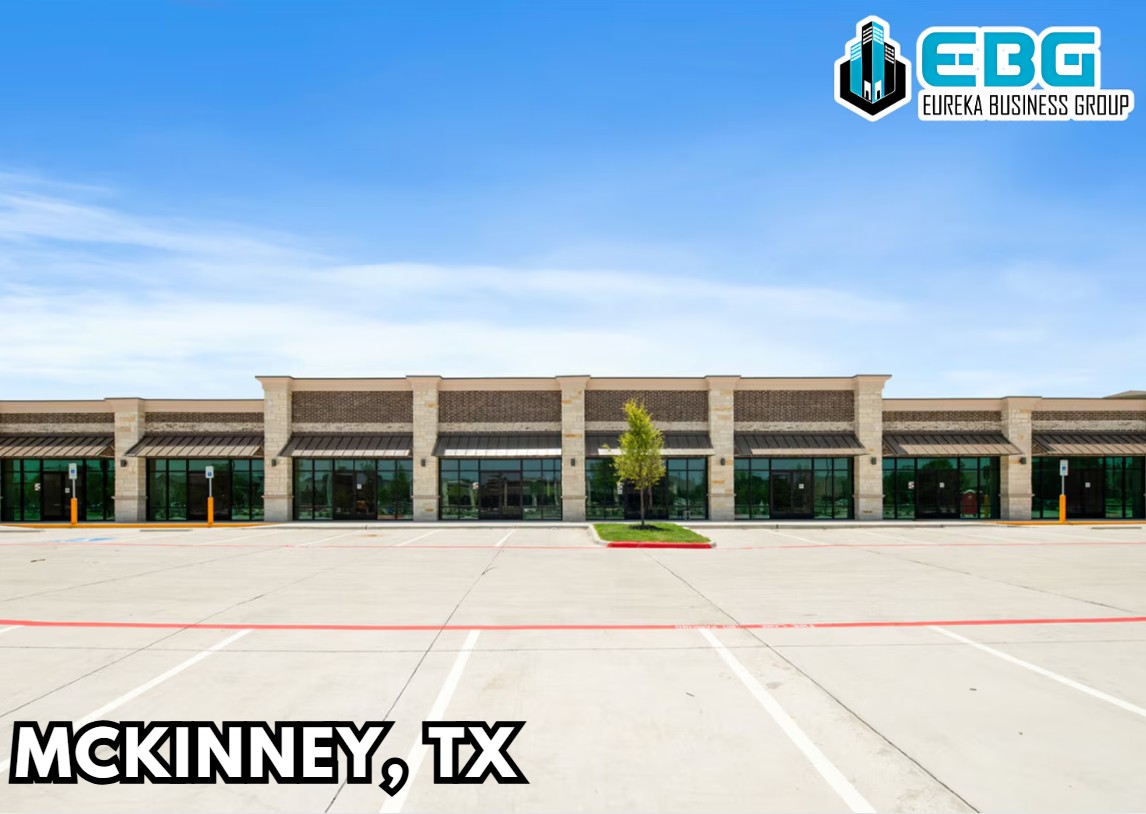
6 AC Unrestricted Land

Why we like it:

* US380 Frontage (383 ft)!
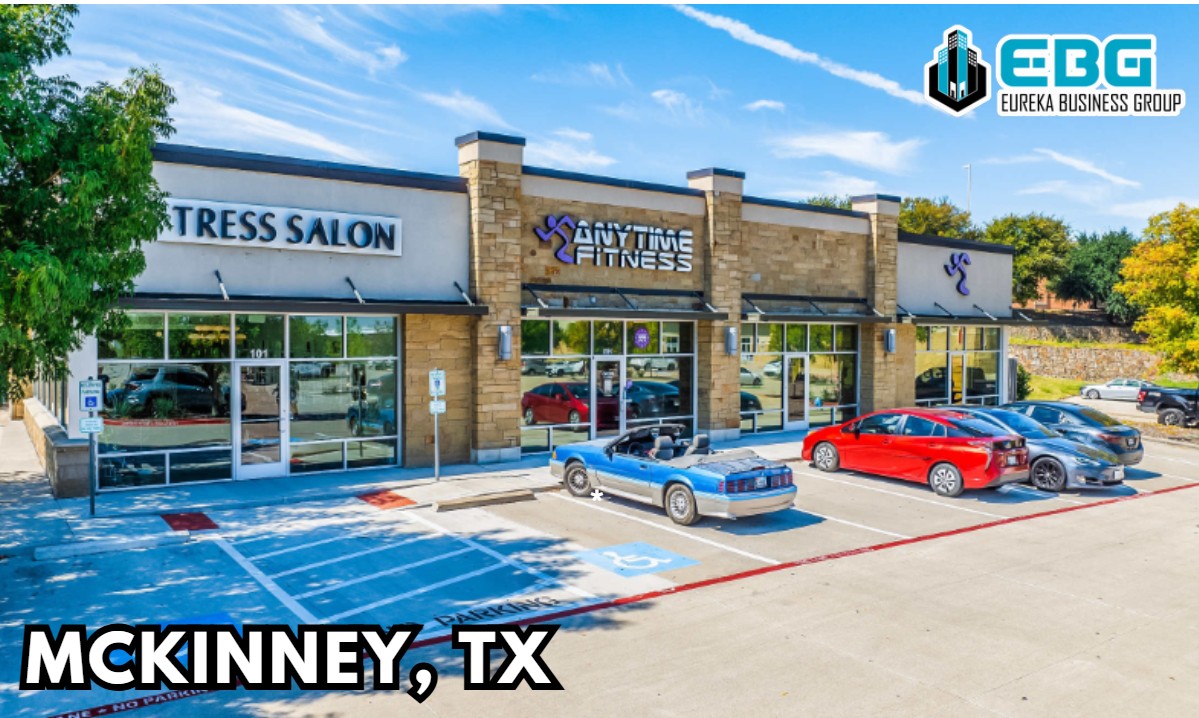
* McKinney ETJ
* On DFW’s hottest growth path!
* Exclusive EBG Listing

$5M-$10M

Eureka Business Group: Your Retail Navigator; Charting the Course for Retail Growth!

98,949 SF Retail Center

Why we like it:

* 100% occupied
* 9.32% cap rate
* Mix of national & local tenants
* Below-market rents | Long-term tenancy

$10M plus

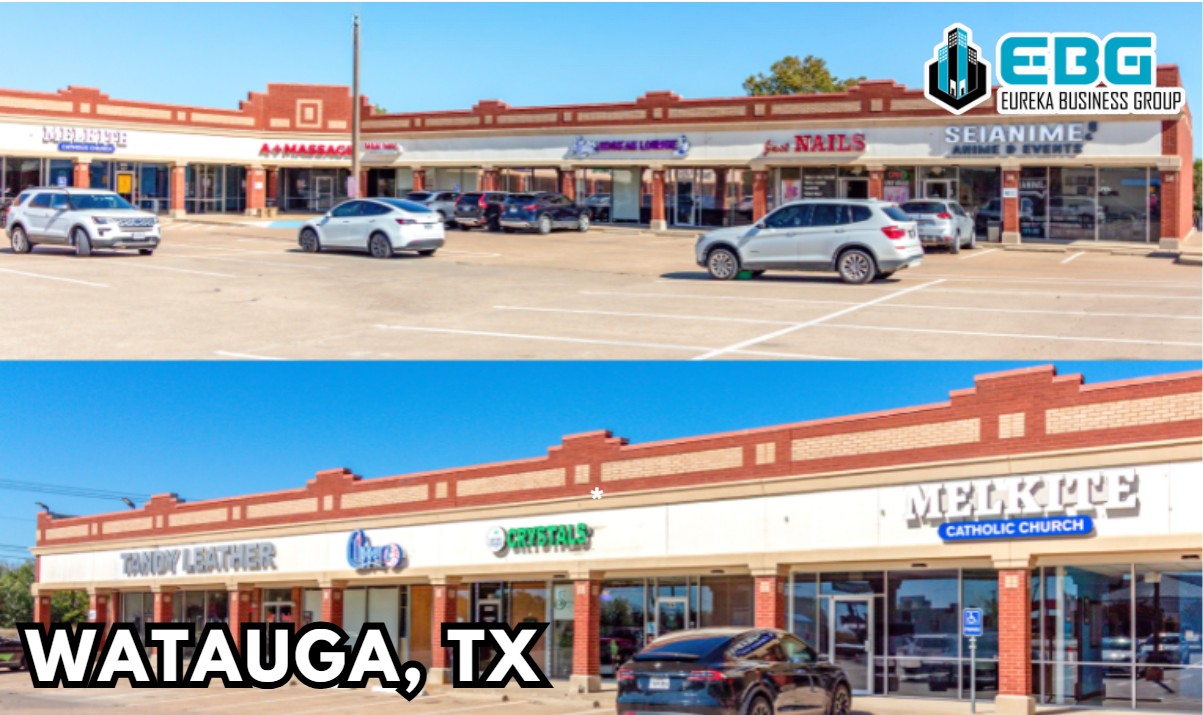
Eureka Business Group: Your Retail Navigator; Charting the Course for Retail Growth!

98,949 SF Retail Center

Why we like it:

* 82% leased – Value add!
* 8% cap rate
* Mix of national & local tenants

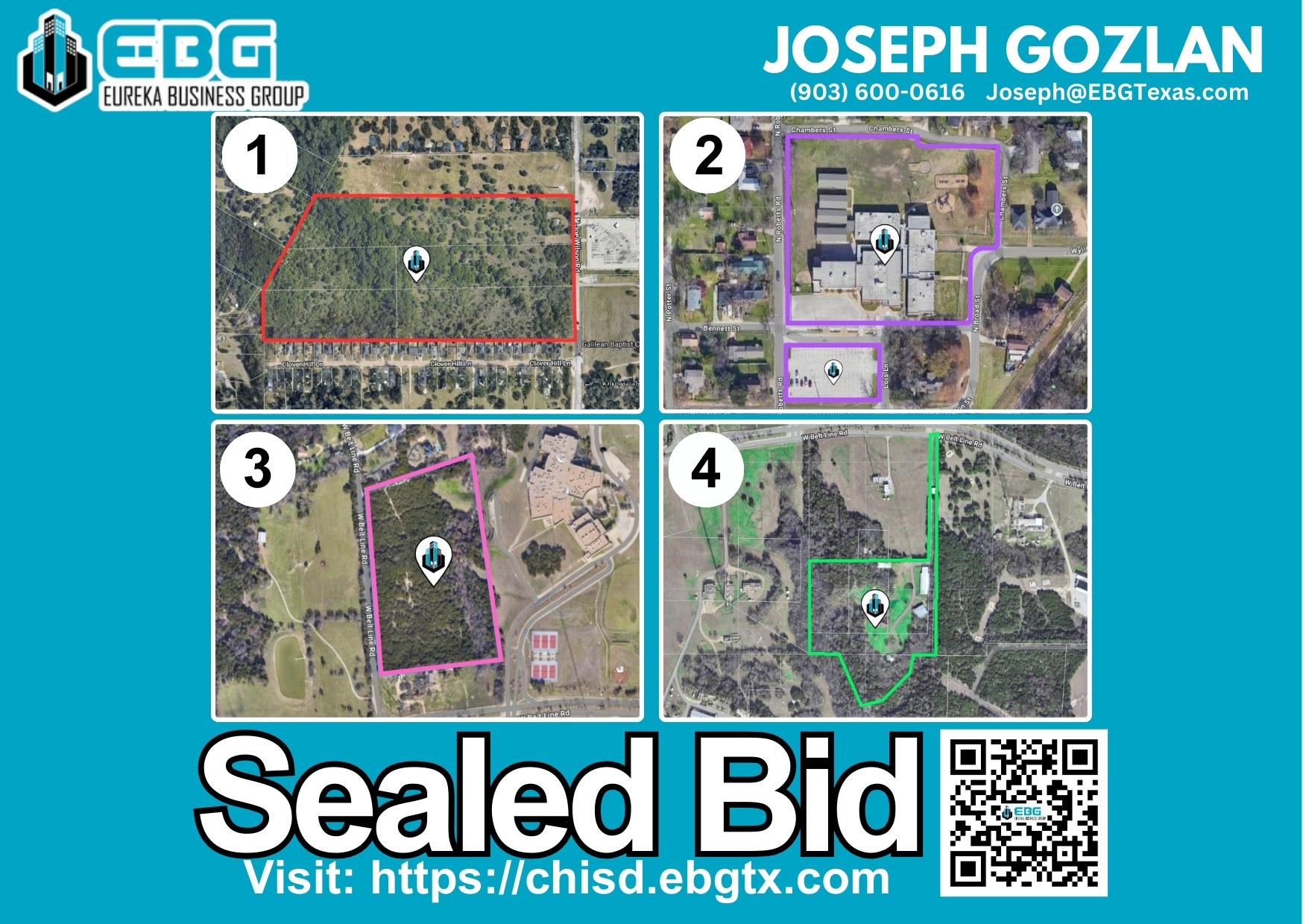
Cedar Hill ISD
Assets Sale

Commercial Land, Residential Land, Warehouse, School Building and mixed-use land. Full package now available

Eureka Business Group: Your Retail Navigator; Charting the Course for Retail Growth!

(1) TBD at Picard Rd. Cedar Hill

Why we like it:

* Approx. 10.5 AC Vacant land
* Zoned: SF-10
* Elementary School Next Door

Eureka Business Group: Your Retail Navigator; Charting the Course for Retail Growth!

(2) 912 Cedar Street, Cedar Hill

Why we like it:

* 109,015 built on 4AC lot
* Zoned: OT-Sq
* Located In The Heart Of Cedar Hill Future Growth Path!

Eureka Business Group: Your Retail Navigator; Charting the Course for Retail Growth!

(3) 700 Bennett St., Cedar Hill

Why we like it:

* 33,886SF built on 5.585AC lot
* Zoned: OT-Res
* Located In The Heart Of Cedar Hill Future Growth Path!

Eureka Business Group: Your Retail Navigator; Charting the Course for Retail Growth!

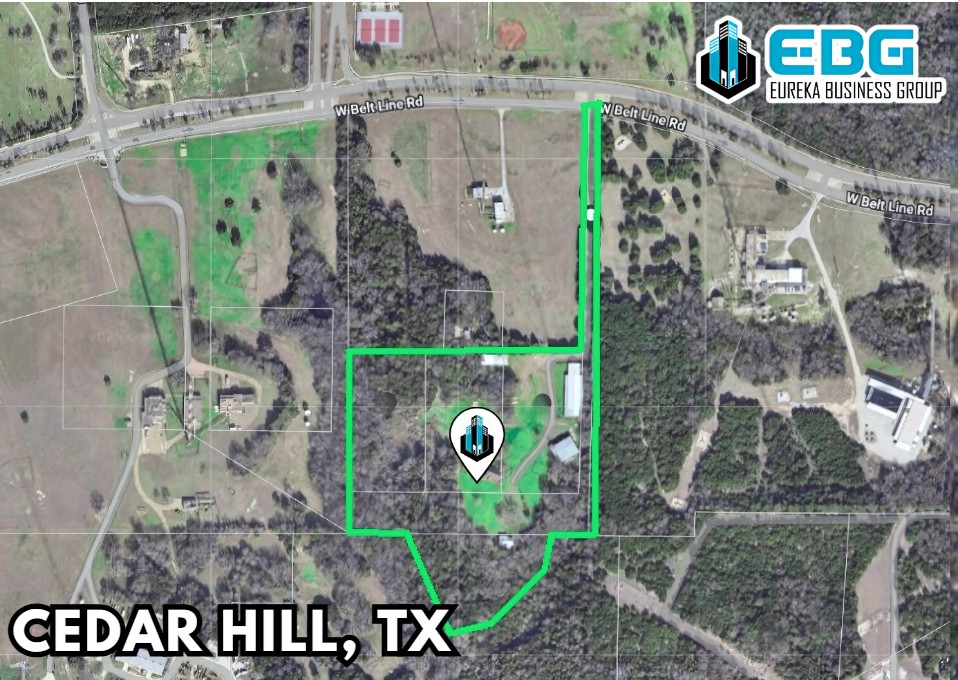
(4) TBD at W. Belt Line Rd. Cedar Hill

Why we like it:

* 15AC Vacant land
* Zoned Residential * Subdivision Development Potential Or Build a Generational Estate

Eureka Business Group: Your Retail Navigator; Charting the Course for Retail Growth!

(5) 1560 W. Belt Line Rd. Cedar Hill

Why we like it:

* 15AC Vacant land
* Zoned: SFE
* Subdivision Development Potential Or Build a Generational Estate

Eureka Business Group: Your Retail Navigator; Charting the Course for Retail Growth!

(6) 914 Brandenburg Street, Cedar Hill, Texas 75104

Why we like it:

* 0.557 AC Vacant land
* Zoned: OT-Sq
* Located In The Heart Of Cedar Hill Future Growth Path!

Eureka Business Group: Your Retail Navigator; Charting the Course for Retail Growth!

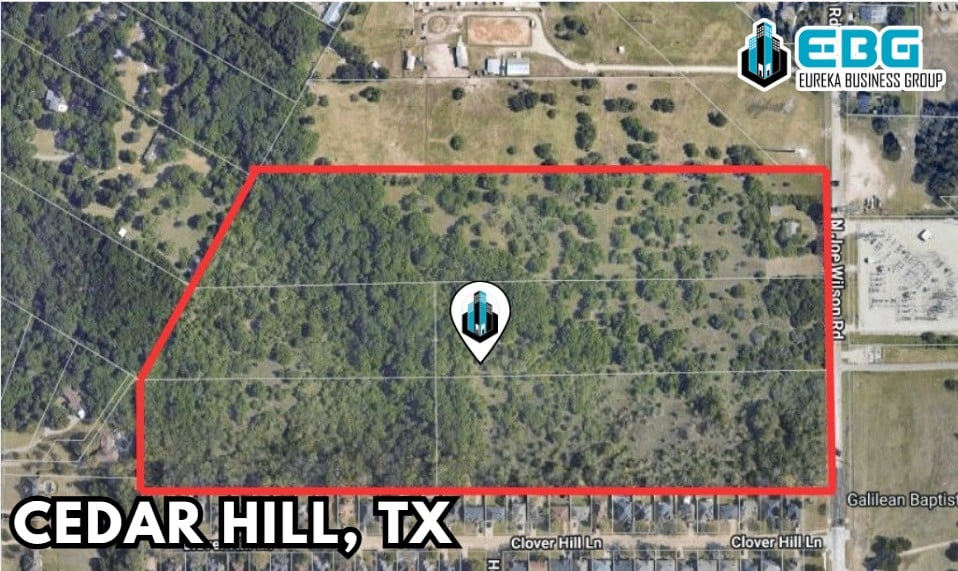
(7) 900 S. Joe Wilson Rd. Cedar Hill

Why we like it:

* 11.082 AC Vacant land
* Split Zoning: LR: Local Retail & Residential
* Elementary School Next Door

Eureka Business Group: Your Retail Navigator; Charting the Course for Retail Growth!

CRE News 08/01/2025

Listen to this week’s hottest Commercial Real Estate News on our podcast

Listen Now

Featured Video

Eureka Business Group: Your Retail Navigator; Charting the Course for Retail Growth!

Click Here to Download The Full “7 Myths About Commercial Real Estate” Report

Eureka Business Group: Your Retail Navigator; Charting the Course for Retail Growth!

Joseph Gozlan, Managing Principal

Eureka Business Group

joseph@ebgtexas.com

(903) 600-0616

Recent Closings

Eureka Business Group: Your Retail Navigator; Charting the Course for Retail Growth!

Looking to sell your property?

About Us

Eureka Business Group: Your Retail Navigator; Charting the Course for Retail Growth!

Established in 2008, Eureka Business Group is a full-service commercial real estate brokerage. We specialize in guiding retail investors, retail leaders, franchisees, and business owners through the complexities of retail commercial real estate in the Dallas-Fort Worth market. Whether you’re a seasoned investor, a franchisee ready to expand, or a first-time tenant, we provide expert solutions tailored to your unique goals.

Read More…

Eureka Business Group: Your Retail Navigator in DFW Commercial Real Estate

Sign Up Here

Be the first to learn about lucrative commercial real estate investment opportunities in the DFW market pre-vetted by our CRE experts!

Eureka Business Group: Your Retail Navigator, Charting the Course for Retail Growth!
Read More

Commercial Real Estate News – Week of August 01, 2025

Commercial Real Estate News – Week of August 01, 2025

Click below to listen: 

Transcript:

 Welcome to the Deep Dive, we’re your shortcut to getting truly well informed. That’s right. Today we are plunging into the big commercial real estate news from this past week and our focus, it’s squarely on the really dynamic retail sector with a special emphasis on what’s happening right here in the Dallas-Fort Worth markets, which is just exceptionally robust.

Absolutely. Our mission, as always, is to cut through all that information overload, bypass the noise. We wanna pull out those crucial insights that will really get you up to speed on the latest trends. The shifts impacting the market right now. Exactly. And our goal here is to synthesize all these different.

Pieces for you, helping you understand not just you know, what’s happening on the ground, but critically why it actually matters for your strategic decisions within this whole commercial real estate landscape. You should walk away with a clearer picture, something actionable, really get a feel for the market’s pulse, and hopefully where those opportunities might lie.

Okay, so let’s untack this. Kicking off with retail. We’re seeing some some absolutely massive portfolio plays. This Onyx Partners acquisition 119 JCPenney stores. Yeah. For nearly a billion dollars, specifically $947 million cash. That really jumps out. It’s huge. It’s gotta be one of the largest retail real estate portfolio deals in recent memory, spanning over 30 states too, including key spots right here in Texas.

So what’s the real story? Why this kind of institutional interest in what some might see as well, legacy retail assets? What truly stands out here, I think, is that it’s not just about the big number. It’s actually a powerful signal. This deal expected to close in September. It reflects a really significant renewed interest from institutional investors in these, stabilized retail assets.

It signals this ongoing effort to fundamentally reset JC Penney’s whole financial structure and unlock that long-term value from the underlying real estate itself, right? Betting on the physical assets. Exactly. It’s a savvy bet on physical assets that are ripe for reinvention. It challenges that whole retail apocalypse narrative we heard so much about, and it’s worth noting too, JC Penney is actively refreshing its brand.

You see the Yes. JC Penney campaign, I see that it’s actually driven a 22% year over year increase in brand search demand, and apparently a 6% rise in foot traffic. So all of that feeds into the long-term value investors are seeing here. That’s a really fascinating insight into JC Penney. It puts that deal in perspective.

And speaking of high value retail we saw some pretty significant activity up on Fifth Avenue in New York. But also importantly, right here in Texas. First New York. Brookfield Properties closed on a while. Staggering. $601 million refinancing for its retail condo as its seven 35th Avenue in midtown Manhattan.

The Crown building. The crown building, yeah. Yeah. Home to Bulgari. Chanel really top tier luxury. That figure $601 million is just massive. It is, and if we zoom out a bit, what does this really tell us? Okay, so the market value of this property, this Fifth Avenue spot, was declared at just over $200 million back in 2022.

Yet it secures a $601 million refinancing. Wow. This just proved that even in uncertain markets, these trophy retail assets, the ones in prime irreplaceable locations. They remain the ultimate flight to quality landers are clearly still lining up for these global Dans. It demonstrates that location is still absolutely paramount, especially at that luxury end location still holds true.

Then e especially there, it’s a clear sign of where capital still finds comfort and real value. Okay. Meanwhile, let’s bring it back down here to Texas. Another major acquisition really confirms the continued strength of our open air centers. Yes. Bricks, more property group picked up Lac and Terra at Cinco Ranch.

That’s a big 409,000 square foot open air lifestyle center out in Katy. Near Houston for $223 million. Yeah. That made it one of the iest retail deals in Texas this year. That’s spot on. And this acquisition, it aligns perfectly with the current consumer trends we’re seeing in Texas. These open air centers, the ones with strong dining options, lifestyle offerings, they are significantly outperforming the traditional malls.

Definitely feels that way, especially in the state’s main metros. And particularly in those high income suburbs like Katy Bricks, Moore’s strategy here is smart too. They plan to capture that upside as leases with, below market rents expire. Ah, the value add play. Exactly. It’s a classic value add play and what is fundamentally a strong market.

Okay, we’ve seen these big retail plays, big dollars changing hands, but what’s fascinating, almost like. Contradictory is the national retail picture. Overall, it seems incredibly mixed. It really does. On one hand, us shopping center leasing, it’s at its fastest pace. In two decades, the average leasing time dropped to just 8.5 months.

Just quick, very quick. Yet, on the other hand, we’re expecting over 15,000 brick and mortar store closures in 2025. Yeah, that number’s startling. It is. That’s double last year’s figure. Yeah, and it includes. Major chains like Joanne Party City, right? So how do we reconcile these two, these seemingly opposite trends?

That really is the big question. This brings up, isn’t it? Is this a contradiction or is it more of an evolution? JLL put out some data highlighting that only about 25% of the available retail space out there was actually built this century. It’s only 25%. Interesting. So this surge enclosures isn’t necessarily a decline in retail overall.

It might be more of a significant shift. A shift towards more modern spaces, more efficient, and definitely more experience driven places that meet today’s consumer demands. So out with the old in with the new. Essentially we’re seeing malls being reinvented too. Yeah. About 46% of redevelopments are now mixed use.

They’re adding residential units, diverse commercial spaces. And this evolution, it isn’t just a theory, right? It’s actually attracting serious money. Look at retail and healthcare REITs, for instance, they collectively raised almost $11 billion through June, 2025. Wow. Okay. That’s pretty clear evidence of robust investor confidence despite all the headlines about sore closures.

So it’s more about adaptation and relevance then. Exactly. Adaptation and relevance. That’s the key. Okay. Let’s bring that focus directly here. To Dallas-Fort Worth retail. We’ve seen continued transaction activity that really underscores this this nuanced national picture you’re painting. For example, Marcus and Millichap brokered the sale of Keller Springs Village.

That’s a shopping center in Carrollton, just north of Dallas. Good location, about 39,600 square feet. And importantly, this 17 suite center. Was fully leased when it sold. Fully leased. That’s key. And this activity, it isn’t just limited to DFW either. If you look further south, down in Longview, the Hawkins Crossing Retail Center sold, that’s about 16,000 square feet and it was 93% leased.

Still very strong occupancy, very strong. And then down in South Austin, you’ve got Barnes and Noble opening a big 20,000 square foot store at South Park Meadows. They’re backfilling an old office max space. Interesting to see a bookstore taking that kind of space. It is, but these sales, these new openings, they highlight that sustained demand.

The capital willingness to invest in these well located income producing retail assets across Texas. It really reinforces the state’s unique strength in retail fundamentals, especially when you compare it to the broader national picture. It really is a compelling testament to the market’s resilience here.

Absolutely. Now let’s try and connect this to the. The broader picture capital markets because some significant challenges seem to be emerging there. Yes, definitely Some headwinds. TRE data is revealing this new challenge. They’re calling maturity drags. Maturity drags right about $23 billion in CMBS loans.

That’s commercial mortgage backed securities for our listeners have gone past their original due dates. Without payoff, without liquidation, or even a formal extension. Yeah. And these were almost non-existent back in 2019, so $23 billion in these maturity drags and CMBS special servicing rates are at a decade high.

That sounds it sounds like a storm brewing. It definitely raises concerns. How are lenders and owners actually navigating this on the ground? Are we seeing creative solutions pop up, or is it just more holding patterns, more kicking the can down the road? That’s a really crucial question, and what’s compelling here is that this actually challenges that common narrative, the extend and pretend story, because many of these loans, believe it or not, are still current on their interest payments.

Oh, really? Okay. Yeah. But the real bottleneck seems to come from market uncertainties, disagreements on valuation, and just operational slowdowns. These are exacerbated by frankly, slow decision making sometimes, which could lead to trouble. It could lead to what some are calling a disorderly wave of writedowns.

Yeah. And that special servicing rate for CMBS, that’s the percentage of loans and really serious financial distress. It surged to 10.57% in June. That’s the highest since 2013 o. And office and retail loans are seeing significant distress within that office is at 16.38%, retail at 11.93%. Wow. Yeah, while the payments might be current for some, the underlying issues are definitely mounting up.

Okay. There’s maybe a compelling counterpoint to some of that uncertainty, especially in how capital is actually flowing. There is, yeah. The extend and pretend era in CRE lending might be ending, but it’s coinciding with this well meteoric rise of private credit. That’s a huge shift. The number of private debt funds globally.

Has just ballooned from maybe a hundred back in 2011 to roughly 1,080 in late 2023. Incredible growth. So this rise of private credit, it certainly sounds like a vital liquidity injection for the market, right? It absolutely is providing liquidity. But is there maybe any hidden risk? Or perhaps a lack of transparency that comes with so much capital moving outside traditional banking and the public markets.

That’s a fair point to consider. Transparency can be a factor sometimes with private funds. Yeah. But primarily this influx of private capital is providing really significant liquidity to the market right now. It’s allowing investors to acquire tangible assets, often at a potentially discounted rate, seizing opportunities.

Exactly, and look at BlackRock’s recent acquisition of Elm Tree funds that further signals strong institutional interest in expanding within this space. Despite the broader market challenges, it really implies a strategic move to capitalize on the current environment makes sense. Look at the numbers.

Despite overall commercial real estate fundraising declining about 7.7% year over year. Actual Q2 CRE sales jumped 18% year over year to $110 billion. Okay, so money is moving. Money is moving, and this was driven primarily by increases in retail transactions up. 37.4% and industrial up 15%. Detail up that much.

That’s significant. It is. It suggests that those bid ask spreads the gap between what buyers wanna pay and sellers wanna get. They’re finally narrowing and creative deal structures are helping to get transactions across the finish line. Plus, US banks also reported pretty solid earnings through mid 2025, which shows capital is indeed still flowing for viable projects.

Okay, so beyond the direct deal flow in these capital shifts we’ve discussed. The broader real estate landscape is also being shaped by some significant policy and legal changes, right at the federal level. That’s right. These macro forces matter. Let’s explore how these are creating maybe new challenges, but also new opportunities.

For instance, there’s talk. The Trump administration is pushing to significantly downsize the government’s office footprint. We’re talking 360 million square feet. It’s a massive portfolio and leadership changes at the General Services Administration. The GSA seem aimed at this. This effort could potentially lead to a 50% reduction in the government’s portfolio with examples like say, HUD and FBI headquarters being disposed of or maybe relocated.

Yeah. The big question this brings up is how will such massive government shifts affect. Major office markets like Washington, DC especially, and also what opportunities will emerge from this this portfolio optimization. It’s potentially a seismic shift for those core markets. Absolutely. And then on the legal front, you’ve got CoStar Group suing Zillow.

Yes. The data wars continue. CoStar’s alleging theft of nearly 47,000 copyrighted images appearing apparently over 250,000 times and alleging Zillow syndicated this content to other platforms too. This legal battle. It really just underscores the immense value of data and intellectual property In today’s real estate tech landscape, information is currency.

Absolutely. Data is the new oil, as they say. And speaking of new opportunities and maybe new ways capital can flow, a crucial, maybe, often overlooked federal development is the recent signing of the Genius Act. The Genius Act. Tell us about that. This legislation, it establishes federal standards for stable coins.

Now, this isn’t just about crypto enthusiasts. It could potentially unlock billions in sideline digital capital. Yeah. And potentially transform how commercial real estate transactions are funded just by providing a clearer regulatory path for these digital assets. Interesting. So potential new funding avenues opening up there potentially.

Yes. It’s one to watch. Okay. Let’s broaden our view again, back to Texas. Maybe beyond DFW for a moment. Look at other key markets starting with Dallas-Fort Worth’s. Continued dominance, though you really can’t ignore it. No. DFW is still the leader. Globe Life is moving to a new 200,000 square foot class A headquarters up in McKinney, reinforcing DFWs position as a key employment hub.

Over 3000 employees there. Major commitment, and this aligns perfectly with DFW being ranked the number one commercial real estate market for investment performance in 2025. That’s according to the PW Curb and Land Institute Emerging trends report. Always a closely watched report. Yeah, and it highlights DFWs diversified economic base, that 11.2% job growth since February, 2020.

We also saw at t’s recent big 12 year lease renewal up in Richardson. That signals immense corporate confidence, too. Huge vote of confidence. So DFWs dominance seems pretty undeniable, but laying devil’s advocate. Are there any emerging cracks in the foundation or maybe any sectors within DFW that aren’t performing quite as robustly as say, industrial or core retail?

That’s a perceptive question. While DFW remains incredibly strong overall, I think a key takeaway is how local developers are strategically adapting, especially in industrial. DFW continues to lead the nation in industrial construction, right over 28 million square feet. Under development currently Still number one.

Still number one, but what’s really compelling here is how developers are shifting their focus. They’re moving away from just massive speculative warehouses towards more build to suit projects and flexible facilities. Ah, mitigating risks. Exactly. It helps mitigate. Especially amidst a national industrial slowdown, it ensures pre-lease spaces and it’s allowed DFW to actually surpass leasing volumes from five of the past 10 years already by mid 2025.

Yeah. So this strategic adaptation, I think is a significant reason for its sustained performance across different property types. That makes a lot of sense. Smart adaptation. Okay, let’s move down South of Houston, we see a really fascinating contrast in market dynamics There very different picture in some ways.

Houston’s industrial market is continuing its significant expansion. Jackson Shaw developing a big 347,000 square foot distribution center in North Houston. Yeah, demand is strong there too. Q1 2025 saw nearly 6.2 million square feet of net absorption. That’s a strong indicator of demand and year to date.

Leasing totals are around 16.3 million square feet. Houston’s resilience and industrial, it really comes down to its strategic location as a major port city. And also its diversified manufacturing base. That helps a lot. Wow. But when we zoom out, Houston is also facing some significant distress in its multi-family market.

I saw reports on that. Yeah. 3000 apartment units across eight complexes are heading to foreclosure auction, apparently due to a Houston investor losing grip on a a billion dollar portfolio. Wow. That’s a huge contrast to the industrial side. It really highlights that uneven recovery across property types, even within the same metro where one sector like industrial can boom while another, like multifamily in this case, faces significant challenges.

It’s a good reminder that you can’t paint a whole city with one brush. Absolutely not though. On a positive note for urban revitalization in Houston, we are seeing that growing trend of adaptive reuse, like the conversion of the 110 year old Texaco building downtown into the star multifamily community.

Cool project. So different stories playing out across different property types there. Definitely, and as you pointed out earlier, not all Texas markets are performing equally, even beyond Houston. Look at Austin’s office market, for example. Yeah. Austin’s struggling on the office front. It recorded a staggering 28% vacancy rate in Q1 2025.

That’s among the worst rates nationally. It really is, and that contrasts so sharply with Dallas’s relative strength and stability. Even though both are considered major tech hubs, it’s quite a difference. Although Austin does still have the third largest development pipeline in the nation for office with 2.7 million square feet still under construction, which complicates the picture even further, right? More supply coming online into high vacancy. Exactly. And this situation in Austin, it really puts the broader national office sector crisis into perspective. You’ve got over $290 billion in office loans maturing by 2027 nationally.

National office vacancy rates hit 19.4% in May. It’s just a truly challenging environment for many office landlords, and the delinquencies are rising too. Office CMBS delinquencies specifically have risen to 11.08% in June. So Austin’s struggle really highlights the critical importance of understanding these nuanced local dynamics.

Even with an a seemingly booming state, like Texas baby market is different, every market is different. It interestingly though, Manhattan stands out as an exception. Its vacancy rate is actually. Falling slightly down to 15.2%. Often driven by demand for that high quality class A space. So it shows that even within this challenge sector, quality and location can still win out.

Quality always matters. Okay, so let’s try and connect all these threads. Now, what does this all mean for the interconnectedness of these market trends? For instance, rising office attendance is now at about 72.6% of pre COVID levels nationally getting closer. That’s helping stabilize office vacancy rates somewhat.

And it’s fueling growth in related sectors like downtown multifamily housing. Definitely more people downtown means more demand for housing there. And naturally that translates to more foot traffic for retail, directly boosting demand for both urban and suburban retail. It’s all linked. Exactly.

And there’s this other fascinating emerging trend you hear about. The accidental landlords. Accidental landlords. Explain that. You know those homeowners who maybe can’t get their asking price when they try to sell? Yeah. So instead they decide to rent out their homes, they become landlords almost by accident, not by initial design.

Ah, okay. I see. It’s a subtle shift, but it’s actually dramatically boosting the single family rental supply, particularly in these Sunbelt cities like we have here in Texas. Creating more competition for the big institutional SFR players. Potentially. Yeah, and what’s interesting is how that then directly impacts consumer spending habits.

People renting might spend differently than owners, which then ripples back to affect the health of our retail sector. It’s all connected, really is all interconnected. But overall, you still have this broad real estate uncertainty. Persisting buyers and developers are delaying major decisions because of the mixed economic signals, the high interest rates and price discovery is still stalling in many sectors.

Buyers and sellers just can’t quite agree on true market value yet. That bid ask spread issue again, but despite that broader uncertainty, you mentioned we’re seeing private real estate demand on the rise. Yes. What do you think this tells us about investor priorities right now? Are they just seeking stability above all else, or is there something else driving this uptick in private capital?

Oh, it certainly seems like a positive sign for long-term investment in the sector. I think it’s a combination of things. Private capital is definitely seeking stable income streams amidst all the economic volatility. That’s a big part of it. They’re finding value perhaps in assets that might be overlooked by more traditional lenders or the public markets right now.

And this willingness to deploy capital, especially in proven markets, is indeed a very positive sign for the sector’s long-term health. And importantly, it’s liquidity. Oh, makes sense. So let’s try and recap our deep dive today. Dallas Fort Worth. It just continues to solidify its position as a really dominant force in commercial real estate.

No question proving its resilience, attracting significant investment, particularly in industrial, as you noted. Yeah. And showing that sustained transaction activity in retail, which was a key focus for us today. DFW retail looks strong. Couldn’t agree more. And while the broader commercial real estate market is definitely navigating some genuine uncertainty and complexity, from those maturity drags in CMBS to the evolving retail formats, we discussed that localized strength.

Particularly what we see here in DFW and its robust retail transaction activity. It truly offers compelling opportunities. This deep dive, I think really shows the critical importance of understanding these nuanced market dynamics and of course strategic positioning. Absolutely. For anyone involved in commercial real estate, especially if you’re focused on the Dallas-Fort Worth retail market, grasping these specific trends is absolutely key to staying ahead of the curve and finding that upside amid all the change.

Definitely, and maybe here’s a final provocative thought for you for our listeners, given these contrasting trends. We talked about record retail leasing on one hand, but massive store closures on the other. What does this truly mean for the future consumer experience in physical retail spaces, particularly in thriving markets like DFW?

Interesting question. Is it simply about location, just maybe in a new light, or is it something perhaps more profound, something about purpose, adaptation, and maybe the lasting appeal of a truly curated physical experience? That’s definitely something to think about. We encourage you to explore that question further.

** News Sources: CoStar Group 
Read More

EBG Listings of The Week 07-26-2025

EBG Listings of The Week


July 26, 2025


Texas economy is still pushing forward! over 20% of all international investments in the USA were directed into the Texas economy! Retail sales are still up year over year and despite the apocalyptic conversation in the media about tariffs, the consumers are still spending. Are we headed to a recession? Not sure but what I do know is that in uncertine times like now, the best way to build and preserve your wealth is through NNN investments that have strong tenants with longer leases. As we say here at EBG: NNN=TTR: Transfer The Risk!

As we do every week, we took time and reviewed all the commercial listings that came on the market and curated this hand-picked list representing the top opportunities we identified as the best value.


Did you know you can LISTEN to this email?


Eureka Business Group: Your Retail Navigator; Charting the Course for Retail Growth! 

5,942 SF Retail Center

Why we like it:

* National tenants

* Located in a 430KSF Power Center with 4.7M annual visits

* 169,000 VPD on I-635


Eureka Business Group: Your Retail Navigator; Charting the Course for Retail Growth! 

3,005 SF Single Tenant

Why we like it:

* Zero landlord responsibilities

* 14+ years remaining

* 40K+ VPD


Eureka Business Group: Your Retail Navigator; Charting the Course for Retail Growth! 

±12,848 SF Single Tenant

Why we like it:

* Austin MSA

* $1M of arcade equipment included in sale!

* 8.02% cap rate


Eureka Business Group: Your Retail Navigator; Charting the Course for Retail Growth! 

9,631 SF Single Tenant

Why we like it:

* Anchored by 330K SF Target center with 3.3M visits/year

* 110K+ VPD on Hwy 114

* Corporate guarantee


Eureka Business Group: Your Retail Navigator; Charting the Course for Retail Growth! 

6 AC Unrestricted Land

Why we like it:

* US380 Frontage (383 ft)!
* McKinney ETJ
* On DFW’s hottest growth path!
* Exclusive EBG Listing


Eureka Business Group: Your Retail Navigator; Charting the Course for Retail Growth! 

12,124 SF Retail Center

Why we like it:

* Growing community

* 2024 construction

* Surrounded by 6,000+ new planned homes


$5M-$10M


Eureka Business Group: Your Retail Navigator; Charting the Course for Retail Growth! 

26,050 SF Retail Center

Why we like it:

* 92% leased

* 7.1% cap rate

* $120K+ average HH income


Eureka Business Group: Your Retail Navigator; Charting the Course for Retail Growth! 

14,625 SF Retail Center

Why we like it:

* 100% leased

* High residential growth corridor in Anna, TX

* Long-term leases with staggered expirations


Eureka Business Group: Your Retail Navigator; Charting the Course for Retail Growth! 

10,866 SF Child Care Facility

Why we like it:

* Corporate NNN lease

* 12 years remaining

* Annual rent escalations


Eureka Business Group: Your Retail Navigator; Charting the Course for Retail Growth! 

10,655 SF Retail Center

Why we like it:

* 100% leased

* Long-term NNN leases with staggered expirations

* Affluent, fast-growing Houston suburb


Cedar Hill ISD
Assets Sale


Commercial Land, Residential Land, Warehouse, School Building and mixed-use land. Full package now available


Eureka Business Group: Your Retail Navigator; Charting the Course for Retail Growth!
 
 
Eureka Business Group: Your Retail Navigator; Charting the Course for Retail Growth! 

(1) TBD at Picard Rd. Cedar Hill

Why we like it:

* Approx. 10.5 AC Vacant land
* Zoned: SF-10
* Elementary School Next Door


Eureka Business Group: Your Retail Navigator; Charting the Course for Retail Growth! 

(2) 912 Cedar Street, Cedar Hill

Why we like it:

* 109,015 built on 4AC lot
* Zoned: OT-Sq
* Located In The Heart Of Cedar Hill Future Growth Path!


Eureka Business Group: Your Retail Navigator; Charting the Course for Retail Growth! 

(3) 700 Bennett St., Cedar Hill

Why we like it:

* 33,886SF built on 5.585AC lot
* Zoned: OT-Res
* Located In The Heart Of Cedar Hill Future Growth Path!


Eureka Business Group: Your Retail Navigator; Charting the Course for Retail Growth! 

(4) TBD at W. Belt Line Rd. Cedar Hill

Why we like it:

* 15AC Vacant land
* Zoned Residential * Subdivision Development Potential Or Build a Generational Estate


Eureka Business Group: Your Retail Navigator; Charting the Course for Retail Growth! 

(5) 1560 W. Belt Line Rd. Cedar Hill

Why we like it:

* 15AC Vacant land
* Zoned: SFE
* Subdivision Development Potential Or Build a Generational Estate


Eureka Business Group: Your Retail Navigator; Charting the Course for Retail Growth! 

(6) 914 Brandenburg Street, Cedar Hill, Texas 75104

Why we like it:

* 0.557 AC Vacant land
* Zoned: OT-Sq
* Located In The Heart Of Cedar Hill Future Growth Path!


Eureka Business Group: Your Retail Navigator; Charting the Course for Retail Growth! 

(7) 900 S. Joe Wilson Rd. Cedar Hill

Why we like it:

* 11.082 AC Vacant land
* Split Zoning: LR: Local Retail & Residential
* Elementary School Next Door


Eureka Business Group: Your Retail Navigator; Charting the Course for Retail Growth! 

CRE News 07/25/2025

Listen to this week’s hottest Commercial Real Estate News on our podcast


Featured Video


Eureka Business Group: Your Retail Navigator; Charting the Course for Retail Growth!


Click Here to Download The Full “7 Myths About Commercial Real Estate” Report


Eureka Business Group: Your Retail Navigator; Charting the Course for Retail Growth! 

Joseph Gozlan, Managing Principal

Eureka Business Group

joseph@ebgtexas.com

(903) 600-0616


Recent Closings


Eureka Business Group: Your Retail Navigator; Charting the Course for Retail Growth!
 
Eureka Business Group: Your Retail Navigator; Charting the Course for Retail Growth!
 
Eureka Business Group: Your Retail Navigator; Charting the Course for Retail Growth!


Looking to sell your property?


About Us

 
Eureka Business Group: Your Retail Navigator; Charting the Course for Retail Growth!


Established in 2008, Eureka Business Group is a full-service commercial real estate brokerage. We specialize in guiding retail investors, retail leaders, franchisees, and business owners through the complexities of retail commercial real estate in the Dallas-Fort Worth market. Whether you’re a seasoned investor, a franchisee ready to expand, or a first-time tenant, we provide expert solutions tailored to your unique goals.

Read More…

Eureka Business Group: Your Retail Navigator in DFW Commercial Real Estate

Sign Up Here

Be the first to learn about lucrative commercial real estate investment opportunities in the DFW market pre-vetted by our CRE experts!

Eureka Business Group: Your Retail Navigator, Charting the Course for Retail Growth!
Read More

Commercial Real Estate News – Week of July 25, 2025

Commercial Real Estate News – Week of July 25, 2025

Click below to listen: 

Transcript:

 Welcome to the Deep Dive, your essential shortcut to truly being well-informed. This week, we’re plunging into the most important commercial real estate news from July 18th, 25th, 2025. Our mission today is well, to cut through all that information overload, bypass the noise, and really extract the crucial insights, the things that will make you well versed on the latest trends and shifts.

Impacting the market right now, and we’ll be putting a particular focus on the exceptionally robust Dallas-Fort Worth market especially as it relates to the retail sector. Absolutely. And our sources for this deep dive, they offer a truly comprehensive compilation. We’ve prioritized key commercial real estate news from Texas, specifically drilling down into that Dallas-Fort Worth area, but we’re still covering significant.

National developments that you know impact the broader landscape. Our goal is really to synthesize these diverse insights for you, helping you understand not just what’s happening on the ground, but critically why it matters for your strategic decisions within the commercial real estate landscape. You should walk away with a clearer, actionable picture of the market’s pulse and hopefully.

Where the opportunities lie. Okay. Let’s unpack the headline news right at the top then, because it’s a big one for our focus area. Dallas-Fort Worth has just been ranked the number one commercial real estate market for investment performance in 2025. That’s coming from the highly influential PW Curb and Land Institute emerging trends report.

It’s actually the first time DFW has topped that list since 2019. Now, this isn’t just, a statistical win for DFW. It’s really a powerful testament to how a highly diversified economic base acts the resilient backbone in commercial real estate. It signals that markets with a broad industry mix well, they’re better insulated from sector specific shocks, offering more consistent long-term stability for investors.

The report backs this up with some pretty impressive numbers 11.2% job growth in the DFW Metroplex since February, 2020. That kind of growth trajectory allowed for a much faster COVID recovery compared to many other major markets across the country. Yeah, and what’s truly fascinating here is how multifaceted DF W’s strength really is.

It extends far beyond just that impressive overall ranking. Beyond its diverse economy, the market boasts exceptionally strong industrial development, which is a sector that has performed remarkably well, even nationally, and it ranks fourth nationally for data center expansion. That speaks volumes about its critical infrastructure and its growing tech presence.

If we connect this to the bigger picture, this kind of. Broad-based strength is it’s like a magnet. It’s drawing multiple firms to actively eye opportunities and expand their physical presence, especially in the broader Fort Worth area. They’re directly benefiting from DFWs national prominence, no question.

And a tangible, really crucial example of this continued corporate commitment and. Stability for Dallas Metro Area Office, landlords. Is that recent at and t 12 year lease signing in Richardson. A long-term lease like that from a major corporation that signals immense confidence in the market’s future.

And speaking of market depth in that sophistication we mentioned earlier, DCEO Magazine just released their Dallas Power Brokers 2025 list. This annual compilation highlights the top North Texas commercial real estate brokers. I think it was nearly a hundred firms, employing over 3000 brokers.

This isn’t just some local award. It truly demonstrates the sheer. Depth of professional expertise and the transactional volume flowing through this market. It’s a testament to a mature ecosystem where deals get done, which is vital for investment. Definitely. And to further underscore DFWs Industrial prowess, which is a major driver of its top ranking, it’s worth noting that Dallas-Fort Worth actually leads the nation in industrial construction.

Wow. We’re talking over 28 million square feet under development as of May, 2025, and this is happening even amidst a national industrial slowdown where warehouse vacancies are creeping up nationwide because of a significant pipeline of new supply. But what’s crucial to understand about D W’s approach is that local developers are strategically shifting their focus.

They seem quite agile. They’re moving away from building those massive speculative warehouses. The ones built without a tenant already lined up, and they’re concentrating more on built to suit and flexible facilities. So built to suit means it’s custom designed for a. Tenant, while flexible facilities can be adapted more easily, this adaptation aims to meet changing tenant needs often for specialized manufacturing or maybe last mile delivery.

And it helps mitigate risks for developers by ensuring pre-leased spaces. It’s a very smart, responsive approach to the market dynamics, I think, and it’s why DFW has already surpassed leasing volumes from five of the past 10 years by mid 2025. That proves its continued strong demand, even in a tightening national industrial market.

Okay. Here’s where it gets really interesting as we transition into the retail sector. This is another area we wanted to deep dive into, especially in DFW nationally, we’re seeing some truly mixed signals. Retailers announced 67% more store closures in 2025 compared to 2024. The numbers are stark. 5,941 announced closures versus only 4,176 new locations open through July 4th.

That’s a significant imbalance, right? A negative net gain and approximately 50 million square feet of retail space was vacated without new tenants stepping in. We saw major closures from household names Joanne closed 815 locations, party City, 7 38 stores, big lots, 682 locations on the surface. That certainly sounds like a tough environment, doesn’t it feeds that retail apocalypse narrative.

We hear time. It absolutely sounds challenging and look for many traditional retailers, it is. However, JLL, their A leading CRE firm offers a more optimistic counterpoint for the US retail sector overall. They state that the market remains optimistic precisely because of the opportunities within this shift.

It’s not all doom and gloom. They point out that only 25% of all available retails. Currently is in properties built this century. So this strongly indicates that the closures aren’t necessarily a decline in retail overall, but rather a significant shift towards more modern, efficient, and frankly experienced driven spaces that meet today’s consumer demands.

Older, less adaptable retail formats are definitely struggling while newer, located senders thrive. It raises that question, is it a contraction or is it really an evolution in modernization? And furthermore, healthcare and retail REITs, that’s real estate investment trust, they collectively raised almost $11 billion, $10.92 billion through June, 2025.

This clearly demonstrates continued robust investor interest in the sector. It suggests belief in its long-term viability. Despite all the news about closures, investors are clearly seeking out those opportunities in modern retail. Okay, so bringing that focus directly to Dallas-Fort Worth retail, we’ve seen continued transaction activity that kind of underscores this more nuanced national picture.

Marcus and Millichap, a major player in investment sales. For example, they just completed the sale of Keller Springs Village. That’s a 17 suite retail property in Carrollton, Texas. Just this month, July, 2025, this specific deal highlights that even with the broader retail sector challenges and those national closures, there’s still strong movement, confidence and capital willing to invest in Dallas area retail real estate, and this particular property being multi-tenant.

It demonstrates sustained demand for well located income producing retail assets. Exactly. And for further context, just to show this isn’t only a DFW phenomenon, we also saw the sale of Webster Shopping Center. That’s a roughly 24,000 square foot retail property down in Webster, Texas. Also in July, this sale south of Houston shows sustained activity in Houston area retail transactions as well.

It really reinforces investor confidence in Texas retail fundamentals as a whole. So it’s not just Dallas-Fort Worth, the entire state is demonstrating a certain resilience and. Appeal for retail investors. It suggests a unique strength in the Texas market that warrants attention. I think that’s a great point.

In connecting this to broader market dynamics, we’re seeing rising office attendance across the nation. The latest figures put it at about 72.6% of pre COVID levels. This significant return to the office is helping to stabilize office vacancy rates, which you know have been a major concern. And importantly, it’s fueling growth in related sectors like downtown multifamily housing, more people living and working in urban cores.

That naturally translates to more foot traffic for shops, restaurants, service providers, directly boosting demand for both urban and suburban retail. And this also raises an important question about the interconnectedness of housing and the broader rental market dynamics and how it indirectly impacts retail viability.

We’re seeing this emerging trend of what people are calling accidental landlords. Basically frustrated home sellers who can’t get their desired price are opting to rent their homes out instead, this is significantly boosting single family rental SFR supply, particularly in Sunbelt cities like those in Texas, where large institutional SFR operators already have a big presence.

Now, this influx of individually rented homes creates more competition for those larger landlords. It could impact rent growth across the board and challenge the pricing power for those big institutional SFR players as they face more diverse. Decentralized competition and this shift in the housing market ultimately influences consumer disposable income and spending patterns, which then directly affects the health and viability of the retail sector.

It’s a fascinating ripple effect, really. Yeah, it really is. So what does all this mean for broader Texas and national CRE trends? Then? Let’s broaden our view a bit to other key Texas markets. Houston, for instance, continues its significant industrial expansion. Jackson Shaw recently developed the R 45 distribution center, a massive what, 347,000 square foot industrial project.

Houston’s Q1 2025 saw nearly 6.2 million square feet of net absorption. That means occupied space grew by that much, and year to date leasing told 16.3 million square feet, which is actually a 4% increase over 2024. It’s an incredible amount of activity and absorption, especially given those broader national concerns we mentioned about industrial oversupply.

What makes Houston’s industrial market so resilient even when we hear about national slowdowns? That’s an excellent question. Houston’s resilience In industrial, it really comes down to a few key things. It’s strategic location as a major port city. It’s strong energy sector foundation, and. Pretty diversified manufacturing base.

And what’s fascinating here is how large corporate shifts can reverberate through the entire commercial real estate landscape. Take Chevron’s finalized $53 billion acquisition of Hess Corp. That deal affects roughly 575 employees and has significant implications for Houston’s energy corridor, CRE landscapes, specifically for office space.

Such mergers can lead to office consolidations or expansions, directly reshaping demand in that premier district. We’re also seeing that growing trend of adaptive reuse, repurposing existing buildings. A prime example is the conversion of that 110 year old Texaco building into the star multifamily community right there in Houston.

It showcases how developers are creatively repurposing older industrial and commercial buildings for residential use. That trend is gaining traction as a way to meet housing demand and revitalize urban cores without having to do brand new construction. Interesting. But as you pointed out, not all Texas markets are performing equally, and this highlights the critical importance of understanding those nuanced local dynamics.

Austin’s office market, for example, recorded a wealth staggering 29.2% vacancy rate in Q1 2025. That’s among the worst rates nationally. This contrast really sharply with Dallas’s relative strength and stability, highlighting a clear divergent performance within Texas office markets. Even though both are major tech hubs, their office market structures and growth patterns have been quite different.

Exactly. And if we connect this to the bigger picture, Austin’s situation really puts into perspective the broader national office sector crisis. The numbers. Quite daunting. Over $290 billion in office loans are maturing by 2027. That creates immense pressure on building owners to either refinance or sell in what is a very challenging market.

National office vacancy rates hit a concerning 19.4% back in May and office CMBS delinquencies, those are commercial mortgage backed securities. They’ve risen to 11.08% in June. That’s up. 3.5% year over year. A loan going into delinquency means the borrower missed payments. And special servicing implies it’s defaulted or about to making it high risk.

It’s a truly challenging environment for many office landlords. However, Manhattan stands out as a notable exception. Here it’s showing surprising resilience with a falling vacancy rate of 15.2%, often driven by those high quality amenity rich class A spaces. And beyond the major markets and specific property types, we’re seeing continued industry investment and expansion across Texas indicating broader confidence.

Some key industry moves recently included TDC appointing a new CFOM two G ventures, launching a hospitality vertical and basis industrial opening. A new Texas regional office up in Richardson. These appointments, new ventures expansions. They signal ongoing confidence and investment within the commercial real estate industry itself in Texas, diversifying the types of deals and projects being pursued.

Now looking at the multifamily market, June saw a significant 30.6% jump in starts reaching a seasonally adjusted annual rates of a 414,000 units. Sarah basically takes the current month’s performance and projects it across a full year, adjusting for seasonal variations. But this raises an important question.

Is it a sustained rebound or just a blip? Because permitting trends. Which often signal future construction are flat and actual completions plunged a dramatic 21% from May and a whopping 40% from last June. So honestly, it’s far too early to declare a sustained rebound based on this volatile data. It’s also fascinating to note that cooling rent inflation, which has fallen from that 8.8% peak back in March, 2023, down to 3.8% in June, 2025, is primarily due to a surge in apartment and build to rent completions over the past year.

This increased supply of new housing is actually helping to keep the broader consumer price index, a key measure of inflation, somewhat in check. Interesting connection there. But despite that cooling rent inflation from new supply, we’re also seeing rising financial stress on independent landlords, especially those with smaller portfolios on time.

Rent payments dropped to 83.6% in July. That’s a 209 basis point, year over year, decrease. The basis point is just 100th of a percentage point, so that’s a 2.09% decline, and this marks the 24th straight month of declining performance for independent landlords. That trend definitely bears watching as continued erosion rent payments could significantly affect the financial in stability of small property owners who make up a large segment of the rental market.

Yeah, absolutely. And if we connect this to the CMBS market, the special servicing rate that indicates the percentage of loans that are distressed and being handled by a special servicer. Due to default, it surged to 10.57% in June. That’s the highest level we’ve seen since 2013. Office loans, as we discussed, are leading this distress at a record 16.38% with retail actually close behind at 11.93%.

However, and this is noteworthy, providing a glimmer of resilience, multifamily, and mixed use sec. Actually showed modest improvements in their special servicing rates. This highlights that certain property types are holding up better than others. It really underscores that discipline, underwriting and diversified portfolios remain critical for navigating these choppy waters.

So overall it’s clear there’s broad real estate uncertainty out there. Buyers and developers seem to be delaying major decisions because of the mixed economic signals, and of course, high interest rates. We’re seeing price discovery stalling in many sectors. And when we talk about price discovery stalling, it basically means buyers and sellers just can’t agree on a property’s true market value right now.

It’s like a tug of war where neither side is willing to budge much on their price expectations, leading to fewer deals, actually closing in suppressed transaction volumes in some areas. That’s true, but there’s a compelling counterpoint to that uncertainty, and it’s important not to miss it.

Commercial real estate transactions are actually gaining momentum. Q1 2025 volume was up 14% year over year to a hundred $0.6 billion. This suggests that those bid asks, spreads the difference between what a buyer will pay and what a seller will accept are finally beginning to narrow after being pretty far apart.

And creative deal structures, things like seller financing were this. Seller acts like the bank and more all cash deals. They’re helping to bridge these remaining gaps and get transactions across the finish line. Furthermore, US banks reported pretty solid earnings through mid 2025. This suggests that while credit availability is certainly tighter than it was a few years ago, it’s not collapsing.

Capital is still flowing for viable projects and crucially, private real estate demand is also on the rise as investors seek stable income streams amidst all the economic volatility. That’s actually a very positive sign for long-term investment in the sector. Okay, so to recap our deep dive today, Dallas-Fort Worth continues to solidify its position as really a dominant force in commercial real estate.

It’s proving its resilience, attracting significant investment, particularly in industrial, and showing sustained transaction activity in retail, which is key for our focus. Despite those national headwinds in sectors like office and some challenges in multifamily segments, Texas markets especially DFW, continue to lead the way demonstrating a unique.

Economic and real estate robustness. Absolutely. And while the broader commercial real estate market is navigating genuine uncertainty and complexity, that localized strength, particularly in DFW and its robust retail transaction activity, offers compelling opportunities. This deep dive truly shows the critical importance of understanding these nuance, market dynamics and strategic positioning.

For anyone involved in commercial real estate, especially in the Dallas-Fort Worth retail market, grasping these specific trends is. Absolutely key to unlocking continued growth. So here’s a final thought for you. Given the diverse performance across different property types and geographies, we’ve discussed how might the ongoing national economic cross currents shape the local investment strategies for the Dallas-Fort Worth retail market specifically, and what innovative approaches will emerge to capitalize on its continued growth and unique resilience.

** News Sources: CoStar Group 
Read More

EBG Listings of The Week 07-19-2025

EBG Listings of The Week

July 19, 2025

,

With the passing of the Big Beautiful Bill law, commercial real estate got our 100% bonus depreciation back! If you haven’t had the pleasure of experiencing the magic of accelerated depreciation, this year is the time to see it in action! 

As we do every week, we took time and reviewed all the commercial listings that came on the market and curated this hand-picked list representing the top opportunities we identified as the best value.


Did you know you can LISTEN to this email?

Under $2M

Eureka Business Group: Your Retail Navigator; Charting the Course for Retail Growth!

8,320 SF Single Tenant Retail

Why we like it:

* Zero landlord responsibilities

* Cap Rate: 7.75%

* signalized corner with 16K VPD

Eureka Business Group: Your Retail Navigator; Charting the Course for Retail Growth!

3,527 SF Single Tenant Retail

Why we like it:

* Zero landlord responsibilities

* Cap Rate: 7.26%

* Leased through July 2030

Eureka Business Group: Your Retail Navigator; Charting the Course for Retail Growth!

 2.20 AC Mixed Use Lot

Why we like it:

* Mixed-use zoning
* 320′ Gus Thomasson  frontage
* Up to 84 apartments + retail possible
* City supports corridor redevelopment efforts
* Owner financing available

* Exclusive EBG Listing

$2M-$5M

Eureka Business Group: Your Retail Navigator; Charting the Course for Retail Growth!

+/-11,500 SF Downtown Retail

Why we like it:

* Frisco’s revitalized Rail District

* Sale-leaseback or creative user play

* Priced below $240/SF!

Eureka Business Group: Your Retail Navigator; Charting the Course for Retail Growth!

6 AC Unrestricted Land

Why we like it:

* US380 Frontage (383 ft)!
* McKinney ETJ
* On DFW’s hottest growth path!
* Exclusive EBG Listing

$5M-$10M

Eureka Business Group: Your Retail Navigator; Charting the Course for Retail Growth!

32,257 SF Single Tenant Retail

Why we like it:


* Hwy 67 with 62K+ VPD

* Strong Operator

* 7.5% cap rate


Eureka Business Group: Your Retail Navigator; Charting the Course for Retail Growth!

10,000 SF Child Care Facility

Why we like it:


* Brand new 2025 build

* 268K+ residents in 5-mile radius

* 7.15% cap rate


$10M plus

Eureka Business Group: Your Retail Navigator; Charting the Course for Retail Growth!

88,538 SF Retail Center

Why we like it:

* 87.5% Leased = value-add 

* Cap Rate: 7.55%

* Anchored by Mercy Hospital

Cedar Hill ISD
Assets Sale

Commercial Land, Residential Land, Warehouse, School Building and mixed-use land. Full package now available

Eureka Business Group: Your Retail Navigator; Charting the Course for Retail Growth!

(1) TBD at Picard Rd. Cedar Hill

Why we like it:

* Approx. 10.5 AC Vacant land
* Zoned: SF-10
* Elementary School Next Door

Eureka Business Group: Your Retail Navigator; Charting the Course for Retail Growth!

(2) 912 Cedar Street, Cedar Hill

Why we like it:

* 109,015 built on 4AC lot
* Zoned: OT-Sq
* Located In The Heart Of Cedar Hill Future Growth Path!

Eureka Business Group: Your Retail Navigator; Charting the Course for Retail Growth!

(3) 700 Bennett St., Cedar Hill

Why we like it:

* 33,886SF built on 5.585AC lot
* Zoned: OT-Res
* Located In The Heart Of Cedar Hill Future Growth Path!

Eureka Business Group: Your Retail Navigator; Charting the Course for Retail Growth!

(4) TBD at W. Belt Line Rd. Cedar Hill

Why we like it:

* 15AC Vacant land
* Zoned Residential * Subdivision Development Potential Or Build a Generational Estate

Eureka Business Group: Your Retail Navigator; Charting the Course for Retail Growth!

(5) 1560 W. Belt Line Rd. Cedar Hill

Why we like it:

* 15AC Vacant land
* Zoned: SFE
* Subdivision Development Potential Or Build a Generational Estate

Eureka Business Group: Your Retail Navigator; Charting the Course for Retail Growth!

(6) 914 Brandenburg Street, Cedar Hill, Texas 75104

Why we like it:

* 0.557 AC Vacant land
* Zoned: OT-Sq
* Located In The Heart Of Cedar Hill Future Growth Path!

Eureka Business Group: Your Retail Navigator; Charting the Course for Retail Growth!

(7) 900 S. Joe Wilson Rd. Cedar Hill

Why we like it:

* 11.082 AC Vacant land
* Split Zoning: LR: Local Retail & Residential
* Elementary School Next Door

Eureka Business Group: Your Retail Navigator; Charting the Course for Retail Growth!

CRE News 07/18/2025

Listen to this week’s hottest Commercial Real Estate News on our podcast

Featured Video

Eureka Business Group: Your Retail Navigator; Charting the Course for Retail Growth!

Click Here to Download The Full “7 Myths About Commercial Real Estate” Report

Eureka Business Group: Your Retail Navigator; Charting the Course for Retail Growth!

Joseph Gozlan, Managing Principal

Eureka Business Group

joseph@ebgtexas.com

(903) 600-0616

Recent Closings

Eureka Business Group: Your Retail Navigator; Charting the Course for Retail Growth!

Looking to sell your property?

About Us

Eureka Business Group: Your Retail Navigator; Charting the Course for Retail Growth!

Established in 2008, Eureka Business Group is a full-service commercial real estate brokerage. We specialize in guiding retail investors, retail leaders, franchisees, and business owners through the complexities of retail commercial real estate in the Dallas-Fort Worth market. Whether you’re a seasoned investor, a franchisee ready to expand, or a first-time tenant, we provide expert solutions tailored to your unique goals.

Read More…

Eureka Business Group: Your Retail Navigator in DFW Commercial Real Estate

Sign Up Here

Be the first to learn about lucrative commercial real estate investment opportunities in the DFW market pre-vetted by our CRE experts!

Eureka Business Group: Your Retail Navigator, Charting the Course for Retail Growth!
Read More

Commercial Real Estate News – Week of July 18, 2025

Commercial Real Estate News – Week of July 18, 2025

Transcript:

 Welcome to the Deep Dive. We’re your shortcut to getting up to speed on the latest in commercial real estate. Today. We’re really cutting through the noise, those headlines you see everywhere, to give you some crucial insights, and we’ll have a special focus of course on our dynamic Dallas-Fort Worth market.

Our goal here is simple, equip you with a clear. Authoritative view on what’s shifting in the market right now, give you the knowledge you need to make informed decisions for this deep dive. We’ve looked at a pretty wide range of sources. Think major outlets like CNBC, CoStar, but also industry specifics like Biz O and Globe Sent.

And all this covers the key developments from, let’s see, July 10th through July 18th, 2025. And our focus really is gonna be on understanding the underlying trends. It’s about finding the real opportunities. In retail, in office, and across the broader Texas market, we wanna highlight what truly matters.

If you’re navigating commercial real estate today, our aim is to empower you with direct actionable knowledge. Okay. Speaking of those underlying trends. Retail. Wow. It’s in a really fascinating state right now. Some are calling it unprecedented transformation at the headline figures. They certainly tell a story Through June 20, 25, nearly 6,000 store closures announced.

That’s over 120 million square feet of retail space. Huge. To put that in perspective, that’s like closing what? Over a hundred large shopping malls and yet. New openings, they only covered just under 4,000 stores, adding about 75 million square feet projections now point towards maybe a record 15,000 closures for the whole year.

Yeah, it’s really easy to look at those numbers that retail churn and jump straight to thinking physical retail is dying. But what’s really fascinating here is how that perception often misses the the bigger picture, ne Neil Saunders and Global Data points out. That’s just simply not true despite these massive closures.

The US retail vacancy rate, it’s actually remained surprisingly tight around 4.3%. Vacant spaces are getting released pretty quickly that we did see a slight increase. CoStar data shows 5.8% in Q2 2025, but historically that’s still very tight. Yes, absolutely. There have been high profile bankruptcies.

You mentioned Rite Aid 4 89 stores, Joanne 815 locations after their second bankruptcy party, city 7 38 Big Lots, 682 closures. But the key takeaway really is that new players and even existing brands, they’re rapidly absorbing that space. It shows remarkable resilience and we are seeing specific examples, right?

New openings from big names that really highlight this. Kroger, Ulta Beauty convenience store chain cases, the Japanese discounted ISO and Ashley Furniture too. But here’s where it gets really interesting. I think we’re seeing institutional capital making a well, a big return to retail. Yes. This shift signals a powerful vote of confidence.

Non rate investors, these are typically your large private equity funds, pension funds. Not the publicly traded REITs. They were involved in 36% of multi-tenant shopping center purchases in Q1 2025. That’s a huge jump from just 8% in 2024. It really suggests that these sophisticated long-term investors are actively looking past those retail apocalypse headlines.

They’re seeing where the real value’s being created. Overall retail real estate sales are up 7% year over year nationally and deals over a hundred million dollars. They’ve surged by 85%. We’ve seen some big transactions too. Starwood Property Trusts $2.2 billion acquisition of fundamental income properties.

That’s a net lease platform, 467 properties. Tenants pay most expenses there and Lucky Strike Entertainment, buying 58 of its own venues for $306 million, basically to cut down their rent obligations Regionally, we’re seeing this strength play out to Florida. For example, west Palm Beach retail occupancies are at record.

Highs Driven by what? 90,000 new residents in Palm Beach County alone. City place, that big mixed use development vacancy rates are below 3% and big brands are following the people Foot Locker. Moving to St. Pete Publix planning a new 50,000 square foot store in Panama City Beach. So how does this all translate back to your market here in DFW in Texas?

It’s arguably even more compelling. While the national retail vacancy sits at 5.8%, the South actually has the lowest rate at 5.4% and the Texas Real Estate Research Center, they’re forecasting over 6 million square feet of new retail deliveries and about 3% rent growth. Just for 2025. That signals continued health, robust activity right here.

So this sustained retail performance, especially when you factor in DFWs, continued population growth will present some pretty unique opportunities if you’re positioned to spot that next wave of successful retail spots. Okay. Shifting gears a bit, what does all this mean for the office market? Because we’re seeing for the first time in maybe 25 years, a truly historic shift.

It could really redefine city landscapes. We’ve definitely hit what you could call an inflection point. Nationally, more office space is actually being removed now through conversions, demolitions, that kind of thing. That’s 23.3 million square feet, and that’s more than what’s being added through new construction, which is about 12.7 million square feet this year.

This net reduction, it’s a strategic move. It’s an attempt to lower that persistently high national office vacancy rate, which is still hovering around 19%. It’s a clear sign that landlords, developers, they’re actively trying to, rightsize the market and it seems like it might be having some effect.

The market is showing some positive signs. Signs of recovery, positive net absorption, meaning more space leased than vacated for four quarters running now, plus office leasing activity was up, what, 18% in Q1, 2025 compared to last year. And if you look specifically at Houston, it has the country third highest amount of office conversion, square footage planned or underway, about 6.7 million square feet.

That represents 3.2% of a toll office market. And what’s significant is that many of these are slated to become multifamily. Which just reflects the incredibly strong fundamentals in the apartment sector, right? Yeah. Finding a new use for these underutilized office buildings. Okay, so that brings us to Dallas-Fort Worth.

Connecting this to the bigger picture, DFWs office market really is a standout story, partly driven by what some folks are playfully calling y’all street that nod to all the financial firms moving in. Absolutely DFW Office leasing showed really positive momentum in Q2 2025. 3.2 million square feet leased that pushed the first half leasing volume of 35% compared to last year.

And yes, the financial services sector is a huge driver. You’ve got the Texas Stock Exchange, TXSE, raising $120 million. The NYSE Reincorporating Chicago Branch here in Dallas, NASDAQ planning a regional hq. These are major moves. Yeah, not small players at all, and that helps explain why DFW maintains that impressive 61% office usage rate among the strongest in the us.

But what’s also fascinating here is this continued flight to quality trend. Exactly. Class A office space. The newest buildings, the ones loaded with Amen. That’s what continues to dominate leasing and it’s driving rent growth. This is happening even while some older Class B buildings are getting renovated, trying to compete.

So it raises an important question for you. What does this ongoing preference for premium space mean when you’re assessing the value and, future potential of office properties in DFW, especially if you’re considering a renovation or maybe a new acquisition moving beyond just retail and office. Texas as a whole just continues to be this undeniable powerhouse in commercial real estate.

That’s right. Dallas-Fort Worth still holds that number one spot as the top commercial real estate market in the us. That reflects significant investment, significant development activity statewide. And this isn’t just happening in the downtown cores either. No, definitely not. We’re seeing really significant momentum in Southern Dallas County areas that maybe historically were underserved.

There are some mega projects there that could be total game changers. Yeah, think about Ali Partners buying 5,200 acres down in Ferris. That project is expected to bring 5,000 new homes, 2000 acres just for data centers, and another thousand acres for manufacturing. A warehouse, huge scale, or Hoke Global’s, $1 billion University Hills Project next to UNT Dallas.

That’s hundreds of homes, 1500 apartments, one half million square feet of commercial space, a hotel, even a stadium. Now, what’s interesting there is that industrial growth has really outpaced, multifamily and office in that part of the county. It’s kinda a fascinating challenge, but also an opportunity, right?

You have this. Large blue collar workforce, almost 50 million square feet of industrial added since 2020. But residential and office grows lagged behind. So now developers like Micki Nu with his Adeline mixed use project. They’re stepping in, they see the strong fundamentals, they see the need for that catalytic investment, and local communities are getting involved too, offering incentives, investing in infrastructure to support it, and stepping back again to the broader capital market picture we’re hearing about.

Over $350 billion in dry powder just waiting to be deployed. That’s a staggering amount of uninvested capital. It really is. In this dry powder held by investment funds, it signals growing optimism at the second half of 2025. See, many of these funds were raised a few years ago and they have finite investment periods, so there’s real pressure building to deploy that capital.

It means a lot of money is looking for a home, which indicates, potential for significant transaction activity ahead. It’s not just the traditional assets, right? We’re seeing huge moves in some alternative asset classes, particularly driven by this well insatiable demand for tech infrastructure.

That’s spot on. Look at Vantage launching a $3 billion data center campus in Nevada. That just underscores the continued expansion all driven by AI demand. Data centers are an asset class, seems it explosive growth right now. And then you also have Nvidia potentially leasing a hundred thousand square feet of office space down in Austin.

That might signal a kind of rekindled romance between big tech and Austin after things cooled off a bit. Okay, so while there’s clearly a lot of optimism, a lot of exciting trends, we also need to acknowledge the economic headwinds that are still definitely impacting CRE decisions. The housing market is one key area to keep an eye on.

Nearly a third of the largest 100 US housing markets are actually seeing prices fall. Now, inventory is rising, mortgage rates are still stuck in the high 6% range. Austin, Texas specifically is mentioned as seeing price declines. Now, this directly impacts housing availability and affordability, which you know, are crucial factors for attracting and keeping residents and businesses here in Texas.

And then on interest rates. The Federal Reserve is only planning maybe one or two rate cuts in 2025. Commercial mortgage rates are ranging anywhere from say, 5.24%, up to 15.25%. This elevated rate environment, it can certainly put a damper on deal making and refinancing. We saw that with recent office loan defaults in New York, the MO group and Savannah deals, and there’s a critical policy shift we need to consider too, how immigration enforcement is projected to quote, radically raise construction costs.

Yeah, the Prolog, CEO, Hamid Moga Damm, he issued a pretty stark warning, said aggressive immigration enforcement could lead to maybe a 15% to 23% loss of the construction labor force, and that workforce is already short by about 450,000 workers. This isn’t just an abstract number. It could significantly increase replacement costs, lengthen construction timelines for new projects, which indirectly could actually make existing properties more valuable because it would be less new supply coming online.

But then on the flip side, there’s a significant policy move creating a new layer of opportunity. Congress made opportunity zones permanent that could really reshape investment in distressed communities. That’s exactly the opportunity zone. Our OZ 2.0 program that’s set to go into effect January 1st, 2027.

It comes with new criteria, like a 7% area median income threshold, no adjacent higher income tracks allowed, plus increased transparency. Now, while investment in the current zones might slow down a bit in the meantime, the permanence of the program, that’s a net positive. It should really spur long-term investment in areas that genuinely need it.

And then just briefly, there’s this new tension emerging in the multifamily sector. The Trump administration requesting tenant information from landlords. This puts property owners squarely between federal inquiries on one side and tenant privacy and fair housing laws on the other. So it raises another important question for you.

How will these evolving regulatory complexities influence investment decisions in multifamily? Especially if you’re looking to expand a portfolio. All right, so as we wrap up this deep dive, it’s pretty clear that despite, various headwinds and challenges, the commercial real estate sector is showing some remarkable resilience and transformation.

We’ve definitely seen significant strength and opportunity, particularly right here in the Texas market and especially within the Dallas-Fort Worth retail sector. Yeah, if you connect all this to the bigger picture, that sheer volume of dry powder waiting to be invested, combined with these strategic market shifts like office conversions and the well the stubborn resilience of retail, it really suggests a curative significant transaction activity could be ahead for you.

Understanding these nuances isn’t just about, staying informed. It’s key to spotting those real opportunities, positioning yourself for success in this evolving landscape. So here’s a final thought for you to consider given these clear trends, the revitalization of physical retail, the continued flood of capital in major businesses into DFW, what specific maybe under the radar, retail, submarkets, or property types right here in Dallas-Fort Worth, do you think are poised for the most unexpected growth in say the next 12 to 18 months?

Thanks for tuning into this deep dive.

** News Sources: CoStar Group 
Read More

EBG Listings of The Week 07-12-2025

Eureka Business Group: Your Retail Navigator; Charting the Course for Retail Growth!

EBG Listings of The Week

July 12, 2025

As we do every week, we took time and reviewed all the commercial listings that came on the market and curated this hand-picked list representing the top opportunities we identified as the best value. We also included the seven new listings we brought to market last week from the Cedar Hill ISD sealed bids opportunity. Some really great opportunities to invest in land or to develop in a growing suburb of the metroplex!

Under $2M

Eureka Business Group: Your Retail Navigator; Charting the Course for Retail Growth!  3 Bay Self-Serve Carwash

Why we like it:

* Redevelopment opportunity * Attractive entry price ($250K) * Flexible zoning
Eureka Business Group: Your Retail Navigator; Charting the Course for Retail Growth! 3,105 SF QSR

Why we like it:

* Zero landlord responsibilities * New 15-year lease * Strong operator
Eureka Business Group: Your Retail Navigator; Charting the Course for Retail Growth!  2.20 AC Mixed Use Lot

Why we like it:

* Mixed-use zoning * 320′ Gus Thomasson  frontage * Up to 84 apartments + retail possible * City supports corridor redevelopment efforts * Owner financing available * Exclusive EBG Listing

$2M-$5M

Eureka Business Group: Your Retail Navigator; Charting the Course for Retail Growth! 3,780 SF Single Tenant Retail

Why we like it:

* Zero landlord responsibilities * Walmart shadow-anchored * Annual rent escalations
Eureka Business Group: Your Retail Navigator; Charting the Course for Retail Growth! 6 AC Unrestricted Land

Why we like it:

* US380 Frontage (383 ft)! * McKinney ETJ * On DFW’s hottest growth path! * Exclusive EBG Listing
Eureka Business Group: Your Retail Navigator; Charting the Course for Retail Growth! 265 Units Self Storage

Why we like it:

* Value-add opportunity * Strong demographics * High visibility: I-35 Frontage

$5M-$10M

Eureka Business Group: Your Retail Navigator; Charting the Course for Retail Growth! 11,422 SF Retail Center

Why we like it:

* 2022 construction * 100% leased * Affluent demographics
Eureka Business Group: Your Retail Navigator; Charting the Course for Retail Growth! 56,941 SF Grocery Anchor Retail Center

Why we like it:

* Corporate leases * Strong credit tenants * Dense infill location

$10M plus

Eureka Business Group: Your Retail Navigator; Charting the Course for Retail Growth!  46,822 SF Retail Center

Why we like it:

* Dense, affluent trade area * 100% leased * Prime Las Colinas location

Cedar Hill ISD Assets Sale

Commercial Land, Residential Land, Warehouse, School Building and mixed-use land. Full package now available
Eureka Business Group: Your Retail Navigator; Charting the Course for Retail Growth!
Eureka Business Group: Your Retail Navigator; Charting the Course for Retail Growth! (1) TBD at Picard Rd. Cedar Hill

Why we like it:

* Approx. 10.5 AC Vacant land * Zoned: SF-10 * Elementary School Next Door
Eureka Business Group: Your Retail Navigator; Charting the Course for Retail Growth! (2) 912 Cedar Street, Cedar Hill

Why we like it:

* 109,015 built on 4AC lot * Zoned: OT-Sq * Located In The Heart Of Cedar Hill Future Growth Path!
Eureka Business Group: Your Retail Navigator; Charting the Course for Retail Growth! (3) 700 Bennett St., Cedar Hill

Why we like it:

* 33,886SF built on 5.585AC lot * Zoned: OT-Res * Located In The Heart Of Cedar Hill Future Growth Path!
Eureka Business Group: Your Retail Navigator; Charting the Course for Retail Growth! (4) TBD at W. Belt Line Rd. Cedar Hill

Why we like it:

* 15AC Vacant land * Zoned Residential * Subdivision Development Potential Or Build a Generational Estate
Eureka Business Group: Your Retail Navigator; Charting the Course for Retail Growth! (5) 1560 W. Belt Line Rd. Cedar Hill

Why we like it:

* 15AC Vacant land * Zoned: SFE * Subdivision Development Potential Or Build a Generational Estate
Eureka Business Group: Your Retail Navigator; Charting the Course for Retail Growth! (6) 914 Brandenburg Street, Cedar Hill, Texas 75104

Why we like it:

* 0.557 AC Vacant land * Zoned: OT-Sq * Located In The Heart Of Cedar Hill Future Growth Path!
Eureka Business Group: Your Retail Navigator; Charting the Course for Retail Growth! (7) 900 S. Joe Wilson Rd. Cedar Hill

Why we like it:

* 11.082 AC Vacant land * Split Zoning: LR: Local Retail & Residential * Elementary School Next Door
Eureka Business Group: Your Retail Navigator; Charting the Course for Retail Growth!

CRE News 07/11/2025

Listen to this week’s hottest Commercial Real Estate News on our podcast

Featured Video

Eureka Business Group: Your Retail Navigator; Charting the Course for Retail Growth!

Joseph Gozlan, Managing Principal

Eureka Business Group

joseph@ebgtexas.com

(903) 600-0616

Recent Closings

Eureka Business Group: Your Retail Navigator; Charting the Course for Retail Growth!

Looking to sell your property?

About Us

Eureka Business Group: Your Retail Navigator; Charting the Course for Retail Growth!
Established in 2008, Eureka Business Group is a full-service commercial real estate brokerage. We specialize in guiding retail investors, retail leaders, franchisees, and business owners through the complexities of retail commercial real estate in the Dallas-Fort Worth market. Whether you’re a seasoned investor, a franchisee ready to expand, or a first-time tenant, we provide expert solutions tailored to your unique goals. Read More…
Read More

Commercial Real Estate News – Week of July 11, 2025

Commercial Real Estate News – Week of July 11, 2025

Click below to listen: 

Transcript:

 Welcome to the Deep Dive. Today we’re plunging into the really dynamic world of commercial real estate, our mission simple, cut through the noise, grab the most important nuggets from the latest news, and help you understand what’s truly driving the market. Especially right here in the Dallas-Fort Worth area, and we’re really zeroing in on a critical timeframe here, July 3rd to July 10th, 2025.

This past week saw just immense activity. Texas markets they’ve been consistently at the forefront of national discussions showing exceptional resilience really, and growth leadership. What’s particularly significant, and we’ll get into this, is Dallas claiming the number one spot nationally for commercial real estate performance.

So yeah, our focus today is on the most impactful stories from this week, especially the DFW retail sector. We wanna give you actionable insights, to understand trends and spot opportunities that Dallas ranking is. Incredible. Seriously, number one. Okay, let’s dive into the broader economic and market forces.

First, the big picture. So DCO magazine, pwc Urban Land Institute. They’re saying Dallas is hashtag one for 2025. Driven by, what was it? 11.2% employment growth, 6.1%, population increase. Pretty staggering numbers. This first time. DFWs held that top spot since 2019. And Houston’s right up there too. Number three, nationally.

But here’s the thing that gets interesting. While Texas is shining nationally, commercial real estate distress that’s telling a different story, distress is up 23% over $116 billion. That’s the highest in what? Over a decade. Okay. Dallas is number one. We have this huge national distress number. How do those two things square up?

Is Texas really immune or are we maybe missing something? That’s really the critical question, isn’t it? Because what we’re seeing is a bifurcated market. It’s split. On one hand, yes, you have systemic issues work from home, high borrowing costs, it’s creating national distress. That $116 billion figure, it’s not just a number.

It represents, a real opportunity for investors who are agile, who have patient capital. They might find some undervalued assets, but it also signals caution, right? Especially if you’re holding properties maybe with debt maturing in sectors that are more vulnerable. Even here in Texas, we are seeing some investor caution in specific asset classes, but the state overall.

Still seen as a bit of a safe haven thanks to those fundamental growth drivers you mentioned, and think about the refinancing pressures. Fortress Investment Group, for example, they’re facing a $2 billion crisis with warehouse bonds. The deadline is July 15th. That’s coming right up now. This is a major institutional player having trouble refinancing.

Amazon leased warehouses. That causes concern across the industry about well broader market stability, and Forges has assets in Texas. So this isn’t just some. Far off national issue for us, it connects back. While Fortress highlights some definite pain points, we’re also seeing signs of long-term confidence.

Strategic capital is still being deployed. Look at BlackRock. They just made their largest private markets acquisition ever. $7.3 billion for elm tree funds. That signals a really strategic push into build to suit. Industrial real estate. Elm Ree manages what, over 250 commercial properties and Elm Ree, by the way, they have offices down in Austin.

So this deal ties into that broader trend, institutional money moving into private markets like net lease where the tenant handles most operating costs. Making income streams more predictable, and we absolutely have to talk about the tax bill. The one big, beautiful bill President Trump signed on July 3rd.

It’s a sweeping tax and spending package. It makes those 2017 corporate tax cuts permanent, keeping the rate at 21%, and it permanently extends the 20% pass through deduction too. Now for commercial real estate, this bill is it’s clearly an attempt to reignite investment. It makes opportunity zones permanent, it brings back.

100% bonus depreciation for property letting you expense real estate investments immediately, and manufacturers can immediately write off qualifying facility costs. The idea here is that these incentives could unlock stalled projects because they dramatically improve the after-tax returns for developers that potentially makes deals work even with higher borrowing costs.

It’s about shifting the math, the economic calculation for new investments, particularly in these high growth areas like Texas. Adding another layer here, the US dollar, it’s dropped about 10% against major currencies this year in 2025. That has a kind of dual impact on real estate. On one side, US assets look cheaper for foreign investors.

Good news there potentially, but on the other side it might. Signal some global skepticism about the US outlook. We saw foreign direct investment into US real estate plunge in Q1 2025, down to $52.8 billion the lowest since 2022. Still, some savvy international buyers might see this as a bargain. You hear phrases like the US market being on sale for value hunters.

So yeah, a weaker dollar could attract some foreign money. But that optimism is definitely tempered by what a lot of industry leaders are calling the messy reality of 2025. That comes from Bnos halftime report survey. They talk to 40 C-suite execs. The takeaway initial optimism for 2025 is gone replaced by acceptance of higher for longer interest rates.

That big wave of distressed assets, everyone expected it’s delayed. Lenders are extending loans and tenant demand is bifurcating. Splitting meaning location and quality matter more now than ever. So the focus right now across the CRE sector, it’s really on adaptability and patience. Lots of patients. Yeah, that survey really paints a clear picture, doesn’t it?

Adaptability and patience. Okay, let’s shift focus now specifically to Dallas-Fort Worth. Given that number one ranking and our retail focus, Frisco is just blowing up a $3 billion mixed use development pipeline. That’s huge. You’ve got fields over $660 million. The Universal kids resort the mix, another $3 billion project.

What’s really driving these massive multi-billion dollar bets up there, and how are they changing the whole North Texas landscape? Frisco’s growth is, truly remarkable. It’s fueled by that constant influx of corporate relocations plus a rapidly growing population that creates demand for everything.

Housing, retail, entertainment, you name it, specifically Fields West. That’s a $2 billion, 160 acre mixed use piece. They just secured $500 million in financing and get this, it’s already 70% for its 350,000 square feet of retail space. Signing tenants like. Bloomies, Kendra Scott, pottery Barn, Sephora, that’s not just filling space.

It really validates the big shift towards experiential high-end retail, and it shows the market’s confidence in that booming North Texas consumer base. These projects. Yeah, they’re fundamentally transforming North Texas into a true live work. Play destination and moving just a bit south McKinney’s also seeing major growth.

They approved the 785 acre Huntington Park development. That’s by the Dallas based Billingsley company. It’s another big mixed use project in a really fast growing corridor up there. And importantly for housing the instead apartments in McKinney 376 units they were just acquired. The plan is to convert over half 191 units to affordable housing for renters earning between 30% and 80% of the area median income.

That shows some real effort, to preserve workforce housing options in these rapidly growing suburbs. Yeah. Which is critical. Absolutely. That balance between shiny development and keeping things affordable is so important. Okay. What else is standing out? Any other retail innovations or maybe broader DFW initiatives catching your eye?

Definitely seeing some exciting retail expansion across DFW Kill Winds, the chocolate and ice cream place. They’re planning 10 new Texas locations, including several here in DFW pay more, which Resells tech stuff. They’re expanding into Houston and the Dallas Metroplex too. And this is interesting kind of a logistics innovation.

Walmart’s expanding its drone delivery, they’re adding it to. A hundred more stores across Houston, Dallas. They’ve already done over 150,000 drone deliveries since 2021 shows where things are heading. On the city side of things. Dallas officials are trying to streamline development. They’re moving to close a zoning loophole.

Apparently neighborhood opponents could delay cases for just $150, so the aim is more efficiency, more. Fairness for developers that could really help project timelines a big win potentially. Separately, UT Dallas bought a vacant office building about 151,000 square feet right next to its Richardson campus.

Their enrollment is booming, so they need the space. It’s a smart repurposing of an older commercial building and looking west towards Fort Worth. And Arlington Fort Worth just saw the groundbreaking for a big mixed use project on the Trinity River. It’s called Merrimack. Hundreds of apartments retail space plan, and in Arlington streetlights residential.

Started face. Three of their project in the huge Viridian master plan community, adding hundreds more multi-family units, leveraging all those recreational amenities they have there. Man, DFW is definitely a hotbed of activity. No question about that. Number one ranking. Alright, let’s broaden out a bit.

Look at Texas wide trends, more retail stories, maybe other key CRE sectors. Tell me about this hemp industry story. Sounds like a close call. Oh, it was an incredible story. And the impact on retail CRE across Texas is direct and massive. Governor Abbott vetoed senate Bill three right at the last minute, that single veto saved estimate, say.

8,000 hemp retail businesses. Think about the square footage. They occupy millions. It protected an $8 billion industry, 50,000 jobs. That intervention literally kept thousands of retail doors open. It’s huge for those small businesses and their landlords. And what’s also surprising is how the retail sectors performing overall.

Indoor malls, believe it or not, actually outperformed open air shopping centers. Recently. Mall visits grew 2% versus less than 1% for open air places. People are talking about a mall revival, partly driven by Gen Z. A survey found 63% of them prefer physical stores. This really reinforces the overall strength we’re seeing in retail.

The national vacancy rate hit a historic low of 5.5% in Q1 2025. That underlying strength is what supports all these expansion plans we’re seeing across Texas, a Gen Z Mall revival. That’s fascinating. Definitely counterintuitive to which you might expect. What about other big retail players making moves in Texas?

Some big names are definitely active. Walmart opened its first new Texas Supercenter in four years. It’s down in Cyprus, near Houston. Features their store The Future Design, and it’s clearly competing head on with H’S push into North Texas. We’re also seeing luxury Step Up. Its physical presence. Perry Gold, that’s Wayfair’s high-end brand, opened a flagship store in Houston’s Highland Village and Gong Sha bubble Tea, which seems to be everywhere, is expanding statewide.

All signs point to robust retail growth. Now, if we look analytically at some other sectors, multi-family dynamics are particularly interesting right now. Q2 2025 saw a huge surge in apartment demand. Nationally, the US absorbed over 227,000 units. That’s the strongest performance since the boom of 2021.

2022. Dallas actually improved its absorption rate here. Austin and San Antonio, though were struggling a bit more partly due to higher office vacancies. Austin’s office vacancy hit 27.7%. That’s high. So demand for apartments is strong nationally, but rent growth is basically flat. Why? Because there’s so much new supply coming online.

National occupancy did climb slightly up to 95.6%, but here’s the flip side. Multi-family prices have seen their steepest drop since the 2008 crash down to 12.1% year over year. So high demand, flat rents, falling prices. It’s complex. Wow. 12.1% drop in prices even with strong demand. That’s a stark contrast.

Are there other, maybe less obvious drivers shaping commercial real estate in Texas? Unexpected things? This raises an interesting point actually. Something fascinating is how youth sports complexes are becoming major real estate drivers. We’re seeing billions, literally, billions. Being invested in project centered around travel tournaments, big training facilities.

They’re creating these all in one destination. Sports, venues, hotels, restaurants, retail, all bundled together. It’s not just about building ball fields anymore. Cities are partnering with developers viewing these complexes as infrastructure projects, basically ways to boost tourism and the local economy.

It really shows a kind of pivot in municipal development strategy. Focusing on capturing that family, leisure and travel dollar. And even with challenges like hurricane Barrel and those historic windstorms down South Houston’s market showed remarkable resilience commercial property values, there still rose 2%.

Retail vacancy is incredibly tight at just 5.4%. Houston’s industrial sector is also just booming. Trammell Crow started a huge, nearly million square foot development near the Houston Spaceport. That’s part of an almost 18 million square foot industrial pipeline there. You’ve got companies like World.

Emblem opening new manufacturing facilities, RSK, real estate partners buying up land plus Houston’s mayor announced a pilot program to streamline permitting that should help development timelines across the board. It’s that kind of fundamental strength, that resilience that allows Houston’s. Property values to rise even after major weather events.

It really underscores the Texas economy’s long-term health, doesn’t it? And finally, just briefly, we should mention the devastating flash floods in the Texas Hill country over the July 4th weekend. The economic losses are estimated between 18 and $22 billion. Mostly infrastructure tourism related direct CRE damage seems limited because the affected areas are largely rural.

But lenders are keeping a close eye on securitized loans, those bundled mortgages in the hardest hit counties. So that’s a potential long-term watch item. Wow. Okay. Let’s try to wrap our heads around this. What a win. Especially right here in Texas. Dallas hits number one nationally. Then you have all these critical details impacting retail, industrial, multifamily.

Yeah, the whole landscape is definitely shifting. Yeah, if you zoom out for just a second, the consistent theme is Texas just continuing to outperform. Even with those national headwinds we talked about, it’s driven by that population growth, the diverse economy, the business friendly policies we always hear about, and the resilience of the retail sector specifically is a real bright spot.

It shows just how crucial it is to understand those local market dynamics and position yourself strategically. So for you, the listener trying to navigate all this, what does it really mean? We’ve seen the current environment isn’t just about single deals anymore. It’s about fundamental shifts, integrating retail tech like those drones, a renewed focus on quality, on location.

It matters more than ever. Which brings up a really important question for the future, I think in a market that has both this incredible growth in these underlying systemic pressures, how will changing consumer behavior keep shaping the next wave of successful CRE investments? Something to think about.

We definitely encourage you to keep watching how these trends play out, see how different sectors respond to both the big national shifts and this amazing localized growth we’re seeing, especially here in Texas. This has been the deep dive into the latest commercial real estate insights.

** News Sources: CoStar Group 
Read More

EBG Listings of The Week 07-05-2025

EBG Listings of The Week


July 05, 2025


Slim picking this week due to the holiday but as in every week, we reviewed all the commercial listings that came on the market and curated this hand-picked list representing the top opportunities we identified as the best value.

We also included the seven new listings we brought to market this week from the Cedar Hill ISD sealed bids opportunity. Some really great opportunities to invest in land or to develop in a growing suburb of the metroplex!


Did you know you can LISTEN to this email? 


Under $2M


Eureka Business Group: Your Retail Navigator; Charting the Course for Retail Growth! 

8,000 SF Single Tenant Retail

Why we like it:

* 7.5% cap rate 

* Renewal in 2 years 

* 10% rent increase at renewal


Eureka Business Group: Your Retail Navigator; Charting the Course for Retail Growth! 

 2.20 AC Mixed Use Lot

Why we like it:

* Mixed-use zoning
* 320′ Gus Thomasson  frontage
* Up to 84 apartments + retail possible
* City supports corridor redevelopment efforts
* Owner financing available

* Exclusive EBG Listing


Eureka Business Group: Your Retail Navigator; Charting the Course for Retail Growth! 

 3,500 SF Medical/Office

Why we like it:

* Rare Crowley Medical/Office
* Sale-leaseback or seller will move out
* SBA loan opportunity for owner-users

* Exclusive EBG Listing


$2M-$5M


Eureka Business Group: Your Retail Navigator; Charting the Course for Retail Growth! 

6 AC Unrestricted Land

Why we like it:

* US380 Frontage (383 ft)!
* McKinney ETJ
* On DFW’s hottest growth path!
* Exclusive EBG Listing


Eureka Business Group: Your Retail Navigator; Charting the Course for Retail Growth! 

18,421 SF Retail Center

Why we like it:

* 8% cap rate

* Strong location of OKC

* Over 40,000 VPD!


Eureka Business Group: Your Retail Navigator; Charting the Course for Retail Growth! 

24 Units Multifamily

Why we like it:

* All units renovated

* 96% occupied

* 9.5% cap rate on T12


Eureka Business Group: Your Retail Navigator; Charting the Course for Retail Growth! 

20 Units Multifamily

Why we like it:

* 90% occupied

* In-Place T-12 Cap Rate North of 10% with Average Rents at $1,888


$10M plus


Eureka Business Group: Your Retail Navigator; Charting the Course for Retail Growth! 

58,395 SF Industrial/Flex Park

Why we like it:

* 100% Leased 

* 7.25% cap rate 

* Mix of Flex and Retail


Eureka Business Group: Your Retail Navigator; Charting the Course for Retail Growth! 

90,251 SF Retail Center

Why we like it:

* Mainly national tenants 

* 100% Leased 

* Very long term tenants


Cedar Hill ISD
Assets Sale


Commercial Land, Residential Land, Warehouse, School Building and mixed-use land. Full package now available


Eureka Business Group: Your Retail Navigator; Charting the Course for Retail Growth!
 
 
Eureka Business Group: Your Retail Navigator; Charting the Course for Retail Growth! 

(1) TBD at Picard Rd. Cedar Hill

Why we like it:

* Approx. 10.5 AC Vacant land
* Zoned: SF-10
* Elementary School Next Door


Eureka Business Group: Your Retail Navigator; Charting the Course for Retail Growth! 

(2) 912 Cedar Street, Cedar Hill

Why we like it:

* 109,015 built on 4AC lot
* Zoned: OT-Sq
* Located In The Heart Of Cedar Hill Future Growth Path!


Eureka Business Group: Your Retail Navigator; Charting the Course for Retail Growth! 

(3) 700 Bennett St., Cedar Hill

Why we like it:

* 33,886SF built on 5.585AC lot
* Zoned: OT-Res
* Located In The Heart Of Cedar Hill Future Growth Path!


Eureka Business Group: Your Retail Navigator; Charting the Course for Retail Growth! 

(4) TBD at W. Belt Line Rd. Cedar Hill

Why we like it:

* 15AC Vacant land
* Zoned Residential * Subdivision Development Potential Or Build a Generational Estate


Eureka Business Group: Your Retail Navigator; Charting the Course for Retail Growth! 

(5) 1560 W. Belt Line Rd. Cedar Hill

Why we like it:

* 15AC Vacant land
* Zoned: SFE
* Subdivision Development Potential Or Build a Generational Estate


Eureka Business Group: Your Retail Navigator; Charting the Course for Retail Growth! 

(6) 914 Brandenburg Street, Cedar Hill, Texas 75104

Why we like it:

* 0.557 AC Vacant land
* Zoned: OT-Sq
* Located In The Heart Of Cedar Hill Future Growth Path!


Eureka Business Group: Your Retail Navigator; Charting the Course for Retail Growth! 

(7) 900 S. Joe Wilson Rd. Cedar Hill

Why we like it:

* 11.082 AC Vacant land
* Split Zoning: LR: Local Retail & Residential
* Elementary School Next Door


Eureka Business Group: Your Retail Navigator; Charting the Course for Retail Growth! 

CRE News 07/04/2025

Listen to this week’s hottest Commercial Real Estate News on our podcast


Featured Video


Eureka Business Group: Your Retail Navigator; Charting the Course for Retail Growth!
 
 
Eureka Business Group: Your Retail Navigator; Charting the Course for Retail Growth! 

Joseph Gozlan, Managing Principal

Eureka Business Group

joseph@ebgtexas.com

(903) 600-0616


About Us

 
Eureka Business Group: Your Retail Navigator; Charting the Course for Retail Growth!
 

Established in 2008, Eureka Business Group is a full-service commercial real estate brokerage. We specialize in guiding retail investors, retail leaders, franchisees, and business owners through the complexities of retail commercial real estate in the Dallas-Fort Worth market. Whether you’re a seasoned investor, a franchisee ready to expand, or a first-time tenant, we provide expert solutions tailored to your unique goals.

Read More…

 
Eureka Business Group: Your Retail Navigator in DFW Commercial Real Estate

Sign Up Here

Be the first to learn about lucrative commercial real estate investment opportunities in the DFW market pre-vetted by our CRE experts!

Eureka Business Group: Your Retail Navigator, Charting the Course for Retail Growth!
Read More