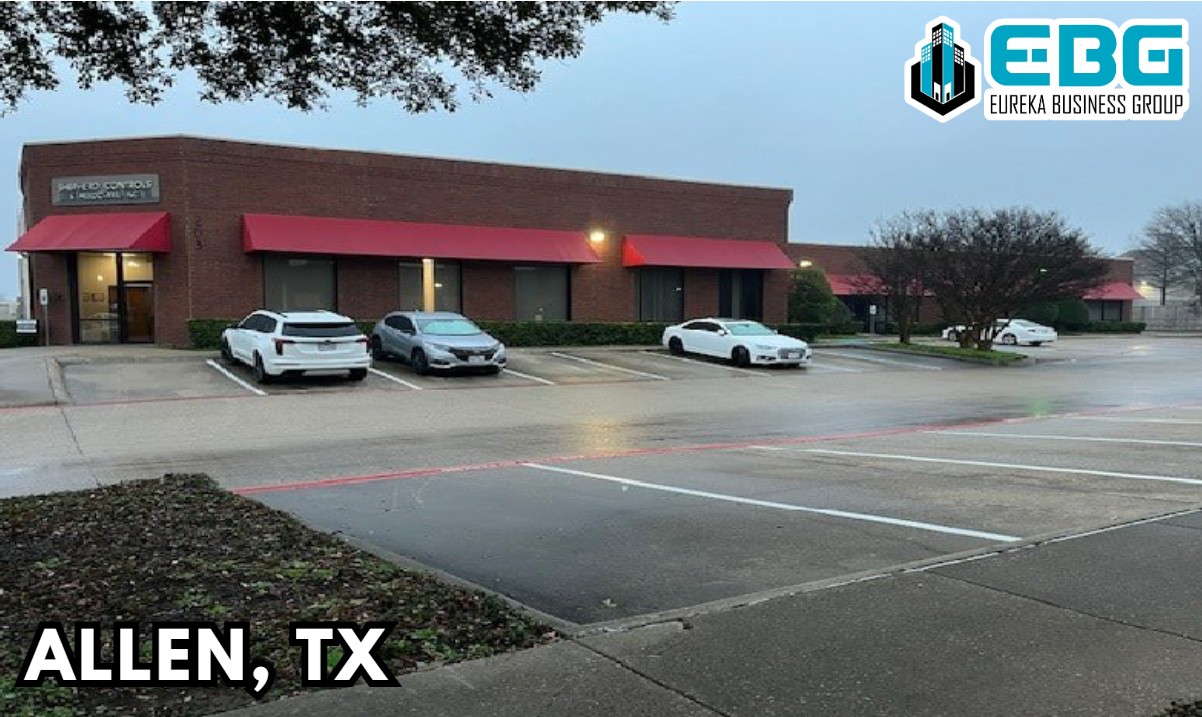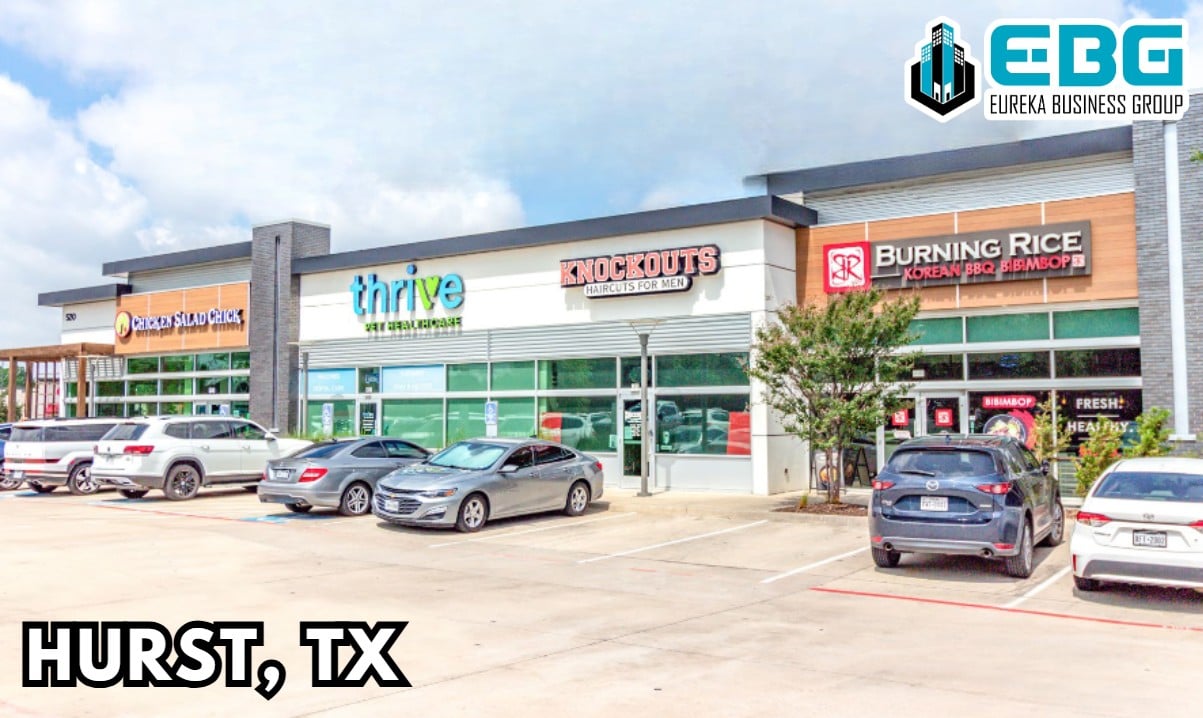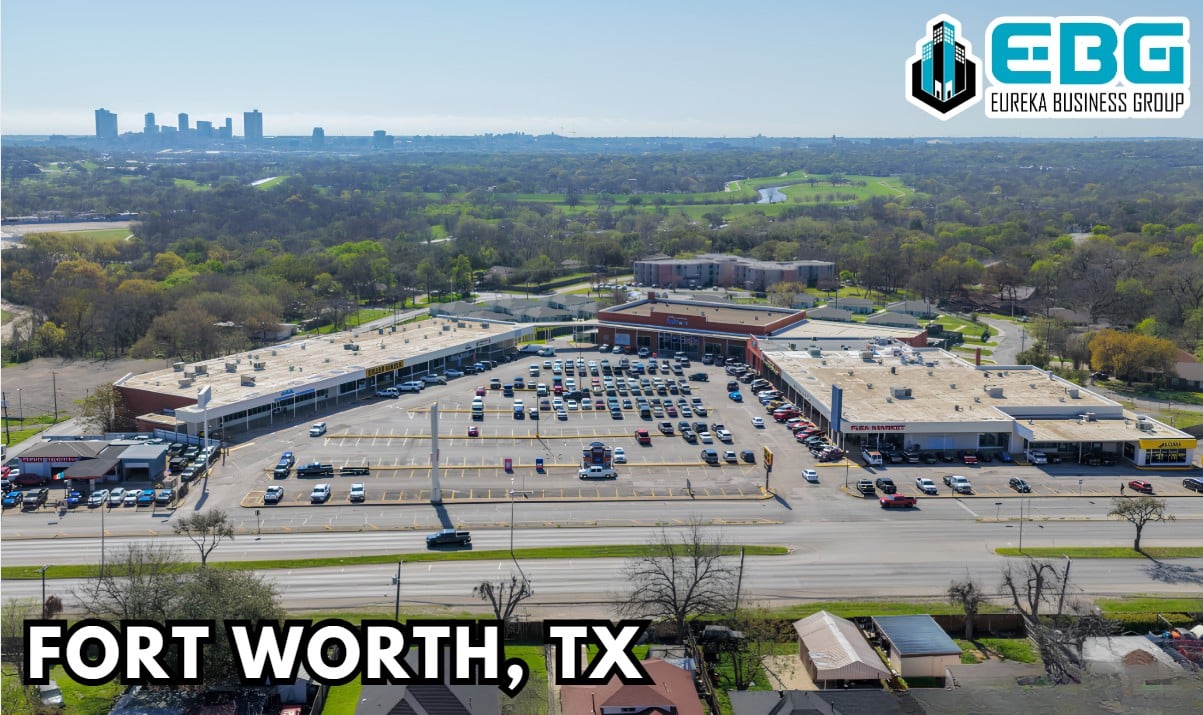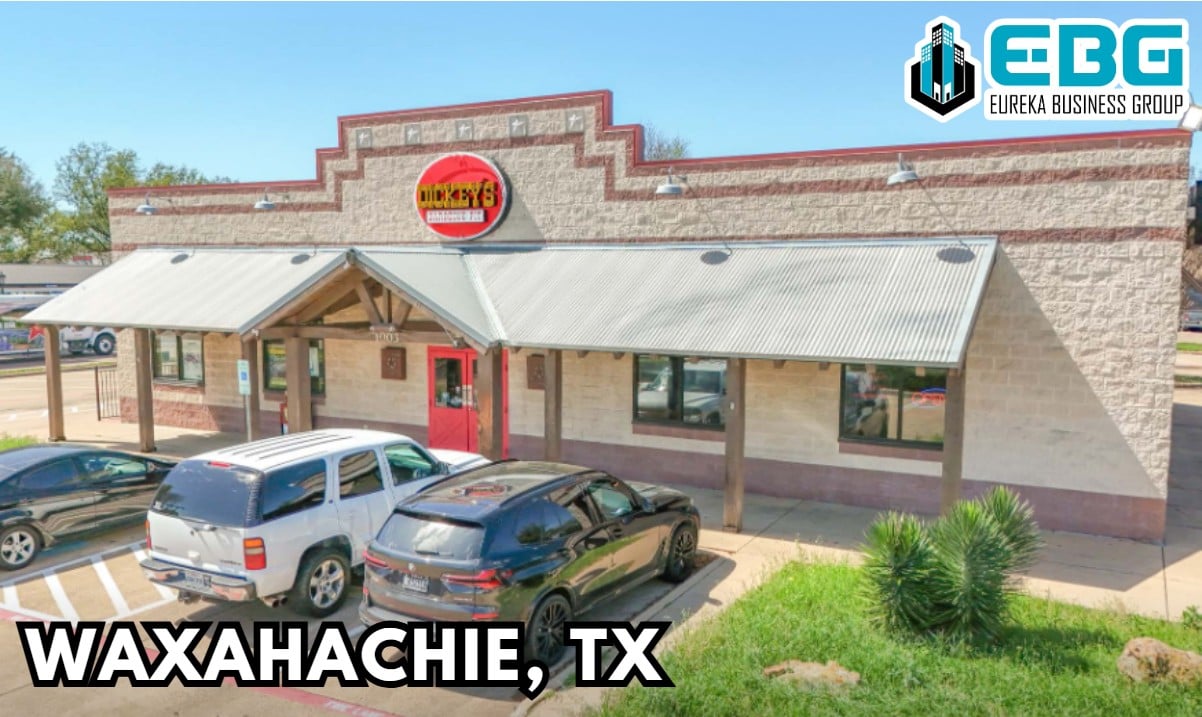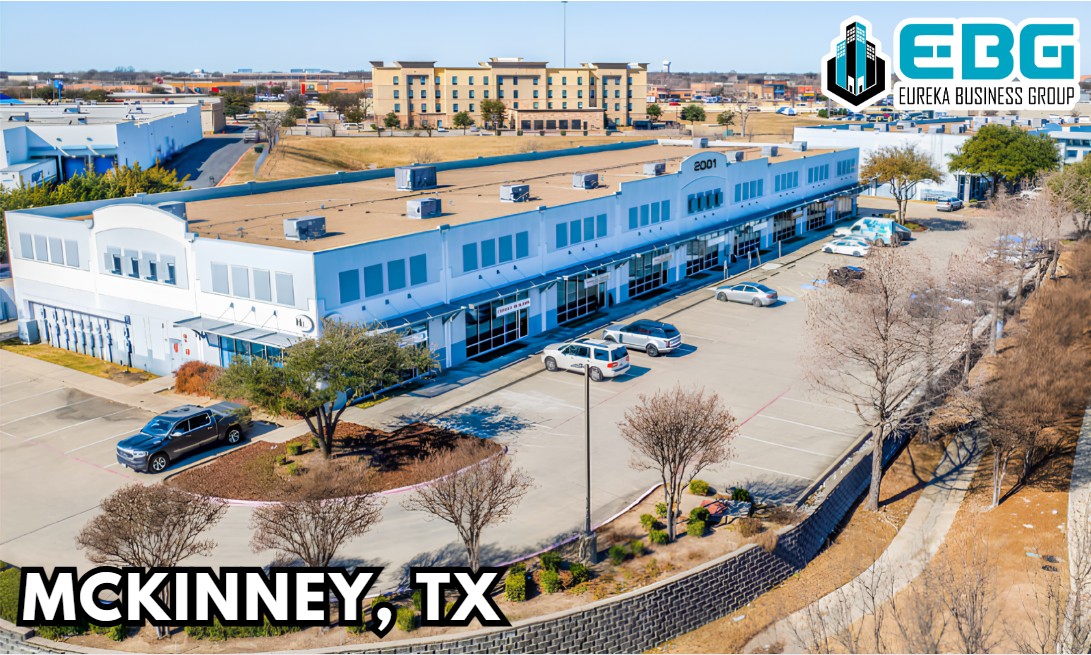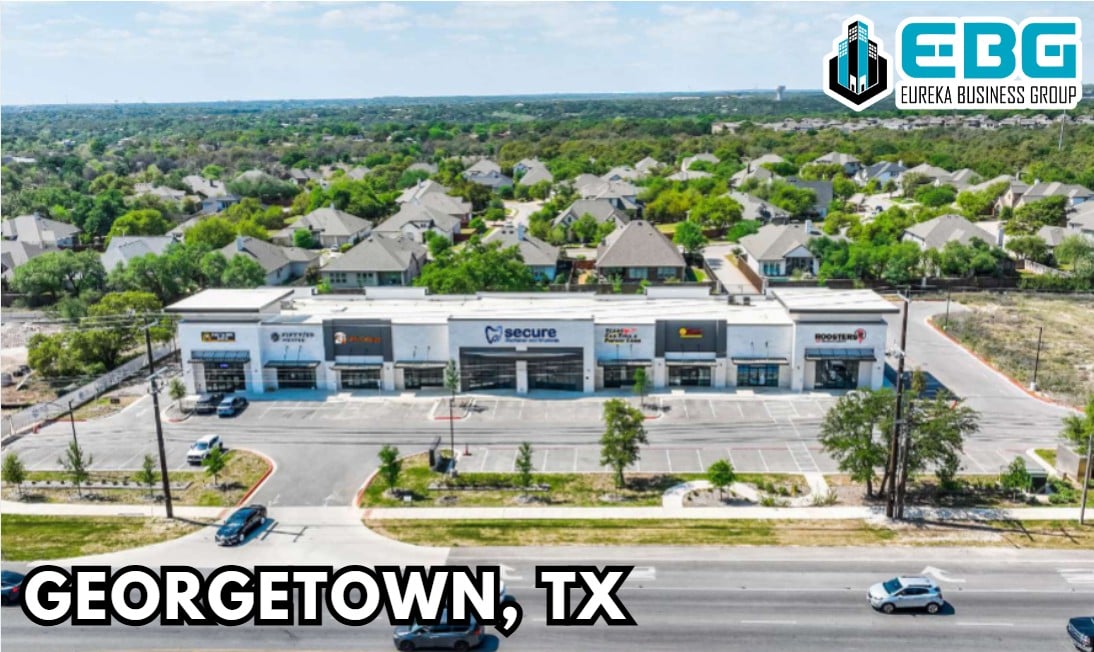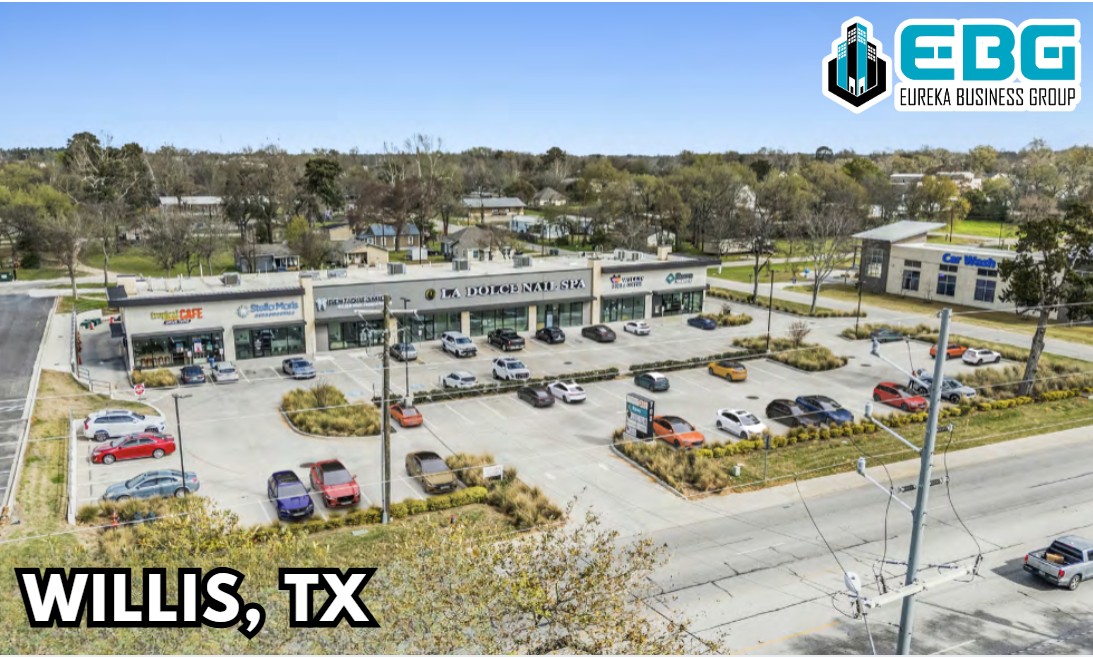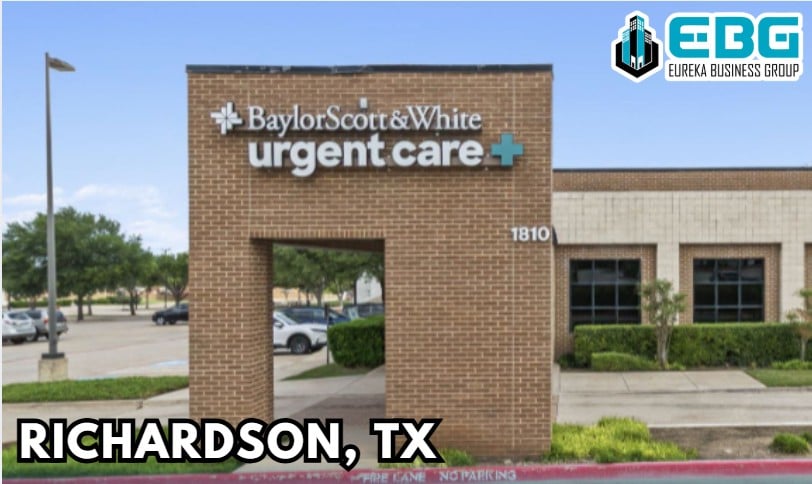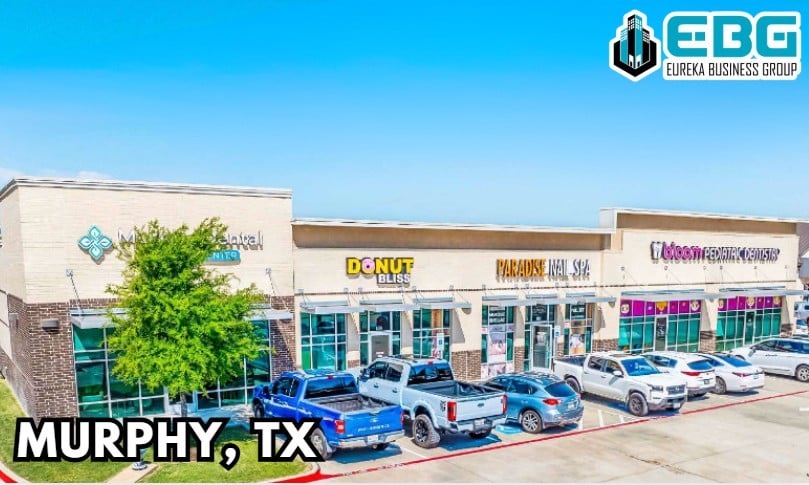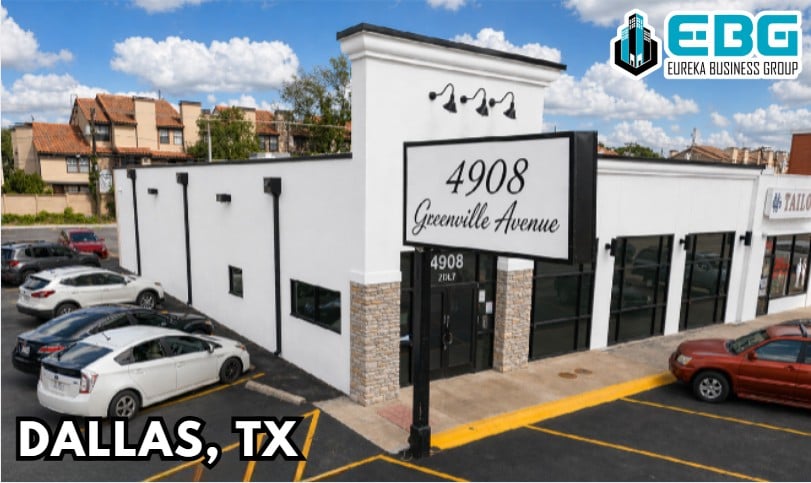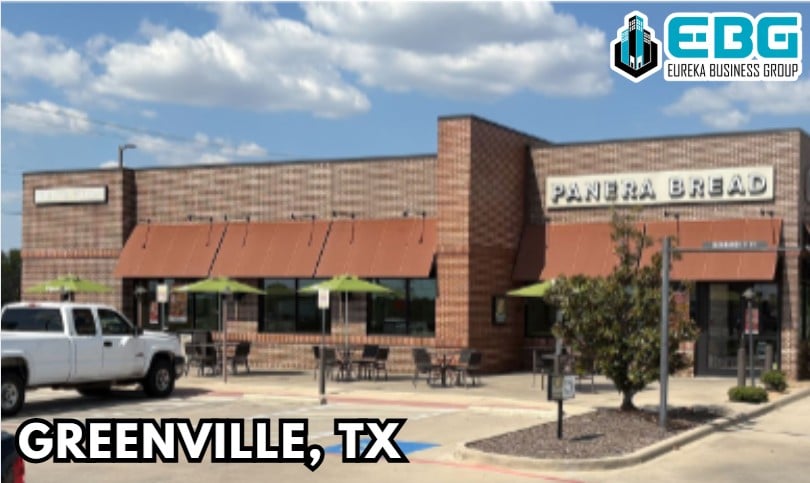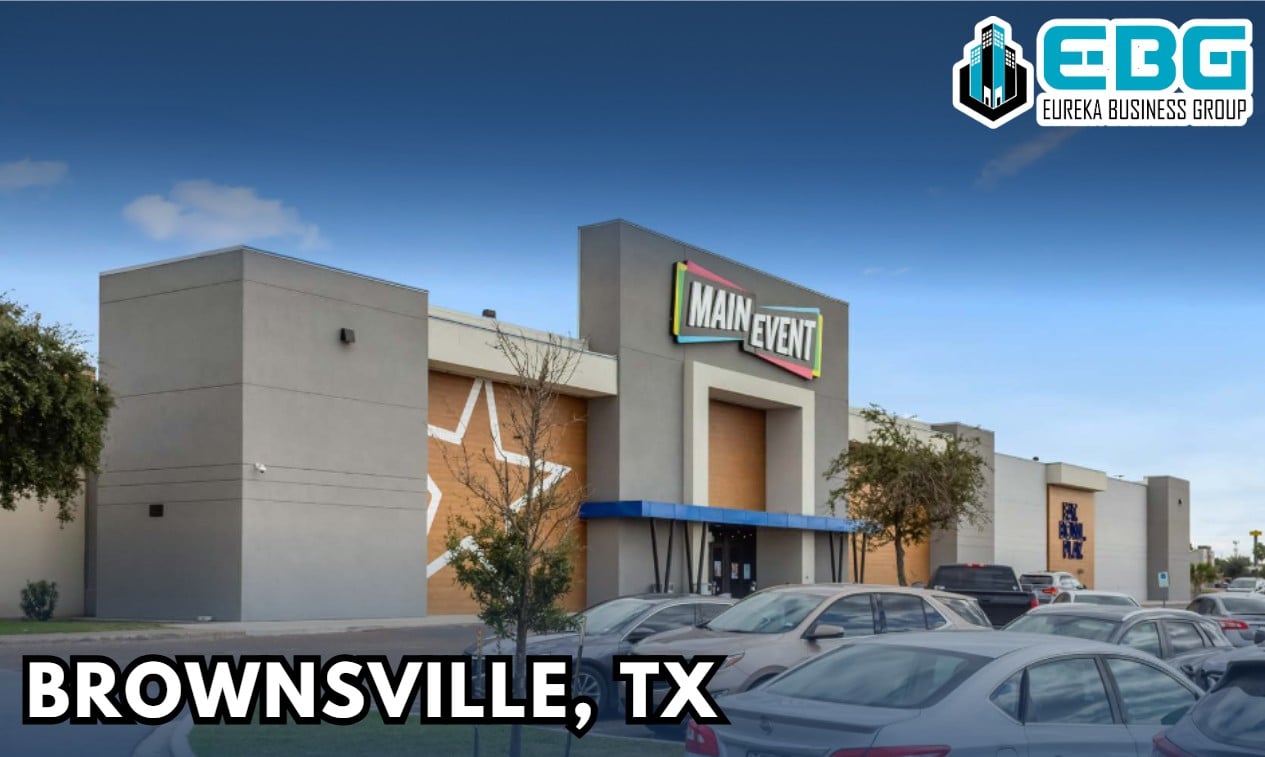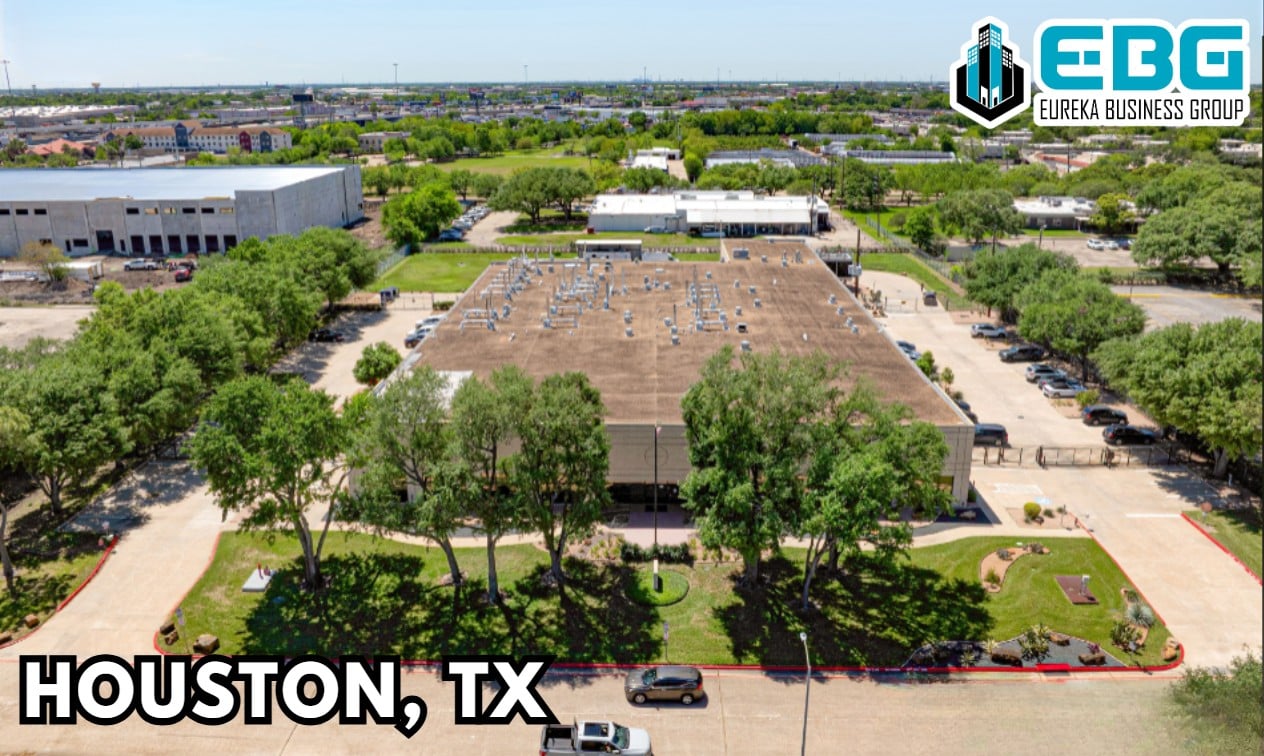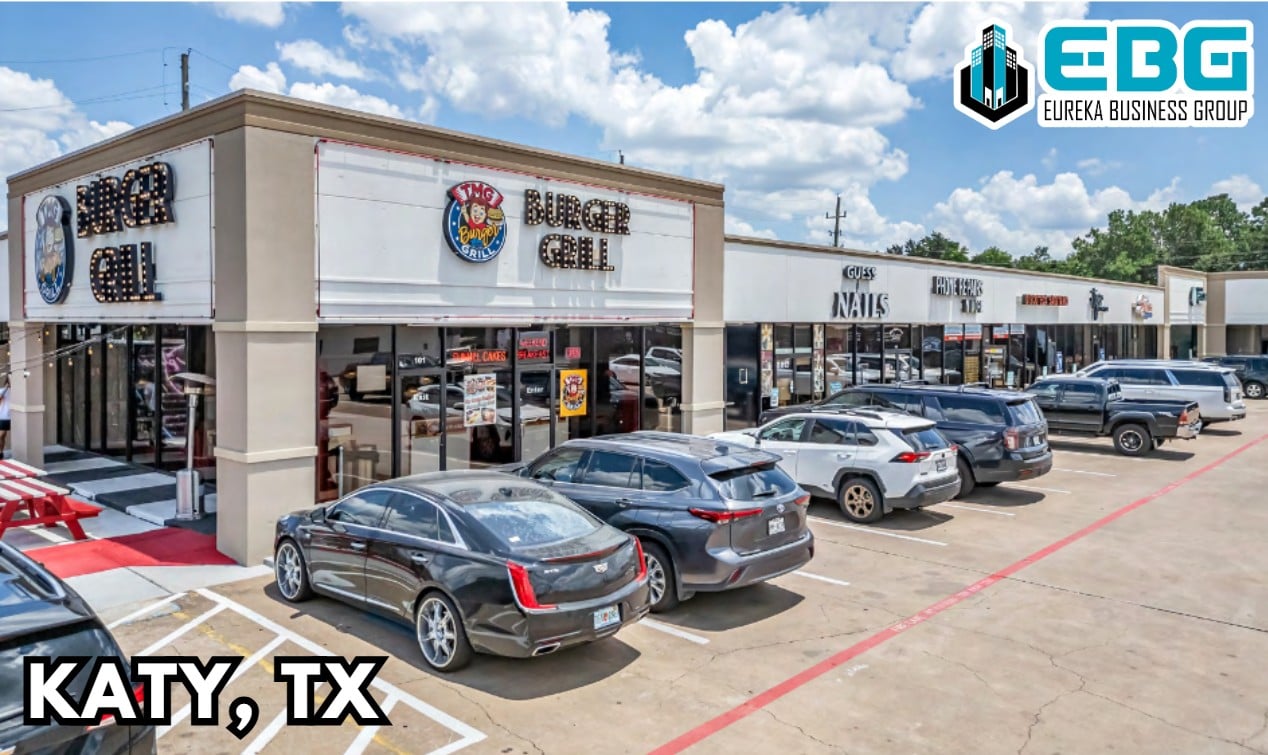

EBG Listings of The Week 12-27-2025

EBG Listings of The Week

December 27, 2025


This is the last email for 2025 and what a year it’s been! Retail & Industrial real estate did really well, some Medical performed as well while Multifamily and Office continue to struggle. 

I wanted to take a moment and thank you for being a part of our investors community and promise to keep adding value in any way that I can!
In the next couple of weeks I will create a 2026 projections video to share my thoughts about where the market is going and what will be the best strategy for this year so stay tuned! If you have any specific subjects. markets or asset classes you’d like me specifically address, feel free to email or message me and I’ll be sure to include that in the video.

As we do every week, we took time and reviewed all the commercial listings that came on the market and curated this hand-picked list representing the top opportunities we identified as the best value.

If you wanted to keep up to date on retail real estate news, we have a LinkedIn Newsletter you can subscribe to.


Did you know you can LISTEN to this email?

Under $2M

Eureka Business Group: Your Retail Navigator; Charting the Course for Retail Growth!

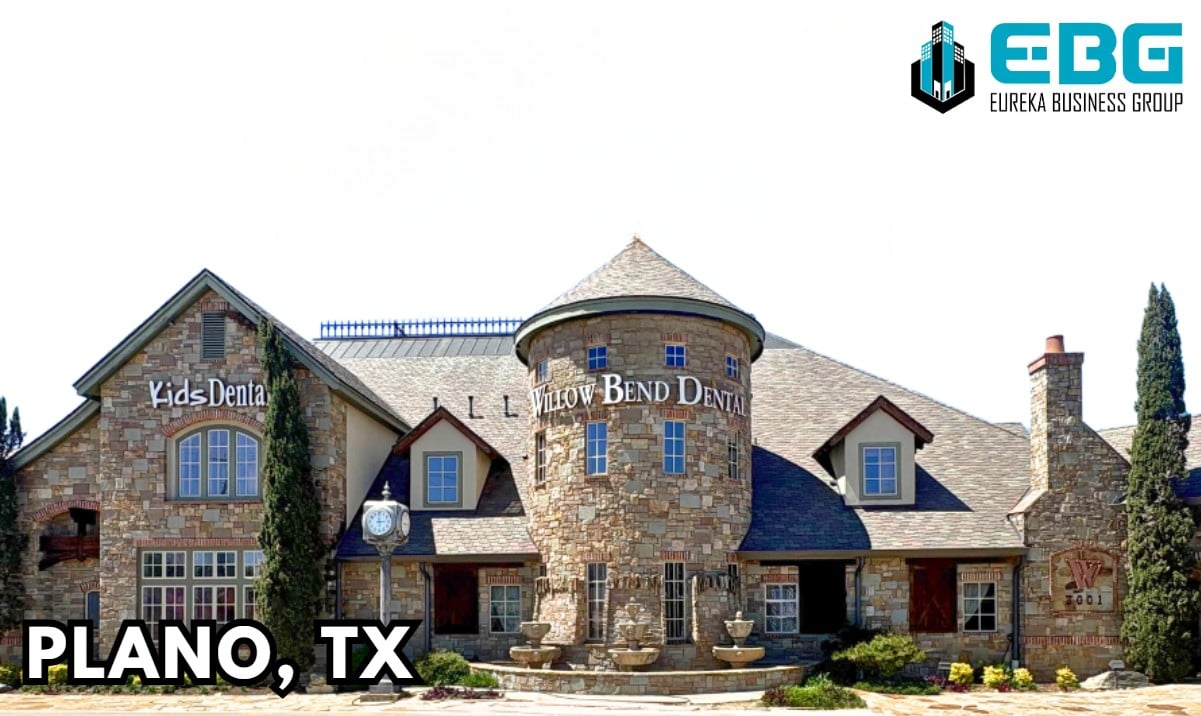
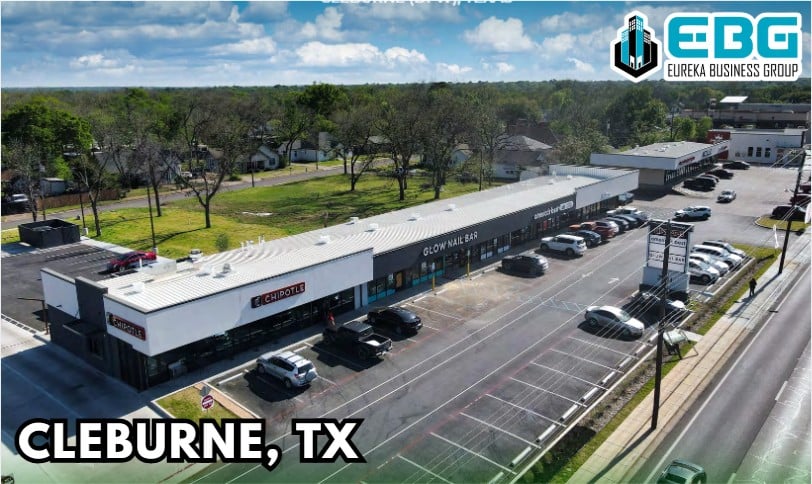
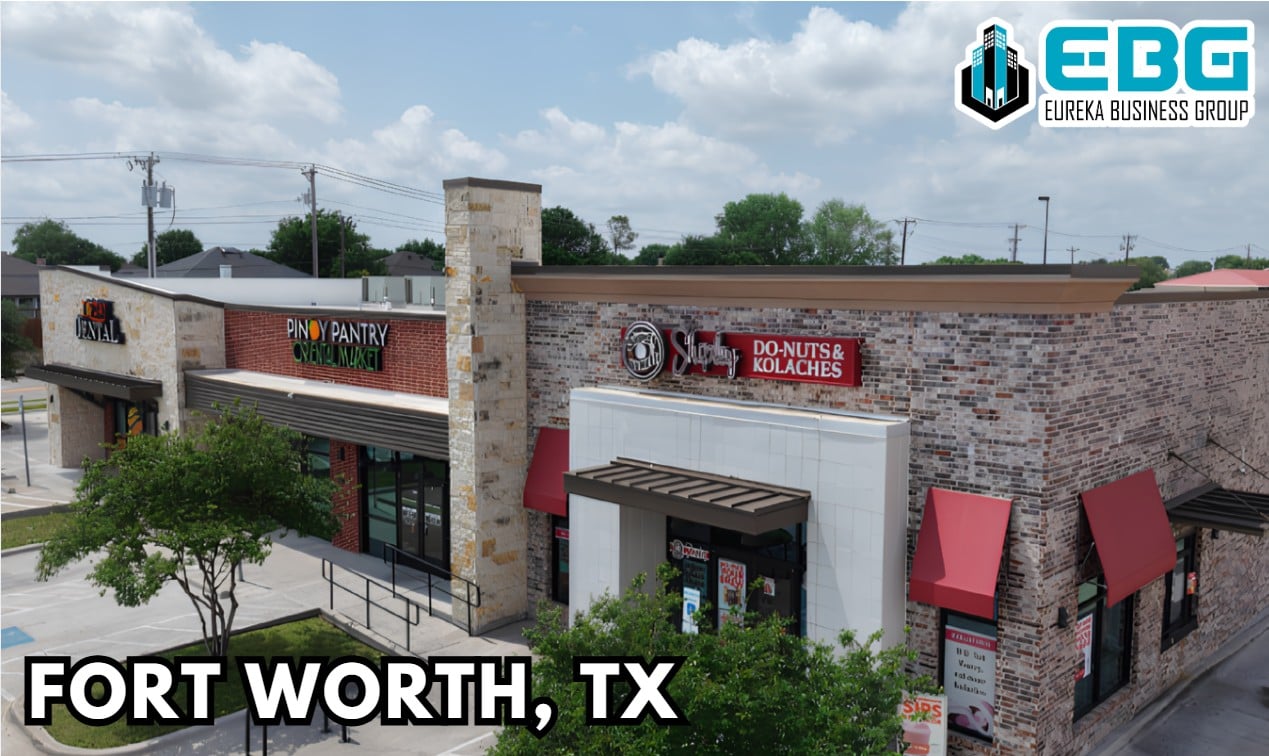
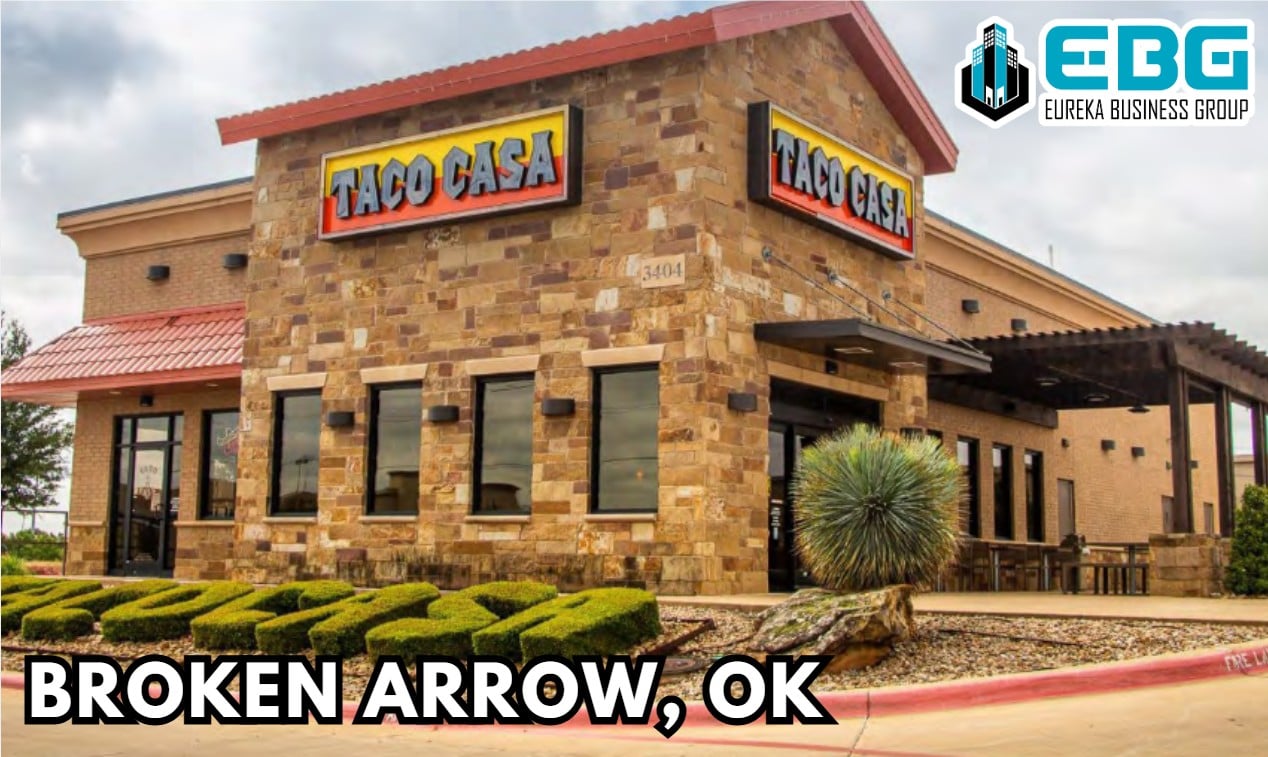
10,020 SF Single Tenant Retail

Why we like it:

* Corporate-guaranteed 
* Strong reported store sales
* Attractive 8.5% cap rate
* Near Walmart, Home Depot & Abilene Mall
* Recent roof & tenant improvements

Eureka Business Group: Your Retail Navigator; Charting the Course for Retail Growth!

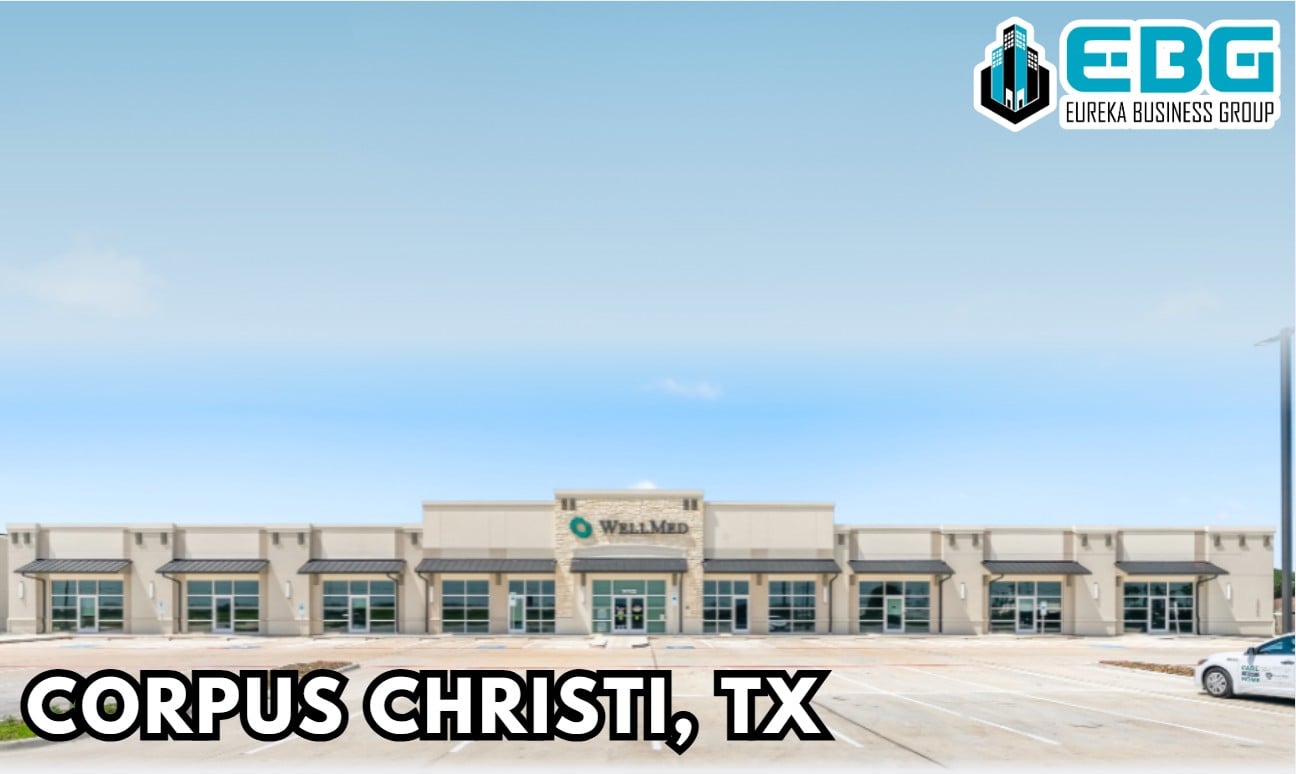
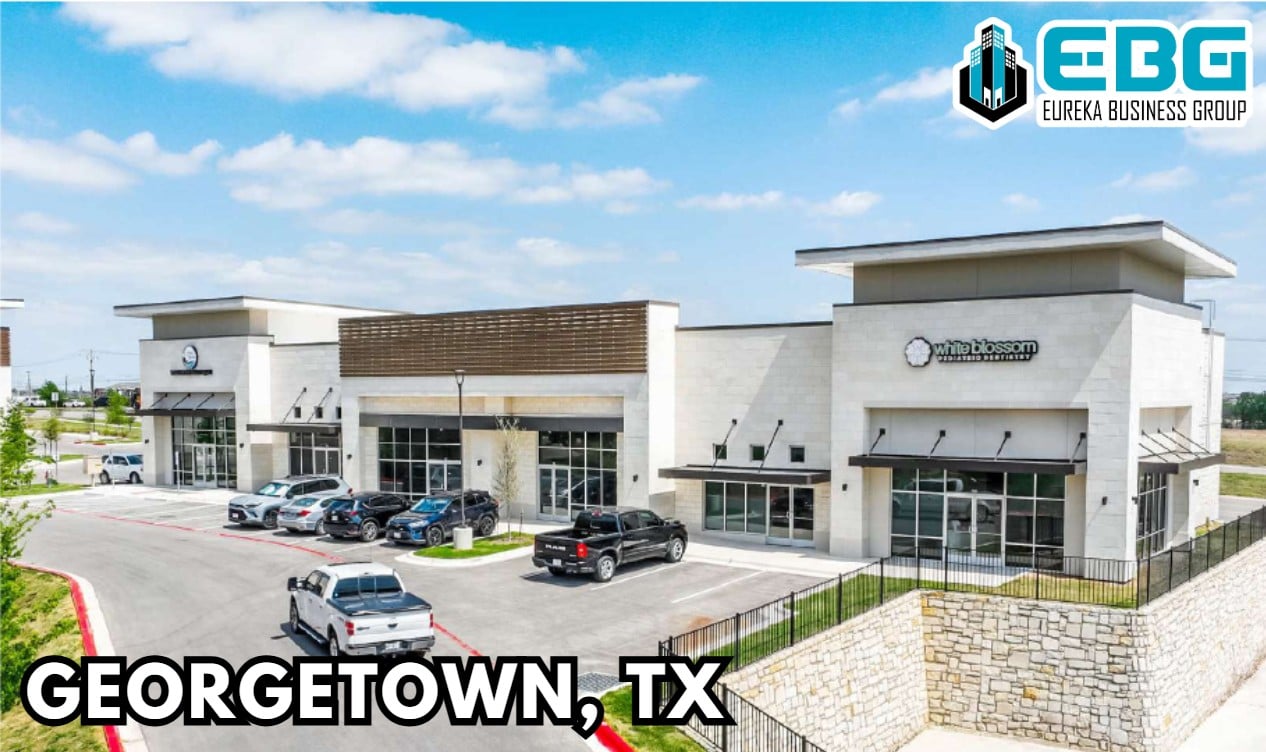
2,900 Medical/Office

Why we like it:

* Two combined units
* Can lease part or all
* Selling well Below county assessed value!
* Owner financing available
* Exclusive EBG Listing

Eureka Business Group: Your Retail Navigator; Charting the Course for Retail Growth!

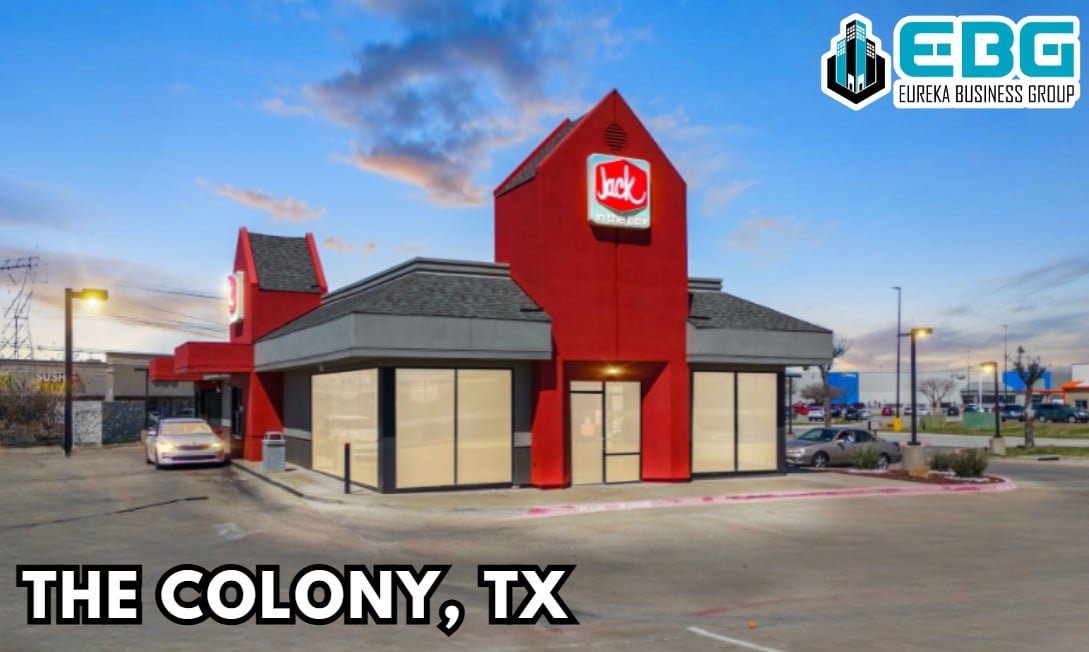
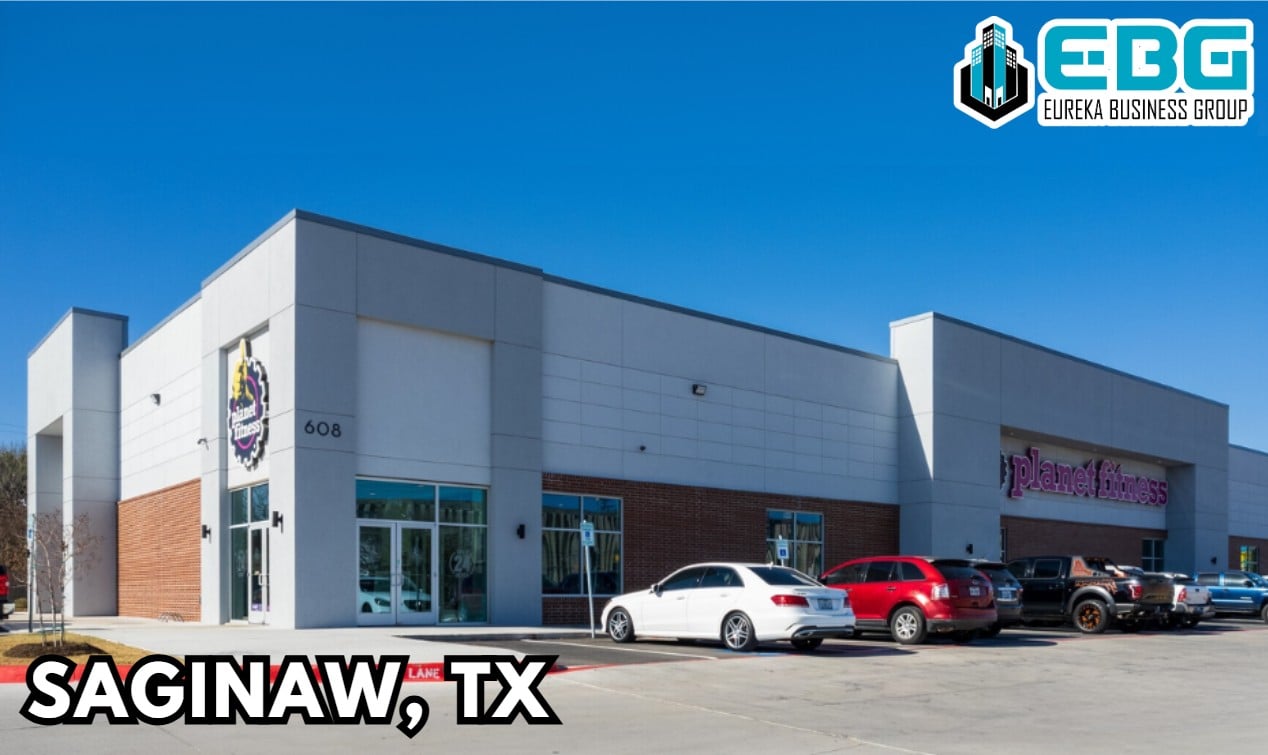
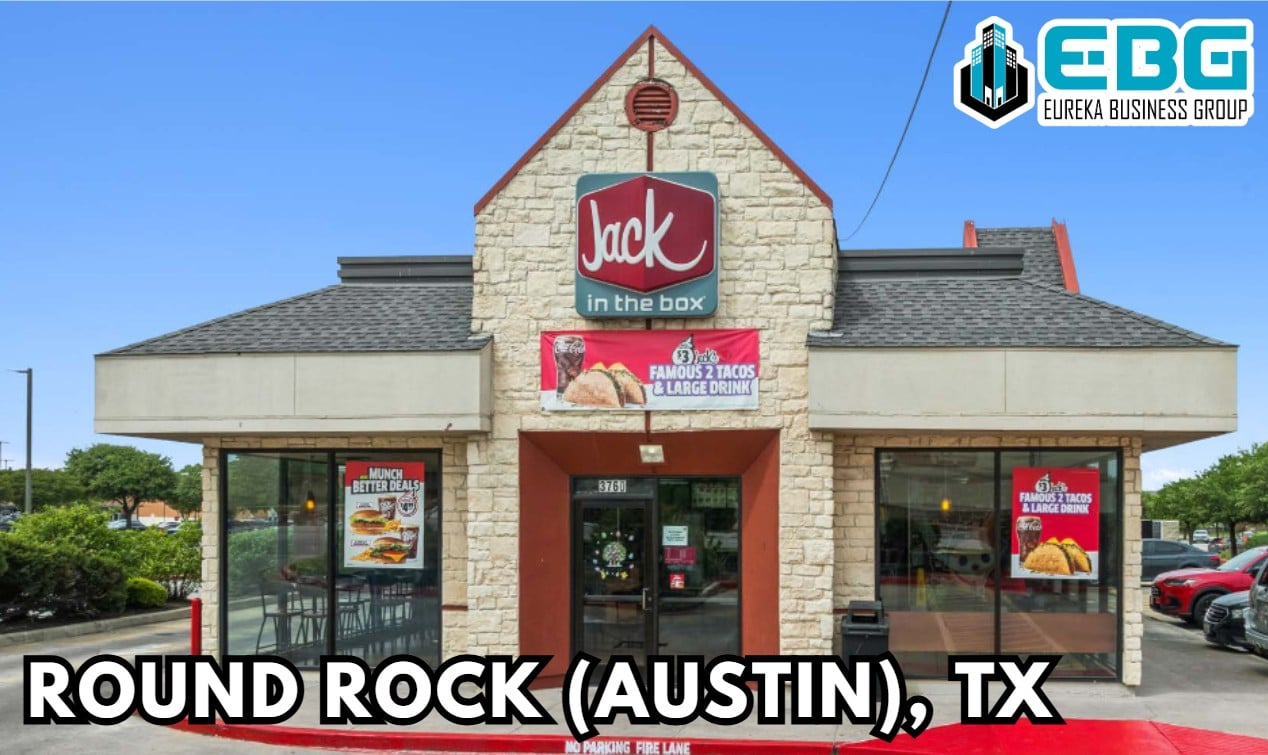
2,650 SF Single Tenant QSR

Why we like it:

* Absolute NNN
* zero landlord responsibilities
* ±14 years remaining + extension options
* Strong visibility on main retail corridor

Eureka Business Group: Your Retail Navigator; Charting the Course for Retail Growth!

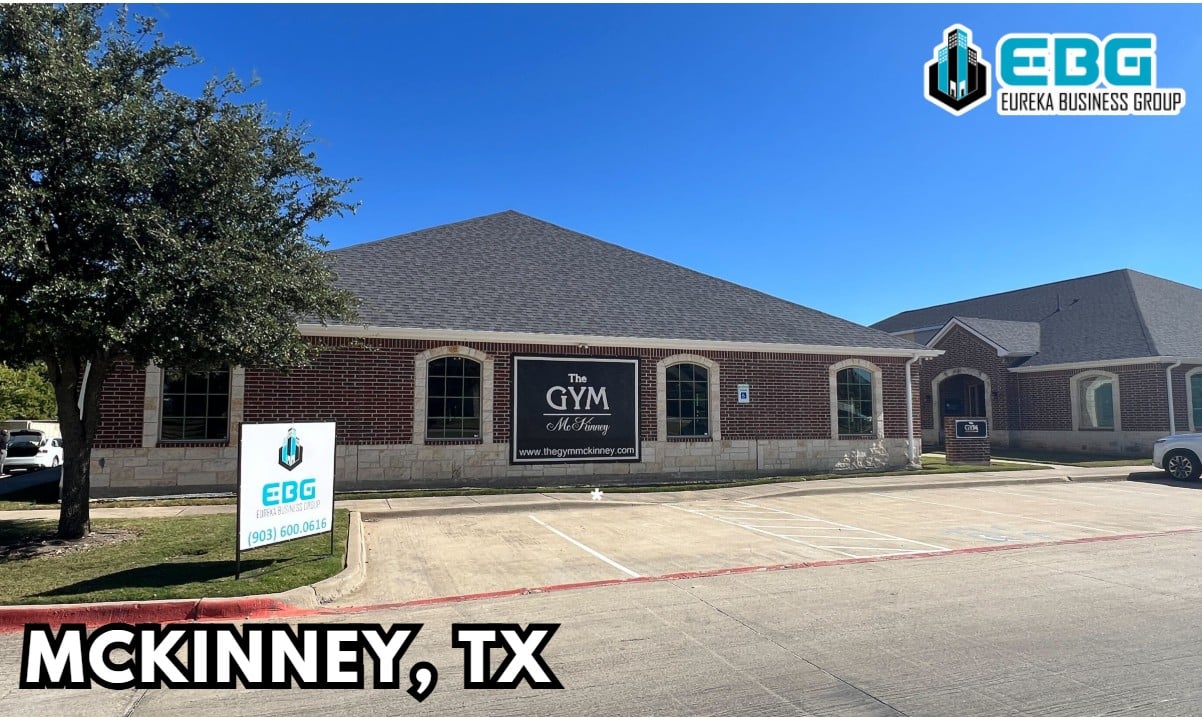
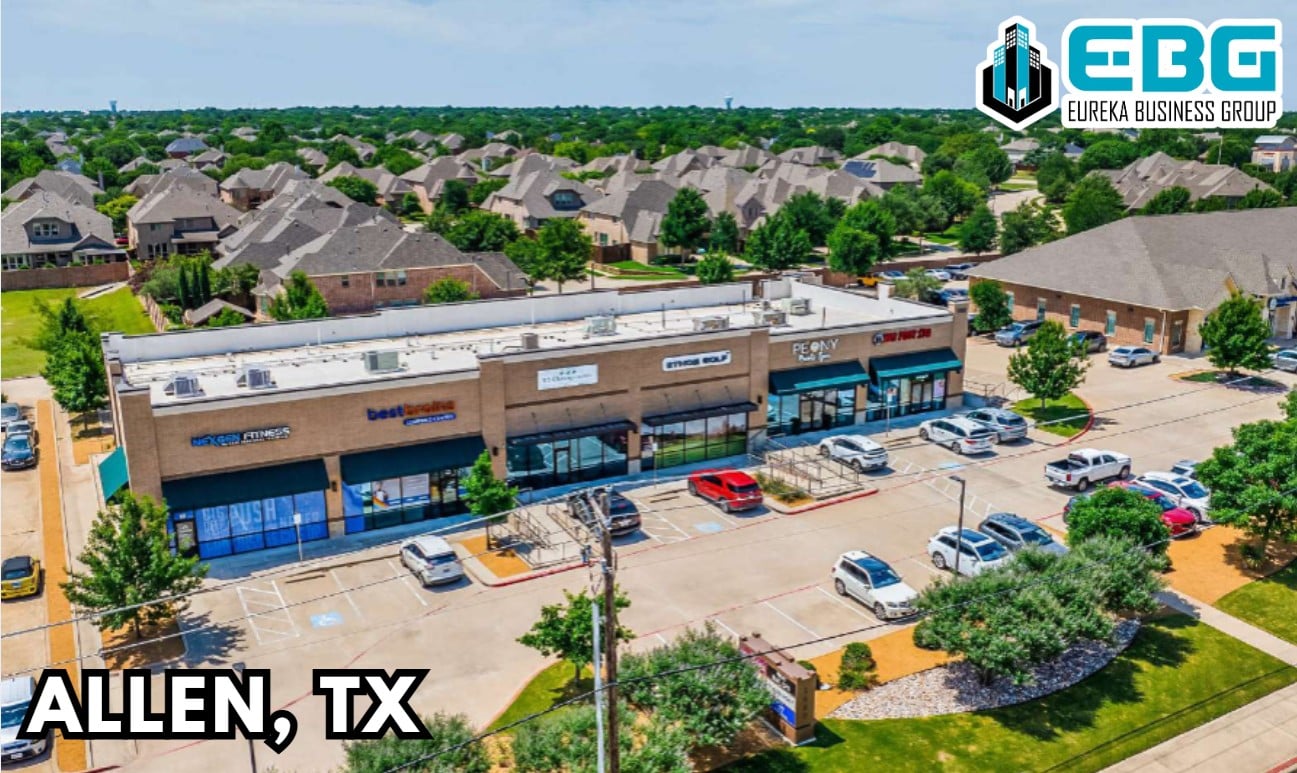
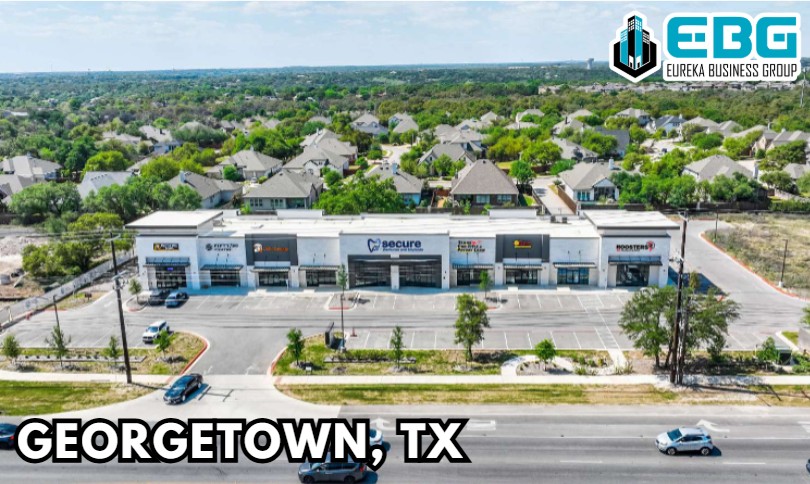
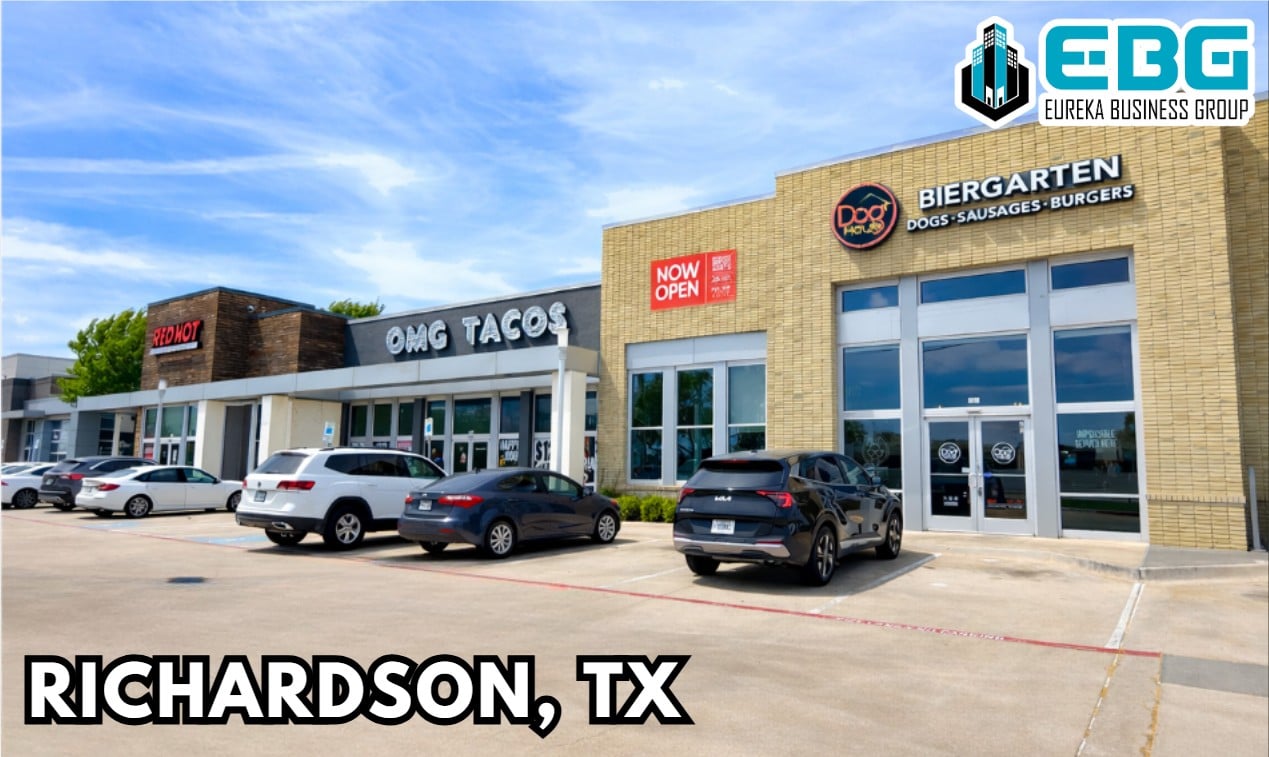
1,250 SF Retail Condo

Why we like it:

* Strong surrounding income & growth
* Owner-user or investor opportunity
* Newer construction (2020)
* Vacant!

Eureka Business Group: Your Retail Navigator; Charting the Course for Retail Growth!

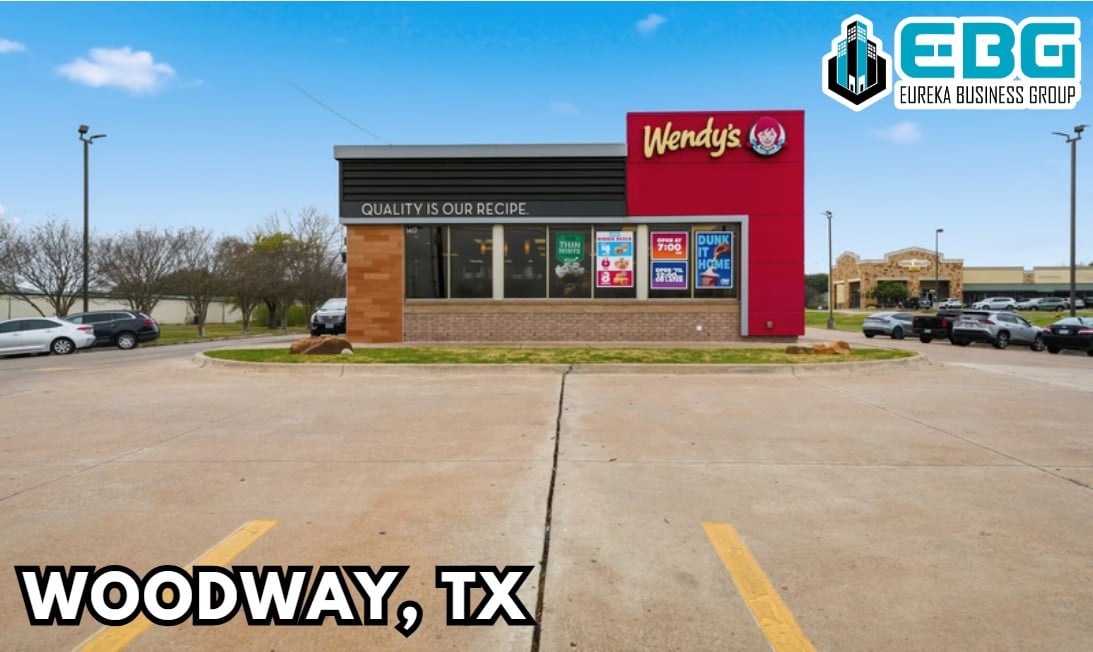
3,240 SF Single Tenant QSR

Why we like it:

* Brand-new 20-year NNN lease
* Guaranteed by 13-unit operator
* Recently renovated (2021)
* Main thoroughfare location

Eureka Business Group: Your Retail Navigator; Charting the Course for Retail Growth!

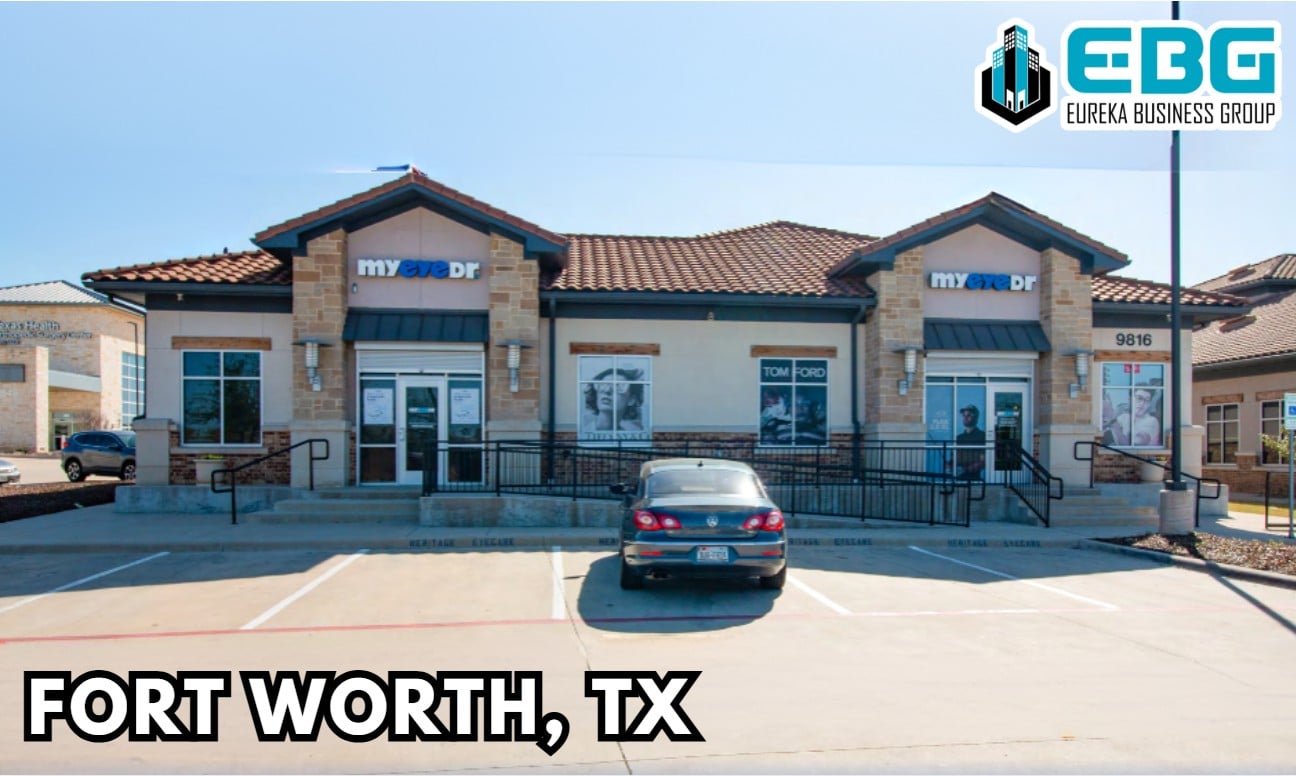
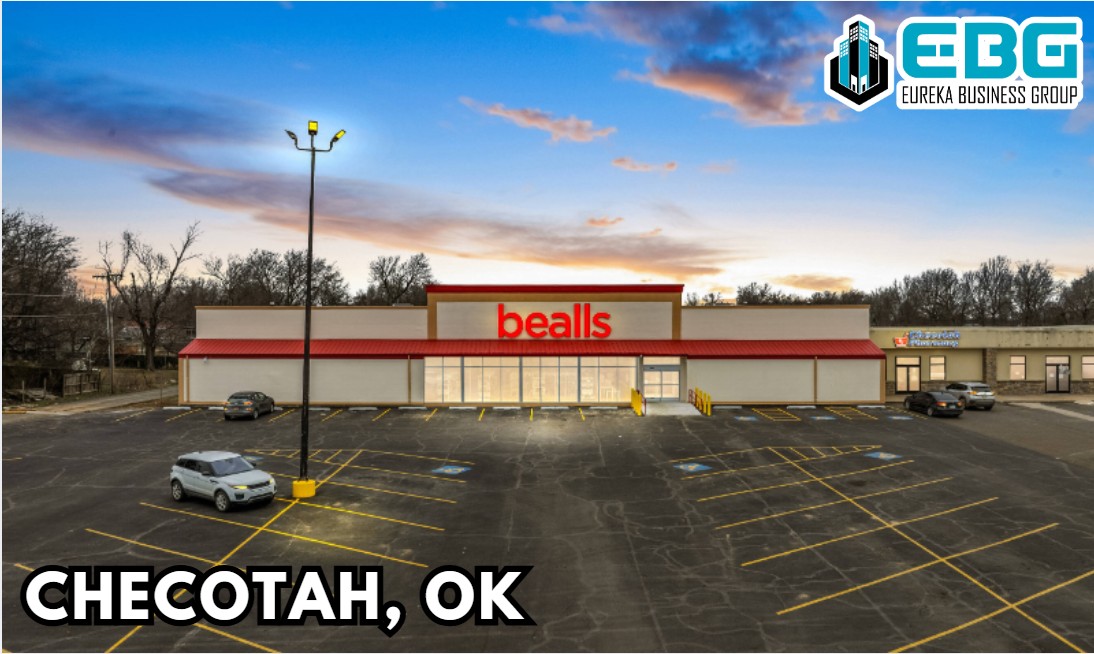
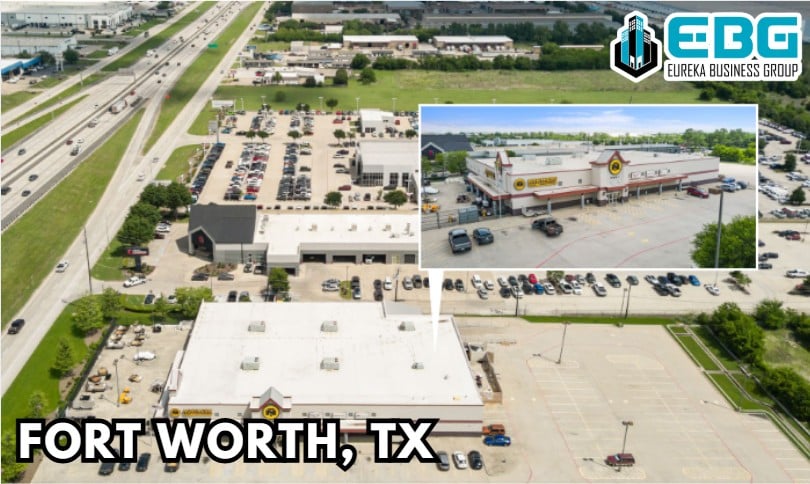
13,787 SF Single Tenant Retail

Why we like it:

* New 10-year corporate lease
* Multiple renewal options
* Rent increases built into lease
* Located in Fort Worth MSA growth path

Eureka Business Group: Your Retail Navigator; Charting the Course for Retail Growth!

25,000 SF Self-Storage

Why we like it:

* Built in 2022 = minimal capex
* 7.58 acres, expansion upside
* Opportunity Zone
* Underserved storage market
* Value-add lease-up potential

Eureka Business Group: Your Retail Navigator; Charting the Course for Retail Growth!

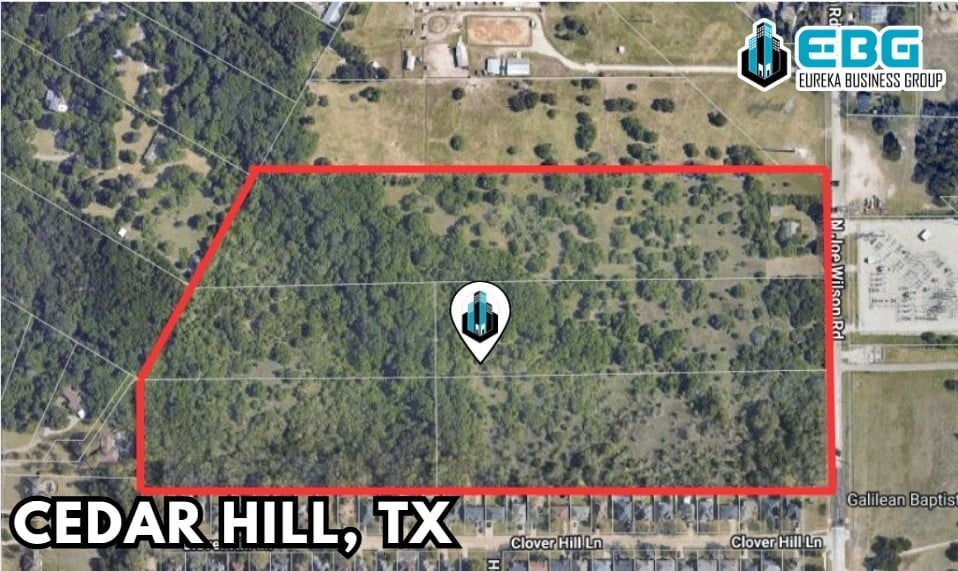
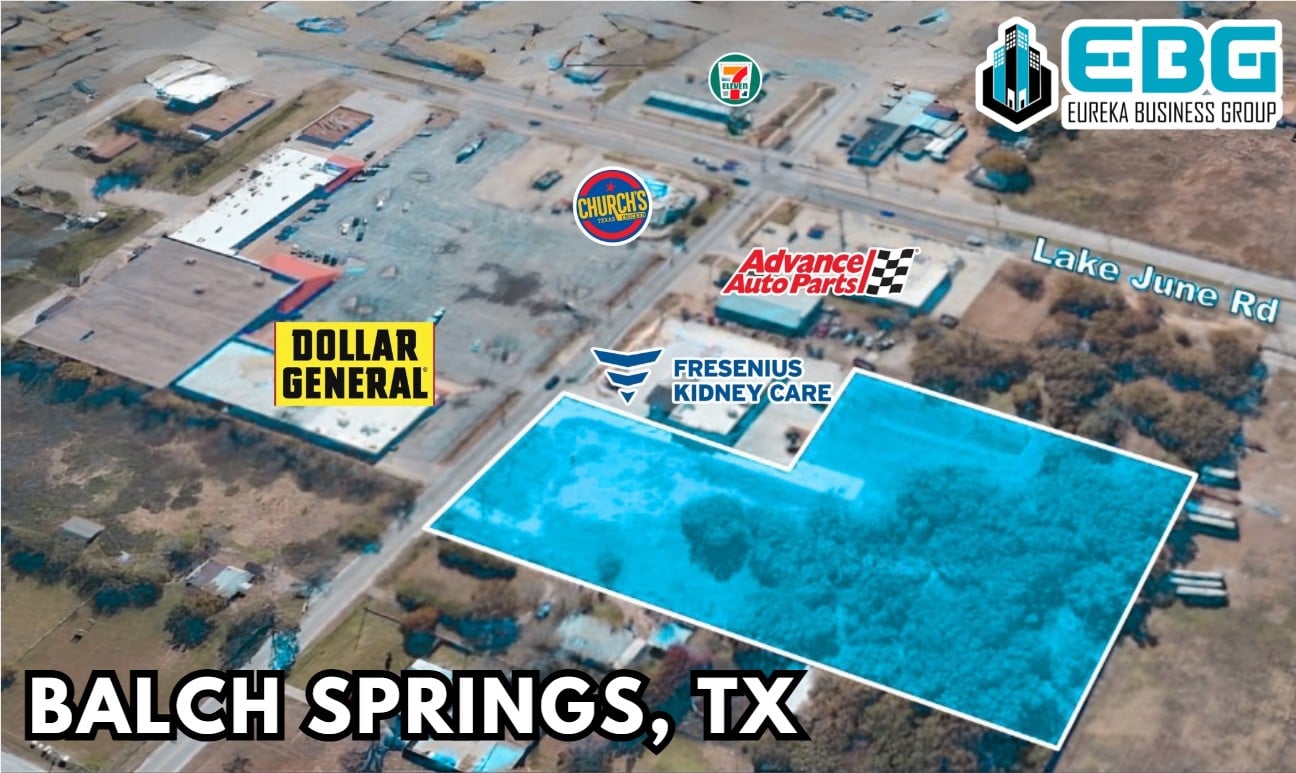
15 AC Vacant land

Why we like it:

* Zoned: SFE
* High School and Middle School Next Door Traffic & Visibility
* Subdivision Development Potential Or Build a Generational Estate

* Exclusive EBG Listing

Eureka Business Group: Your Retail Navigator; Charting the Course for Retail Growth!

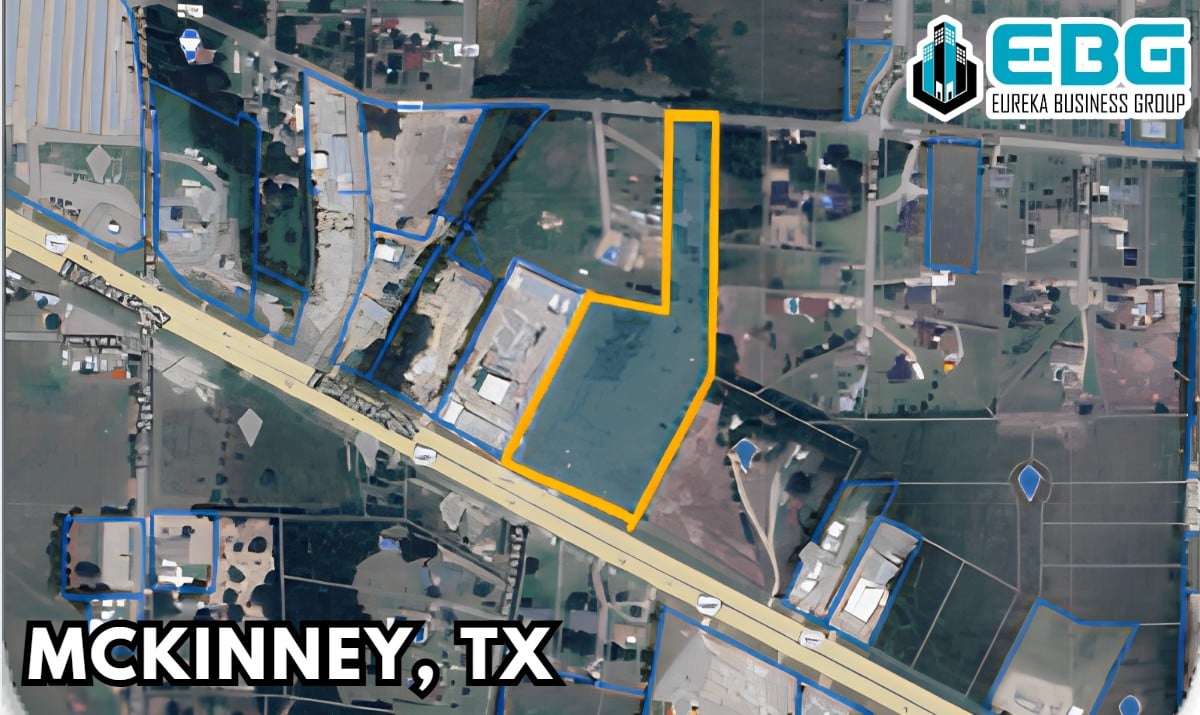
15 AC Vacant land

Why we like it:

* Zoned: SFE 
* Strong Belt Line Rd Traffic
* Adjacent To Commercial Properties, Potential For Re-Zoning

* Exclusive EBG Listing

Eureka Business Group: Your Retail Navigator; Charting the Course for Retail Growth!

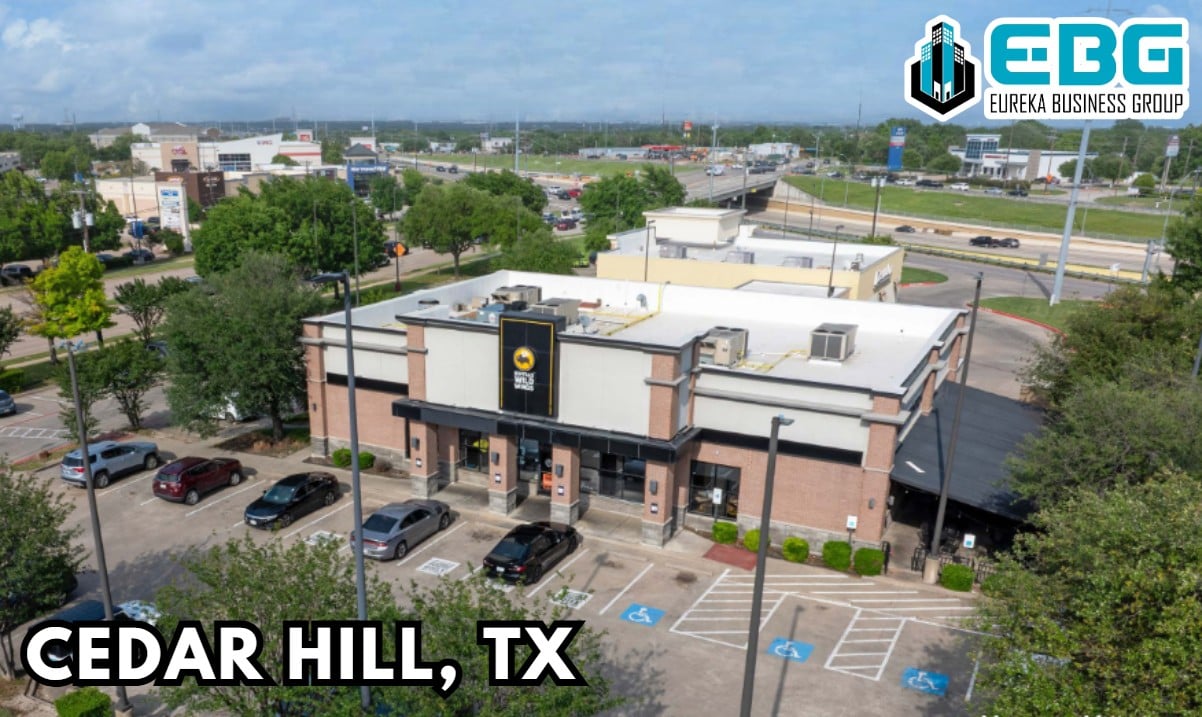
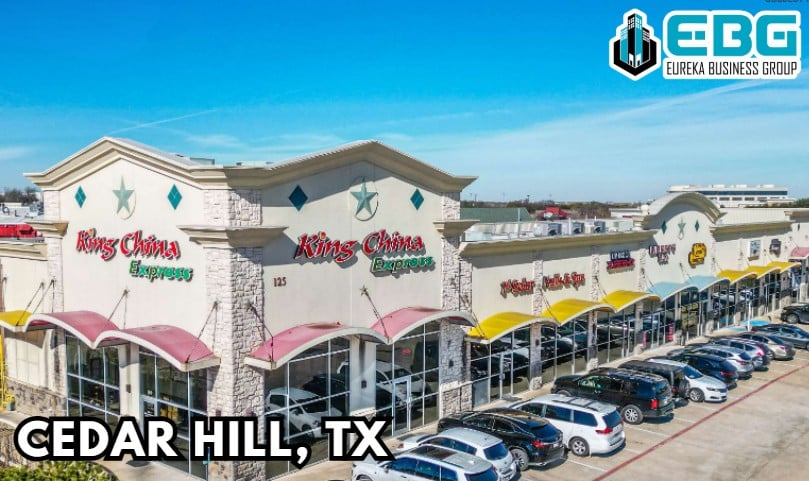
 33,886 SF built on 5.585 AC

Why we like it:

* Zoned: OT-Res (Old Town -Residential)
* Located In The Heart Of Cedar Hill Future Growth Path!
* Multifamily, BTR, Townhomes, Mixed-Use, & Vertical Development Potential

* Exclusive EBG Listing 

Eureka Business Group: Your Retail Navigator; Charting the Course for Retail Growth!

2.20 AC Mixed Use Land

Why we like it:

*Mixed-use zoning

* 320′ Gus Thomasson frontage
* Up to 84 apartments + retail possible
* City supports corridor redevelopment efforts
* Owner financing available

* Exclusive EBG Listing

$2M-$5M

Eureka Business Group: Your Retail Navigator; Charting the Course for Retail Growth!

37.807 AC Residential Land

Why we like it:

* CHISD Asset Sale
* Sealed Bid Opportunity
* Zoned Residential
* Exclusive EBG Listing

$5M-$10M

Eureka Business Group: Your Retail Navigator; Charting the Course for Retail Growth!

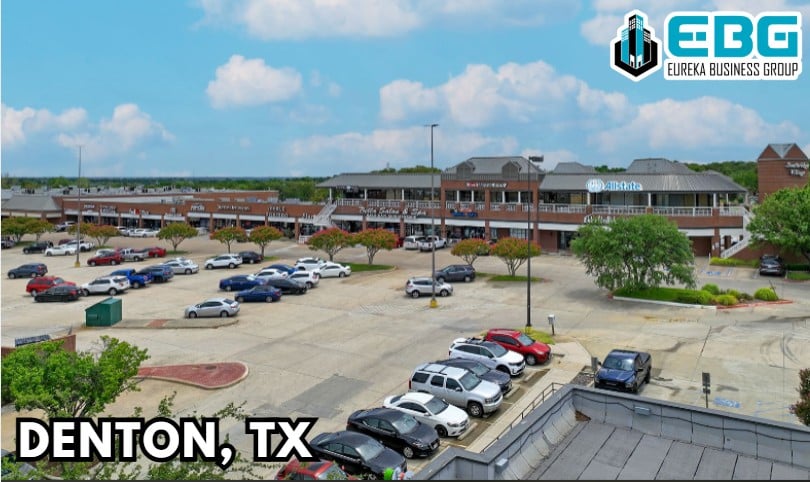
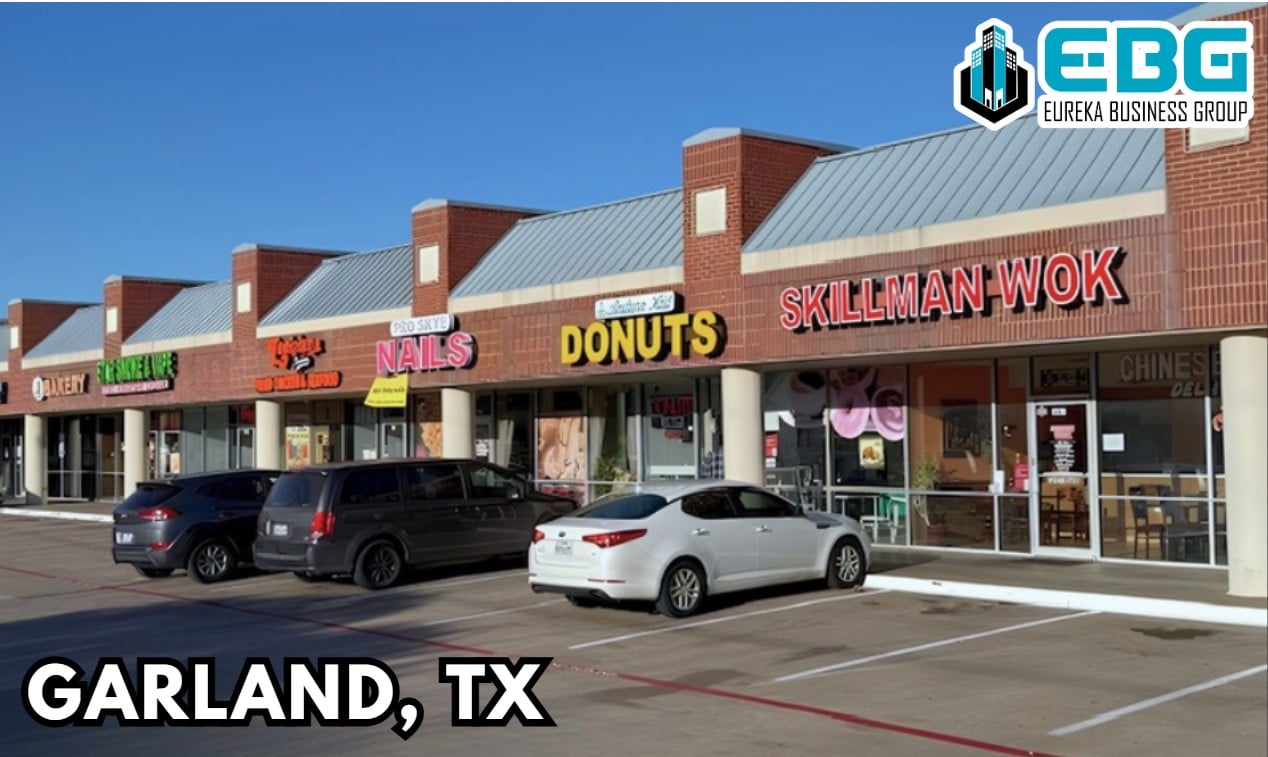
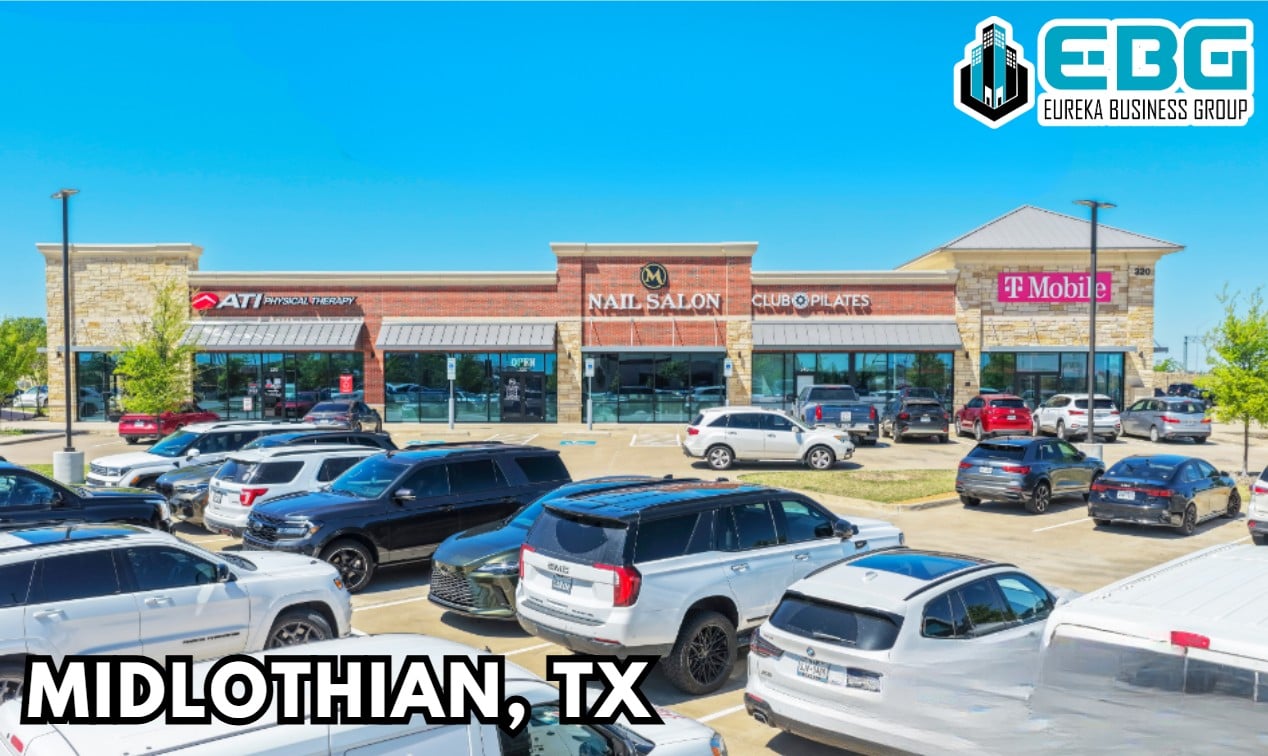
19,858 SF Retail Center

Why we like it:

* 100% leased
* Strong daily traffic on Hwy 121 (≈140,000 VPD)
* Located in dense, high-income DFW trade area

Eureka Business Group: Your Retail Navigator; Charting the Course for Retail Growth!

59,236 SF Retail Center

Why we like it:

* 100% leased 
* National anchors
* 7.22% cap rate
* High-traffic corridor
* Houston-area growth market

Eureka Business Group: Your Retail Navigator; Charting the Course for Retail Growth!

CRE News 12/26/2025

Listen to this week’s hottest Commercial Real Estate News on our podcast

Featured Video

Eureka Business Group: Your Retail Navigator; Charting the Course for Retail Growth!

Joseph Gozlan, Managing Principal

Eureka Business Group

joseph@ebgtexas.com

(903) 600-0616

About Us

Eureka Business Group: Your Retail Navigator; Charting the Course for Retail Growth!

Established in 2008, Eureka Business Group is a full-service commercial real estate brokerage. We specialize in guiding retail investors, retail leaders, franchisees, and business owners through the complexities of retail commercial real estate in the Dallas-Fort Worth market. Whether you’re a seasoned investor, a franchisee ready to expand, or a first-time tenant, we provide expert solutions tailored to your unique goals.

Read More…

Eureka Business Group: Your Retail Navigator in DFW Commercial Real Estate

Sign Up Here

Be the first to learn about lucrative commercial real estate investment opportunities in the DFW market pre-vetted by our CRE experts!

Eureka Business Group: Your Retail Navigator, Charting the Course for Retail Growth!
Read More

Commercial Real Estate News – Week of December 26, 2025

Commercial Real Estate News – Week of December 26, 2025

Click below to listen: 

Transcript:

 If you’ve been following the economic news lately, it must feel like we’re living in, I don’t know, two different realities. It really does. On one hand you have the US economy just performing spectacularly. We’re posting the strongest GDP growth in two years, and it’s all fueled by this massive consumer spending.

Yeah. Holiday sales are expected to break a trillion dollars for the first time ever. Exactly. Okay. But then you look at consumer sentiment and it tells a completely different story. Confidence is down for the fifth straight month, hovering near some pretty recent lows. It is a classic economic paradox, isn’t it?

Right? You have this high velocity spending clashing with just. Deep, deep uncertainty. Right? And that’s precisely why we’re doing this deep dive today. Our mission is to, you know, cut through some of those mixed signals by looking at recent commercial real estate news. Okay. We’re gonna focus specifically on the, I think, surprising resilience of the US retail sector, and crucially how these national trends are really getting amplified in high growth markets like Dallas-Fort Worth, which is still the undisputed leader in overall CRE activity right now.

Still number one. Okay, so let’s unpack this. We have to start with the macroeconomic backdrop, the cost of money, because that tension is defining everything for investors today. Mm-hmm. Let’s look at what’s driving that spending growth. The US economy grew at a really powerful 4.3% annual rate in the third quarter of 2025, and that growth was, I mean.

Overwhelmingly driven by the consumer spending expanded by 3.5%, which is a big jump from the previous quarter. What’s fascinating to me though, is the composition of that growth. It sort of explains why the market feels so mixed. It does. While consumer spending is robust, especially on things like services and experiences.

Business investment growth has really slowed down sharply, right? Yeah. A sharp drop from the prior quarter. And this tells you that while Americans are still out there buying, businesses are pulling back, they’re cautious about the future, pausing, non-essential expansion. And even with all that spending, consumers are clearly anxious.

That’s why we’re seeing the conference board’s confidence score drop again in December down to 89.1. And it’s important to remember that score is based on a 1985 benchmark of 100. So 89.1 is, uh, it’s a significant dip. Concerns about sticky inflation, trade tariffs, federal policy shifts. Yeah, it’s all weighing on people.

And that anxiety translates directly to cost pressures. I mean, look. Annual US consumer inflation has eased a bit from 3% down to 2.7% in November. Okay. But the biggest pain point for households is still shelter. Rents are still up 3% from a year ago. That constant pressure on housing just squeezes the consumer wallet.

It makes that 4.3% GDP growth feel a little less meaningful to the average person. Now on monetary policy, we did see the Fed implement its third consecutive rate cut. That puts the benchmark rate between 3.5% and 3.75%, which was widely welcomed. It’s a signal that the short term borrowing rate is stabilizing in what a lot of people see as, you know, neutral territory.

So if we connect this to the bigger picture for commercial real estate. The narrative gets complex. It does. The Fed is signaling a slowdown in future cuts. Maybe just one more. In 2026, this confirms that the era of ultra cheap sub 4% money is, well, it’s definitively over. So for CRE investors, financing costs are still high.

We’re talking. Mid 6% range for most borrowers, right? And that’s roughly double the rates we saw just a few years ago. It fundamentally restricts who can buy and what they can afford, but the capital markets are showing some signs of life. We saw CMBS issuance, commercial mortgage backed securities.

Surpass $126 billion in 2025. That’s the highest level since 2007. On the surface, that looks like epic market strength, and this is where that theme of selectivity comes in. While that $126 billion figure is massive, it really masks some lingering stress in certain sectors. How so? While that issue in strength is almost entirely fueled by loans tied to say a high quality data centers or prime trophy office assets, mostly in places like New York City.

The majority of BNC class assets, you know, suburban office parks, older retail centers, they’re still struggling to get affordable financing. This higher cost of capital has really favored cash buyers and it’s forced what analysts are calling price discovery. Exactly. Meaning sellers finally had to accept that asset values had to be reset lower to meet this new reality Precisely.

Buyers only came back to the table when the valuations were recalibrated. It shows that high rates didn’t shut down the market. They just forced a major, and frankly, a healthy correction. So it demands a much more selective and capital rich approach, which is why we’re seeing is such a clear bifurcation in performance.

Okay, let’s transition that into the retail sector itself, because this is where that consumer paradox really plays out low confidence. Yet, holiday spending is tracking about 4% ahead of last year. It’s a mix, but the key point is that consumers are prioritizing specific types of spending. Online sales were especially strong up almost 8%, but even brick and mortar did well.

Electronics, clothing and accessories both saw growth over 5%, right? When people are concerned about the future, they tend to consolidate spending. It’s either necessities or smaller, immediate rewards like dining out or small luxuries, and that keeps the cash registers humming. The National Retail Federation projected that total holiday spending would surpass a trillion dollars for the first time.

That confirms this underlying resilience and that resilience has translated into better fundamentals for the properties themselves. The outlook for retail property investment is seen improving all through 2026. Building on a strong 2025 where investment volume was already 12% higher than the pre pandemic average.

The main reason for this strength, and this can’t be overlooked, is the supply dynamic. New retail construction just hit historic lows in 2025. How low? We saw less than 43 million square feet started and under 55 million delivered. That’s the smallest annual total since 2007. That supply constraint is the key ingredient, isn’t it?

You have steady consumer demand meeting this historic scarcity in new construction, and that scarcity is driven by the high financing costs and the labor shortages we’ve talked about. It just completely shifts the leverage to landlords for any quality space. Absolutely. Nationally retail vacancy held steady at a historically low 5.8% in Q3, and that scarcity helped push average US Retail rents up almost 2% to a record, $25 and 69 cents in square foot, and that growth was strongest wear.

Unsurprisingly, in the high growth southern markets, they saw a 2.3% increase year over year. And here’s where we see that selectivity playing out in some surprising ways. The return of the mall malls, which everyone had written off for years. We saw 38 single asset mall sales in the first three quarters of 2025.

That matches the total for all of 2024. And big landlords like Simon Property Group are reporting 96.4% occupancy. Very tight, but you have to highlight the difference here. The market is brutally bifurcated. Egg class malls are thriving because they’ve invested in experiences in technology. They attract the right demographics right at the same time.

We saw 13 million square feet of obsolete mall space get demolished in just the first nine months of 2025, 13 million. That’s a huge number. That demolition rate is the clearest signal you can get. Lower tier, poorly located assets are failing and failing rapidly. The market is not lifting all boats. It’s rewarding superior quality.

We’re seeing interesting moves from tenants too. Food and beverage is clearly a priority. Garden restaurants, olive Gardens parent company is ramping up openings. They’re expecting 65 to 70 new locations this fiscal year. They’re citing better than expected sales growth with Olive Garden’s, same store sales up 4.7%, and their story of distress is really a story of bad real estate.

They’re trying to renegotiate these pricey legacy leases from a 2014 sale leaseback deal that were structured way above current market rates and those outdated rigid lease agreements are now dragging down their profitability. It just underscores the risk of poorly negotiated real estate contracts. A good tenant can still fail under a toxic lease.

So let’s bring this focus home. Let’s pivot from the national trends to the market that’s really capitalizing on all this dynamism, Texas and specifically Dallas-Fort Worth. DFWs performance has been well staggering. It kept its number one spot in the U-L-I-P-W-C emerging trends report, and that’s backed by the numbers, nearly $18 billion in investment sales through Q3 of 2025.

And that investment is fundamentally driven by people. The DFW Metroplex has seen a massive 36% population increase since 2010, and that translates into an unprecedented surge in retail development. DFW saw 2.9 million square feet of new retail space delivered in 2025. That’s the highest amount since 2017.

Yearly, double the previous year’s figure. What’s fascinating is that even with that jump in supply demand remains just insatiable for well-located assets, which is why institutional capital keeps chasing those high profile deals. We saw a great example with CTO Realty Growth Selling Shops at Legacy North in Plano.

A prime retail hub in the Dallas area sold for $78 million, and that transaction achieved strong pricing because of significant leasing and stabilized occupancy in a really desirable growing suburb. And this strength isn’t just confined to DFW, is it? We’re seeing institutional capital flow into retail all across Texas.

Absolutely. Down in the Austin Metro, a joint venture bought the Wolf Ranch Town Center and Lakeline Plaza. That’s a million square feet for $250 million, and both of those centers were 99% leased, and for one of the partners, it was their first US Open air retail acquisition. That tells you a lot about confidence in Texas population dynamics.

Similarly, in San Antonio retail vacancy is a very healthy 4.3%. We saw the Park North Shopping Center sell for $115 million. The largest shopping center sale there since 2021. The common thread here is high occupancy and strong pricing, even with national headwinds, and importantly, D W’s Dominance is anchored by growth across all sectors.

It’s not just retail holding up the market. DFW is leading the nation in office demand 3.3 million square feet of net absorption through Q3. That’s the critical context. Plus you have massive infrastructure and manufacturing investment. That’s right. Texas Instruments just began production at its new semiconductor facility in Sherman, just north of Dallas.

It’s part of a $60 billion expansion plan, so that high tech manufacturing creates high paying jobs, which drives population growth and housing demand, which in turn fuels the need for new retail centers. It’s a powerful reinforcing economic cycle. It gives investors in the region an incredible buffer against uncertainty.

Okay, we have to close by looking at some of the headwinds that could still temper enthusiasm. The conference board projects that trade tariffs will remain a drag on the economy through 2026, which will keep overall spending in investments somewhat muted, especially for sectors that rely on international supply chains and on the construction pipeline front, the architectural billings index.

It fell for the 13th straight month in November, a score of 45.3. Anything below 50 means project demand is contracting that continuous drop signals that future new supply will stay severely constrained even in high growth markets. Even there, and despite construction jobs actually rising in 31 states led by Texas, that labor shortage is a huge factor.

Contractors keep reporting a lack of qualified workers as a key challenge to staying on schedule and on budget. That tight labor market combined with expensive financing just reinforces the lack of new retail inventory we talked about earlier. Separately, we are tracking some policy changes. A federal executive order was just signed to hasten the reclassification of marijuana from Schedule one to a less serious schedule three.

The legal details are complex, but easing regulatory burdens and simplifying banking access is expected to increase the uptake of industrial and retail space for that industry. So what does this all mean for you, the commercial real estate investor? Well, the data really confirms that retail properties, especially high quality supply, constrained assets and high growth southern markets like DFW are thriving.

They’re commanding record prices. Even as this macroeconomic uncertainty continues, it’s the definition of a flight to quality. The key takeaway is the continued need for acute selectivity. The success stories like Simon’s, 96.4% occupancy show the high value of quality, but conversely, that high demolition rate for obsolete malls underscores the risk in lower tier properties.

So investors have to focus on markets with robust population engines like DFW and properties serving those high growth areas. That’s the game right now. Okay. A final thought for you to explore as you plan for next year. Former Senator Mitt Romney recently wrote an op-ed calling for the elimination of 10 31 exchanges a critical tax break.

It allows real estate investors to defer capital gains when they sell one property and buy another. Right, and we’re talking about billions of dollars that flow through 10 31 exchanges for CRE deals every year. It peaked at over $18 billion in 2021. So here’s the question. What would the immediate and long-term consequences be for capital flow, for liquidity, and for asset pricing?

In a market like DFW Retail, if that crucial tax deferral were to suddenly close, it’s a potential policy shift that could fundamentally reset how real estate investment decisions are made across the board.

** News Sources: CoStar Group 
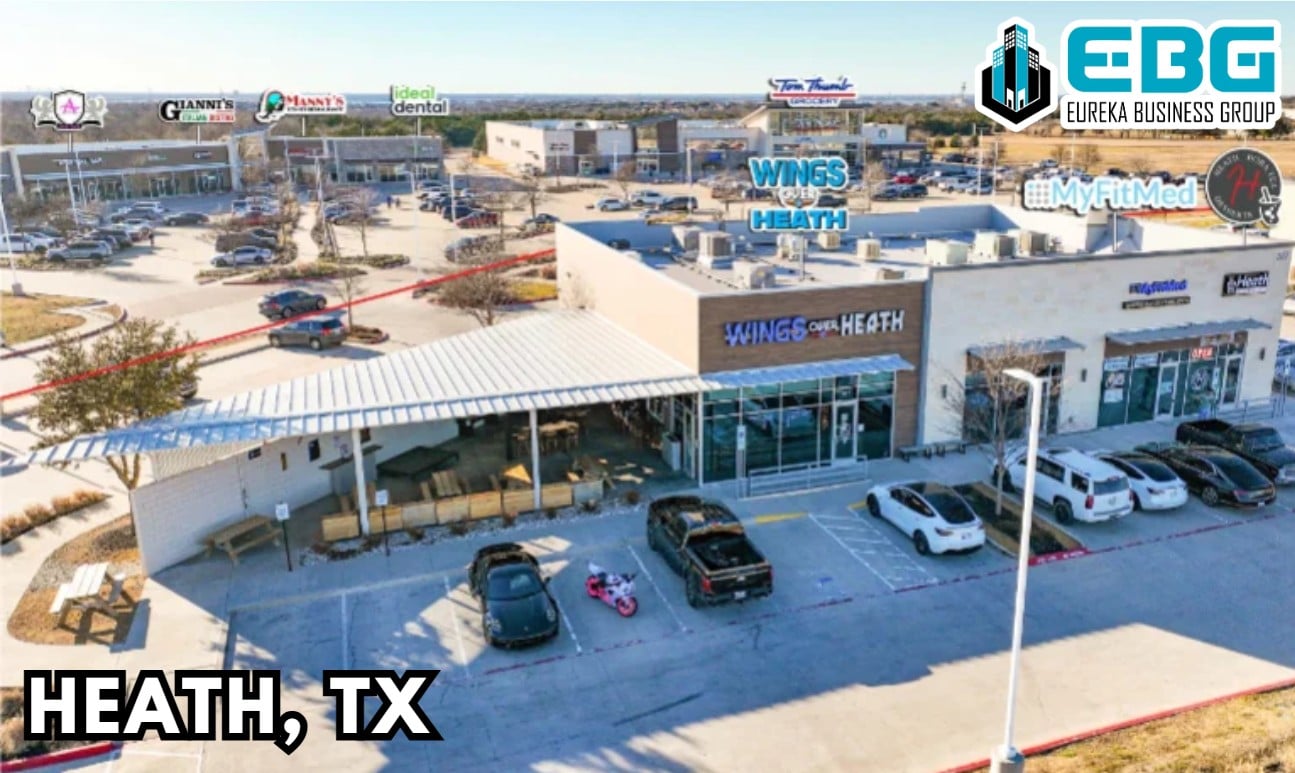
Read More

EBG Listings of The Week 12-20-2025

EBG Listings of The Week

December 20, 2025


Year End is right around the corner and we are still in full swing. Our investors are still making offers, sellers are more open to negotiating on the price and good deals are being made every day. Kind of unusual for this time of the year but we’re not complaining, we’re here for our clients!

I believe a lot of it has to do with the risk in the stock market. If you’d like to view a great analysis of the stock market in 2025 going into 2026, Steve Eiseman (the guy that shorted the market in 2008) has a great video on YouTube: Click Here to view.

Our invitation for a complementary strategy call still stand. We’d love to connect in the next few weeks to discuss possible year-end tax saving actions and start planning your 2026 portfolio optimization. 

If you would like to set up a call, please, reply to this email or send an email to contact@ebgtexas.com and we will reach out. 

As we do every week, we took time and reviewed all the commercial listings that came on the market and curated this hand-picked list representing the top opportunities we identified as the best value.

If you wanted to keep up to date on retail real estate news, we have a LinkedIn Newsletter you can subscribe to.


Did you know you can LISTEN to this email?

Under $2M

Eureka Business Group: Your Retail Navigator; Charting the Course for Retail Growth!

2,900 Medical/Office

Why we like it:

* Two combined units
* Can lease part or all
* Selling well Below county assessed value!
* Owner financing available
* Exclusive EBG Listing

Eureka Business Group: Your Retail Navigator; Charting the Course for Retail Growth!

9,600 SF Self Storage

Why we like it:

* ±86% occupied, in-place cash flow
* Expansion land included (±2.18 acres)
*Remote / low-touch management
* Bitesize Investment

Eureka Business Group: Your Retail Navigator; Charting the Course for Retail Growth!

15 AC Vacant land

Why we like it:

* Zoned: SFE
* High School and Middle School Next Door Traffic & Visibility
* Subdivision Development Potential Or Build a Generational Estate

* Exclusive EBG Listing

Eureka Business Group: Your Retail Navigator; Charting the Course for Retail Growth!

 33,886 SF built on 5.585 AC

Why we like it:

* Zoned: OT-Res (Old Town -Residential)
* Located In The Heart Of Cedar Hill Future Growth Path!
* Multifamily, BTR, Townhomes, Mixed-Use, & Vertical Development Potential

* Exclusive EBG Listing 

Eureka Business Group: Your Retail Navigator; Charting the Course for Retail Growth!

15 AC Vacant land

Why we like it:

* Zoned: SFE 
* Strong Belt Line Rd Traffic
* Adjacent To Commercial Properties, Potential For Re-Zoning

* Exclusive EBG Listing

Eureka Business Group: Your Retail Navigator; Charting the Course for Retail Growth!

2.20 AC Mixed Use Land

Why we like it:

*Mixed-use zoning

* 320′ Gus Thomasson frontage
* Up to 84 apartments + retail possible
* City supports corridor redevelopment efforts
* Owner financing available

* Exclusive EBG Listing

$2M-$5M

Eureka Business Group: Your Retail Navigator; Charting the Course for Retail Growth!

 11,660 SF Retail Center

Why we like it:

* Great Belt Line location
* Strong tenant retention
* Built-in rent escalations
* Surrounded by national retailers

Eureka Business Group: Your Retail Navigator; Charting the Course for Retail Growth!

12,522 SF Retail Center

Why we like it:

* Direct visibility to US-75
* ±203,000 VPD
* Dense, high-income demographics
* Proven retail corridor

Eureka Business Group: Your Retail Navigator; Charting the Course for Retail Growth!

23,655 SF Retail Center

Why we like it:

* ±21% vacancy = value-add!
* Strong Denton Hwy frontage
* Below-market rents
* Dense, high-income trade area

Eureka Business Group: Your Retail Navigator; Charting the Course for Retail Growth!

37.807 AC Residential Land

Why we like it:

* CHISD Asset Sale
* Sealed Bid Opportunity
* Zoned Residential
* Exclusive EBG Listing

Eureka Business Group: Your Retail Navigator; Charting the Course for Retail Growth!

 7,871 SF Retail

Why we like it:

* 100% leased
* Long-term NNN income
* 2021 construction
* Castle Hills mixed-use
* High-income, dense trade area

Eureka Business Group: Your Retail Navigator; Charting the Course for Retail Growth!

12,710 SF Retail Center

Why we like it:

* 100% leased
* Below-market rents
* High-traffic intersection

$5M-$10M

Eureka Business Group: Your Retail Navigator; Charting the Course for Retail Growth!

46,015 SF Retail & Flex

Why we like it:

* Below-market rents
* Short WALT
* Retail &+ flex mix
* Near $750M Bell District redevelopment

Eureka Business Group: Your Retail Navigator; Charting the Course for Retail Growth!

16,395 SF Retail Center

Why we like it:

* Frontage on US-287
* Over 35,000 VPD!
* Large lot (3.34 AC)
* Strong household incomes

Eureka Business Group: Your Retail Navigator; Charting the Course for Retail Growth!

11,320 SF Retail Center

Why we like it:

* 100% leased
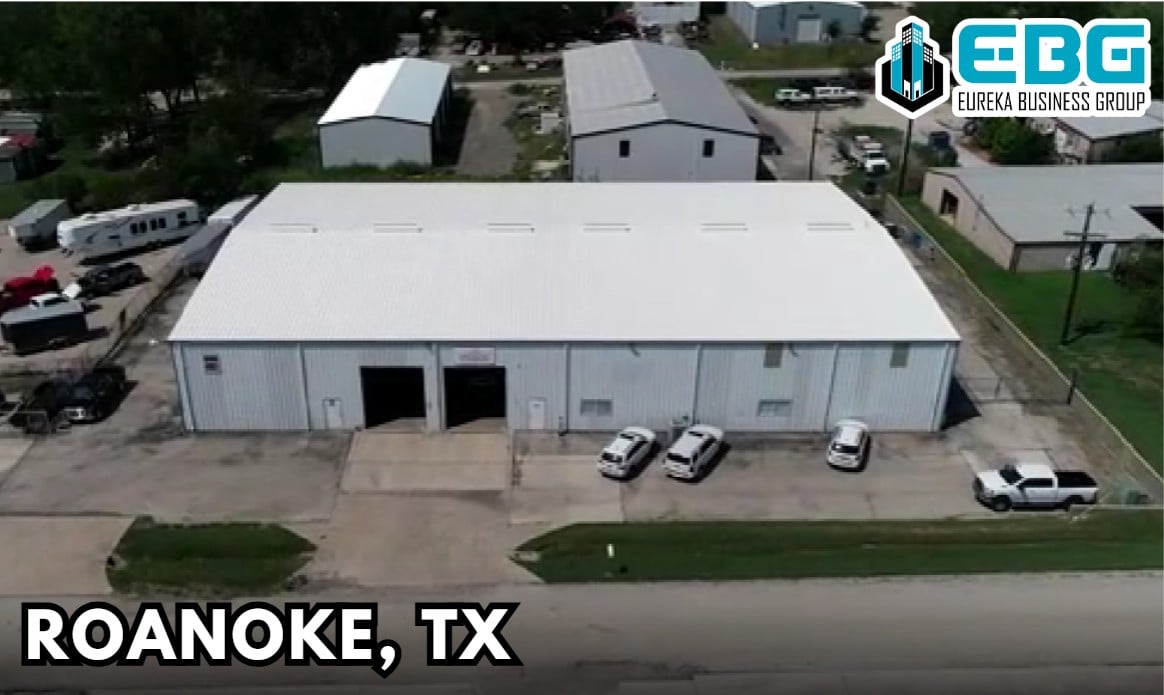
* Historic Downtown Roanoke
* Patio dining, strong foot traffic
* High-income demographics

Eureka Business Group: Your Retail Navigator; Charting the Course for Retail Growth!

19,056 SF Retail Center

Why we like it:

* 100% leased
* Signalized intersection
* Dense, high-income trade area

$10M Plus

Eureka Business Group: Your Retail Navigator; Charting the Course for Retail Growth!

26,330 SF Retail Center

Why we like it:

* 100% leased
* Shadow-anchored by Walmart & Kroger
* ±80K VPD along US-80
* Below-market rents
* One of DFW’s fastest-growing submarkets

Eureka Business Group: Your Retail Navigator; Charting the Course for Retail Growth!

57,000 SF Retail Center

Why we like it:

* Dominant neighborhood retail
* Strong military-driven demand
* Large trade area draw
* Long-term hold stability

Eureka Business Group: Your Retail Navigator; Charting the Course for Retail Growth!

CRE News 12/19/2025

Listen to this week’s hottest Commercial Real Estate News on our podcast

Listen Now

Featured Video

Eureka Business Group: Your Retail Navigator; Charting the Course for Retail Growth!

Investing Beyond Tomorrow

Available on Amazon Now

Eureka Business Group: Your Retail Navigator; Charting the Course for Retail Growth!

Joseph Gozlan, Managing Principal

Eureka Business Group

joseph@ebgtexas.com

(903) 600-0616

About Us

Eureka Business Group: Your Retail Navigator; Charting the Course for Retail Growth!

Established in 2008, Eureka Business Group is a full-service commercial real estate brokerage. We specialize in guiding retail investors, retail leaders, franchisees, and business owners through the complexities of retail commercial real estate in the Dallas-Fort Worth market. Whether you’re a seasoned investor, a franchisee ready to expand, or a first-time tenant, we provide expert solutions tailored to your unique goals.

Read More…

Eureka Business Group: Your Retail Navigator in DFW Commercial Real Estate

Sign Up Here

Be the first to learn about lucrative commercial real estate investment opportunities in the DFW market pre-vetted by our CRE experts!

Eureka Business Group: Your Retail Navigator, Charting the Course for Retail Growth!
Read More

Commercial Real Estate News – Week of December 19, 2025

Commercial Real Estate News – Week of December 19, 2025

Click below to listen: 

Transcript:

 Welcome back to the Deep Dive. Our mission today is it’s built specifically for you. We’re gonna extract the critical intelligence you need to really understand the current commercial real estate landscape, and we’re gonna focus in on the pulse of the Dallas-Fort Worth market. And you know how you should be thinking about positioning yourself in the retail sector.

That’s exactly right. As we’re sitting here mid-December 2025, the whole US. Commercial real estate sector is, it’s navigating what we’ve started calling a profound period of structural recalibration. Recalibration, that’s a good word for it. It is. And what it means for, investors and operators on the ground is that we’re in this intensely bifurcated landscape.

Certain sectors are really thriving on fundamental demand, while others are still grappling with some pretty existential debt challenges. It really is a market of specific winners and very sector specific pain. We’ve synthesized a lot of recent reports here. Everything from the latest fed maneuvers, the surprising resilience of national retail, all the way down to the really sharp variations we’re seeing across the big Texas metros.

Our goal is to give you that localized intelligence that, cuts through all the noise. Okay. So let’s start with the biggest challenge, the one that’s hanging over everything. Debt and monetary policy. Earlier this month, the Fed delivered its third consecutive 25 basis point cut that brings the federal funds rate down to the 3.5% to 3.75% range.

On the surface. That sounds pretty good. A green light for easing? It does, but when you look under the hood, the internal dynamics just scream uncertainty. Yeah. What’s really fascinating here is the vote by the FOMC, the Federal Open Market Committee. It was a highly divided. Nine to three. Split nine to three.

That’s a big, a huge split. You had two members arguing for no change at all, citing, stubborn inflation expectations, and then you had one member pushing for an aggressive full 50 basis point cut and a vote like that. It’s pretty rare By historical standards, what does that kind of internal friction really signal to the market?

It signals a total lack of conviction about the path forward. It tells us that even though they’ve officially started this easing cycle, the Fed’s next move is it’s completely dependent on what Q1, 2026 data shows. Does it confirm a soft landing or do we see inflation pop back up? For borrowers?

That just means volatility and uncertainty remain high. Especially long-term and that long-term volatility, I imagine that’s reflected in the rate that matters most for commercial mortgages. Precisely. Short-term rates are coming down a bit, but the benchmark 10 year treasury note, that’s the cornerstone for commercial mortgage pricing.

It’s just stuck stubbornly, anchored between 4.0% and 4.20. So what’s keeping it so high? This divergence, we call it the sticky yield. It’s being fueled by global concerns over the staggering national debt level, and also the inflationary risk from proposed tariffs on imported construction materials.

Okay, so if the cost of long-term capital isn’t really coming down, what is the immediate consequence for owners of existing commercial property? The refinancing gap is becoming a chasm. It’s leading directly to systemic distress nationally. The CMBS distress rate, that’s for commercial mortgage backed securities, has climbed to 11.63%.

And I’m guessing office is leading the way there, unsurprisingly. Yeah. Office assets are bearing the highest burden they’ve spiked to 17.55% distress. That is a staggering number. But is there one metric in all that debt maturity data that’s the most alarming There is. And here’s the number that should really keep owners awake at night.

Nearly 60% of all distressed CMBS loans are currently past their maturity date without being paid off. 60%. 60%. This is not a temporary hiccup. These assets have effectively failed to find new financing, and that points toward a huge wave of what we call forced liquidity events starting in early 2026. So forced sales properties being sold at a deep discount because owners just can’t roll their debt.

That’s exactly it. That context of financial stress really sets the scene for where the opportunities are. Because while office and some of those overbuilt multifamily assets are drowning, here is the genuinely surprising story, the national retail Renaissance. It really is. Retail has not just survived.

It has emerged as this. This beacon of stability and countercyclical resilience nationally, the retail vacancy rate has hit a 20 year low of about 5.0%, a 20 year low, and that stability is a result of really 15 years of almost no new development combined with extremely strong. And evolving consumer demand.

And when you dig into those drivers, the story about Gen Z is particularly compelling. We always thought of them as, purely digital natives, but the data tells a very different story. 64% of Gen Z consumers actually prefer shopping in a physical store. Over online for discovery and interactive experiences.

Why is that? It’s all about how stores are functioning now. A store isn’t just a place to buy things, it’s a social destination. That Gen Z preference is directly fueling what we’re calling the experiential shift that investors are all chasing now. So shopping centers are becoming social hubs. Exactly.

We’re seeing wellness studios, boutique fitness concepts, and especially entertainment, high-end restaurants and yes, even dedicated pickleball courts, they now account for a staggering 15% of all new leasing activity nationally. It’s the structural embrace. Of retail attainment. And when you have that kind of leasing momentum, especially in a high cost environment, institutional capital is gonna follow.

We saw a massive $1.6 billion capital raise recently, specifically targeting this sector, right? They’re chasing certainty and the highest certainty by far. Is in the grocery anchored segment. This segment, neighborhood retail anchored by strong grocer is running with the national vacancy rate below 4.0%.

Wow. Below 4%. And they’re driving robust 4.5% year over year rent growth. Yeah. So these assets are providing crucial downside protection, which is why investor sentiment for this niche is very positive. And as we’re closing out the year, the holiday numbers seem to confirm that consumers are still spending Black Friday sales.

Were up 4.1% year over year. What does that final holiday rush look like for physical stores? The dependency on brick and mortar for that final push is still just overwhelming. The data shows 89% of consumers plan to do the bulk of their shopping in the final two weeks before Christmas. That means huge foot traffic right up to Super Saturday.

We also saw a real tech integration. 53% of consumers led by the younger demographics are planning to use AI tools for comparison shopping and finding deals. The physical store is essential, but the journey to get there is becoming more technologically informed. Okay, so that national retail resilience gives us the baseline, but now we have to apply it to Texas.

For so long, Texas was just seen as this monolithic winner in US real estate. It’s time to retire that idea. Texas is no longer a single market. It’s become what we call a high beta proxy for national trends. So whatever’s happening nationally, good or bad, it gets amplified here and we’re seeing really sharp regional variations that demand hyperlocalized knowledge.

So let’s start with the cautionary tale right now, Austin, after years of just explosive parabolic growth, it really seems like the market is paying the price for significant overbuilding. Austin has unfortunately become the poster child for Sunbelt oversupply. The correction is real and it’s painful.

Multifamily vacancy has climbed sharply to 14.5%. That’s leading directly to rent declines and a flood of concessions just to fill units, and the office distresses just as dramatic, right? Can you give us a specific example of what that looks like on the ground? The sheer scale of the problem is clear in assets like the 7,700 Palmer Office campus, this is a massive 911,000 square foot property.

It houses major tenants like Google, and it’s facing an imminent monetary default on its $177 million loan, which just matured this month. A campus of that size with those kinds of tenants. Can’t refinance. That’s right. And when that happens, it just underscores how broken the debt market is for anything that’s not premium new build office space.

Okay, so let’s contrast that stress with what’s happening in Dallas-Fort Worth, DFW seems to be defying those gravitational forces. It’s arguably the most robust CRE market in the entire country right now. What’s the engine driving that? It’s the continued influx of highly capitalized financial services firms.

The y’all street growth we talk about plus just fundamental demographic momentum while national office obsolescence is a huge story. In DFW Class A office rents in uptown have hit record highs. They’re sitting between 41 and $44 per square foot triple net. For our listeners, can you quickly define triple net or NNN and why that pricing is so significant?

Sure. NNN means the tenant is responsible for paying property taxes, insurance, and maintenance on top of the base rent. So when you see triple net rents in the forties, it just signifies extreme landlord leverage and confidence in that specific location’s long-term quality. But even in a hot market like DFW, aren’t we seeing similar challenges with the older or less desirable class B and C office space?

That’s the critical nuance. Yes. The DFW market is absolutely bifurcated, but the high-end growth is just so powerful. It sustains the whole narrative. Investors are fleeing the obsolete product and consolidating into the best locations like Uptown, and that’s why you see record highs there. Even while the broader metro of agency rates are inflated by older, empty buildings, the kind of buildings that you know will likely need to be repurposed like that HEB acquisition we’re about to discuss.

And the industrial logistics market is also just key to DFW scale. It’s staggering. DFW has over 1 billion square feet of industrial inventory, and yet the vacancy rate is holding at a very manageable 8.8%, which is actually the lowest level we’ve seen since the end of 2023. The demand is just keeping pace.

So this brings us right to the core of this deep dive, DFW, retail and mixed use. In the context of Texas’s sharp variations, retail really does feel like the sleeper hit here. I agree completely. DFW retail vacancy is under 5% and we’re seeing rents consistently top $25 in those high growth suburban submarkets.

The clearest sign of a healthy market isn’t just low vacancy, it’s the confidence in specific high stake steel activity. Let’s use that grocery example to illustrate the point. The Texas grocer, HEB, which is expanding aggressively into Dallas, just secured its first urban Dallas location.

Right, and how they did it is the key. They acquired the 204,000 Square Foot Commerce Plaza Hillcrest office complex for $16.8 million. This deal is a textbook example of opportunistic infill retail acquisition. HAB bought a struggling functionally obsolete office asset from a reed that needed the liquidity.

Specifically to demolish it and secure a prime urban site for a new supermarket. So that single transaction shows the market eating itself, doesn’t it? The demand for prime retail locations is so strong that it’s driving the redevelopment of struggling office assets. It confirms that prime location retail demand is inelastic.

And this flake to quality isn’t just limited to conversions. We’re seeing capital flow strongly into top tier existing DFW assets as well. TRT Holdings, the owner of Omni Hotels recently acquired the 22 Story St. Paul Place, office Tower downtown that shows class A property still attracts high level buyers and institutional lenders are still funding new mixed use that blends office and retail in these prime spots.

Exactly JLL. Just arranged financing from KKR for the Quad, which is a new 500,000 square foot mixed youth campus in uptown that confirms that institutional debt is there for premium amenity rich DFW developments that combine top tier office with high-end experiential retail. And we also need to look beyond the central business district.

The growth in the northern suburbs just continues to integrate retail into these huge master plan developments. Look at Plano. They just broke ground on the $750 million Haggard farm development. The first phase alone includes a hundred thousand square feet of retail and 125 key boutique hotel. It reflects this essential trend.

Retail and hospitality are not secondary amenities anymore. They’re mandatory components that drive foot traffic and value for everything around them. And we see that same integration happening with transit infrastructure too. The first phase of the $1.5 billion Trinity Mill Station, TOD, in Carrollton.

Just completed. That new phase has 10,000 square feet of ground floor retail right underneath a 436 unit apartment building. All strategically integrated with the dark rail system. It just shows retail’s essential role in building density and supporting public infrastructure. This kind of diverse deal flow is what truly confirms DFWs momentum.

Let’s turn now to what might be the largest structural shift defining the next decade. We’re calling it computational real estate. This is a crucial insight. Commercial real estate is shifting fundamentally from a shelter based industry, a roof over your head to an infrastructure based industry, and it’s being driven entirely by technology.

Land value is increasingly defined, not by its proximity to a highway, but by its access to massive power grids and fiber optic connections. And the evidence of this in DFW is just overwhelming. Google plans to spend $880 million to add a new data center in Midlothian, just south of Dallas. That’s a huge investment.

DFW is rapidly becoming one of the most important infrastructure hubs in the world. Our data center inventory is expected to more than double by the end of 2026. And to put that into perspective for property owners, data centers accounted for a massive 21% of all new demand in DFW warehouse and distribution properties in 2025.

That kind of demand changes the math on all infill industrial land. And does this computational density affect the traditional retail supply chain? Absolutely. Those new data centers need constant support and all the e-commerce fueled by them needs rapid last mile delivery. That’s why we see such high demand for smaller infill industrial space.

For example, the 115,000 square foot gateway business center in Irving, a small base suite complex just sold. We saw a bag supply company lease 18,000 square feet in east Fort Worth. These smaller well-located parks are the crucial arties supporting both the retail and computational infrastructure. So if we synthesize this whole deep dive, the sticky debt, the National Retail Renaissance, and this hyper-local DFW momentum, what’s the clear takeaway for an investor focus on this market?

The clear conclusion is that DFW is leading the Texas charge and the retail sector specifically high traffic, grocery anchored and experiential formats shows the strongest fundamentals and the highest investor confidence. This is all driven by limited supply after years of underbuilding and sticky consumer demand that is shifting toward in-person experiences.

So for investors and operators navigating this, the strategic imperative seems pretty clear. You need operational excellence, and maybe more importantly, a nuanced, localized understanding of supply dynamics. The bays of making broad market bets. Even in Texas, they feel like they’re over. Performance is king, and foot traffic is really the ultimate non-negotiable measure of success.

Precisely. Now, here’s a final provocative thought for you to consider as you look toward your capital allocations for 2026. Given the institutional capital flooding into these highly resilient niches like industrial outdoor storage, which has seen rent surge 123% since 2020, and the fact that high construction costs are persisting.

How should retail investors be budgeting for the mandated green retrofits and new infrastructure demands that are becoming standard under recent climate accords like COP 30? That’s a huge operational burden For our listeners who might not be familiar with the term, what’s the financial risk if they just.

Ignore those requirements. You risk what the industry calls a brown discount. A brown discount is the lower valuation that assets receive if they haven’t been retrofitted for energy efficiency. It makes them environmentally and functionally obsolete much sooner than expected. Ignoring these capital improvements risks, significant financial losses, potentially 20% or more on your property’s future valuation.

The question is, are you factoring that mandatory infrastructure spend into your budgets right now? That’s what you need to be thinking about for the long-term health of your portfolio.

** News Sources: CoStar Group 
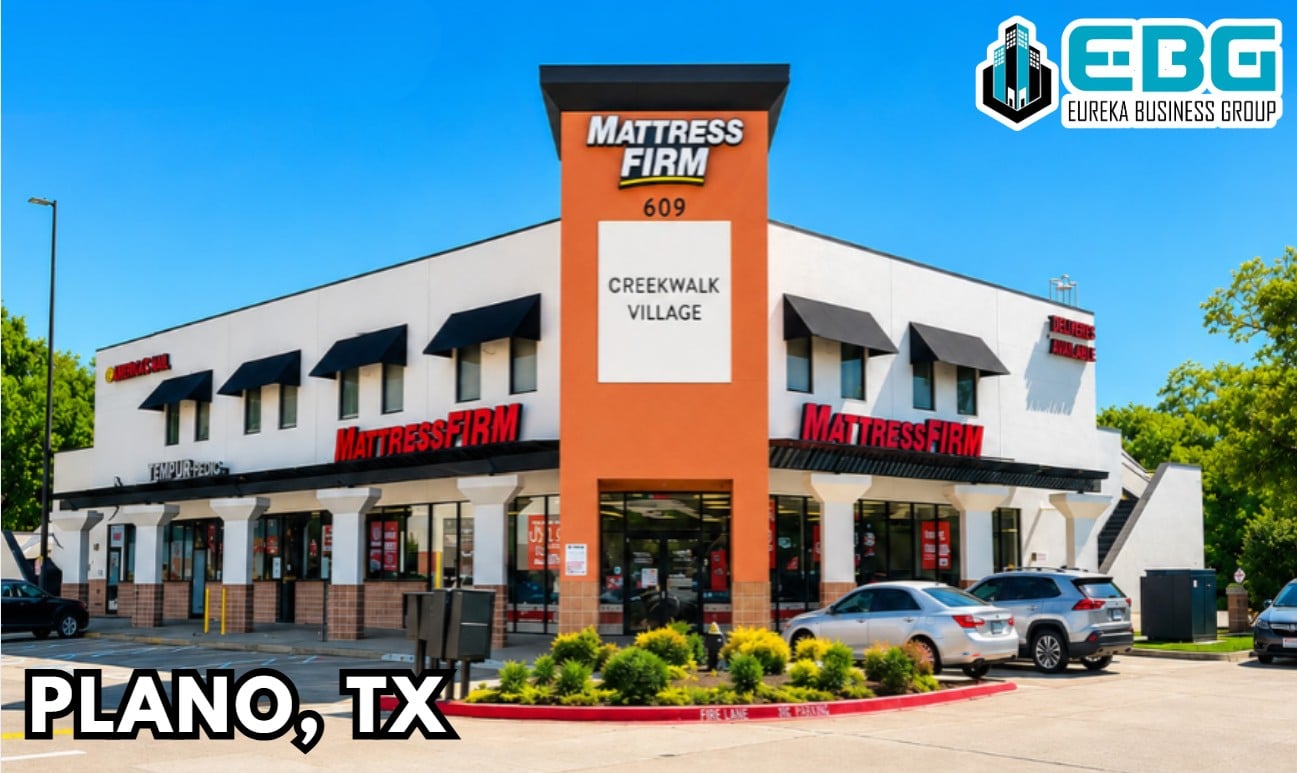
Read More

EBG Listings of The Week 12-13-2025

EBG Listings of The Week

December 13, 2025


Make sure to check out the featured video at the bottom of this email. We have multiple transactions in progress that involve first time commercial buyers and this video was created for them. If you are new to commercial investing, check out the video to get a clear timeline of a commercial transaction!

Our invitation for a complementary strategy call still stand. We’d love to connect in the next few weeks to discuss possible year-end tax saving actions and start planning your 2026 portfolio optimization. 

If you would like to set up a call, please, reply to this email or send an email to contact@ebgtexas.com and we will reach out. 

As we do every week, we took time and reviewed all the commercial listings that came on the market and curated this hand-picked list representing the top opportunities we identified as the best value.

If you wanted to keep up to date on retail real estate news, we have a LinkedIn Newsletter you can subscribe to.


Did you know you can LISTEN to this email?

Under $2M

Eureka Business Group: Your Retail Navigator; Charting the Course for Retail Growth!

2,900 Medical/Office

Why we like it:

* Two combined units
* Can lease part or all
* Selling well Below county assessed value!
* Owner financing available
* Exclusive EBG Listing

Eureka Business Group: Your Retail Navigator; Charting the Course for Retail Growth!

2,607 SF Flex Condo

Why we like it:

* Modern flex product with mezzanine
* 100% HVAC throughout
* Bitesize investment
* Proximity to SH-121, DNT, I-35, and Grandscape

Eureka Business Group: Your Retail Navigator; Charting the Course for Retail Growth!

18,100 SF Self-Storage

Why we like it:

* Brand-new construction
*109 total units with diverse mix
* Fully gated, keypad access
* VACANT = immediate lease-up upside
* Strong access to Hwy 199 and I-35 corridor

Eureka Business Group: Your Retail Navigator; Charting the Course for Retail Growth!

15 AC Vacant land

Why we like it:

* Zoned: SFE
* High School and Middle School Next Door Traffic & Visibility
* Subdivision Development Potential Or Build a Generational Estate

* Exclusive EBG Listing

Eureka Business Group: Your Retail Navigator; Charting the Course for Retail Growth!

 33,886 SF built on 5.585 AC

Why we like it:

* Zoned: OT-Res (Old Town -Residential)
* Located In The Heart Of Cedar Hill Future Growth Path!
* Multifamily, BTR, Townhomes, Mixed-Use, & Vertical Development Potential

* Exclusive EBG Listing 

Eureka Business Group: Your Retail Navigator; Charting the Course for Retail Growth!

15 AC Vacant land

Why we like it:

* Zoned: SFE 
* Strong Belt Line Rd Traffic
* Adjacent To Commercial Properties, Potential For Re-Zoning

* Exclusive EBG Listing

Eureka Business Group: Your Retail Navigator; Charting the Course for Retail Growth!

2.20 AC Mixed Use Land

Why we like it:

*Mixed-use zoning

* 320′ Gus Thomasson frontage
* Up to 84 apartments + retail possible
* City supports corridor redevelopment efforts
* Owner financing available

* Exclusive EBG Listing

Eureka Business Group: Your Retail Navigator; Charting the Course for Retail Growth!

6,113 SF Retail Strip

Why we like it:

* 100% leased
* Priced below replacement cost
* Offered at 7.75% cap rate
* High-traffic intersection (44,800+ VPD)

$2M-$5M

Eureka Business Group: Your Retail Navigator; Charting the Course for Retail Growth!

37.807 AC Residential Land

Why we like it:

* CHISD Asset Sale
* Sealed Bid Opportunity
* Zoned Residential
* Exclusive EBG Listing

Eureka Business Group: Your Retail Navigator; Charting the Course for Retail Growth!

9,138 SF Retail Strip

Why we like it:

* 100% leased
* High-growth submarket with strong incomes
* Prime Preston Rd address
* Essential-service tenant mix (dental, ortho, restaurant)

Eureka Business Group: Your Retail Navigator; Charting the Course for Retail Growth!

2,200 SF Single Tenant

Why we like it:

* Brand-new construction
* 15-year NNN lease
* Excellent visibility near I-10 (35K+ VPD)
* High-growth Houston suburb

Eureka Business Group: Your Retail Navigator; Charting the Course for Retail Growth!

2,800 SF Single Tenant 

Why we like it:

* Corporate-backed lease
* Built 2019
* Strong traffic: 22,000+ VPD
* Dense retail areawith Kroger, Starbucks, Chick-fil-A

Eureka Business Group: Your Retail Navigator; Charting the Course for Retail Growth!

11,223 SF Single Tenant

Why we like it:

* Absolute NNN lease
* Zero landlord obligations
* Recent 10-year extension
* Investment-grade-style national tenant (S&P BB+)
* 35+ years historical occupancy
* Strong traffic counts (43K+ VPD at intersection)

Eureka Business Group: Your Retail Navigator; Charting the Course for Retail Growth!

CRE News 12/12/2025

Listen to this week’s hottest Commercial Real Estate News on our podcast

Listen Now

Featured Video

Eureka Business Group: Your Retail Navigator; Charting the Course for Retail Growth!

Investing Beyond Tomorrow

Available on Amazon Now

Eureka Business Group: Your Retail Navigator; Charting the Course for Retail Growth!

Joseph Gozlan, Managing Principal

Eureka Business Group

joseph@ebgtexas.com

(903) 600-0616

About Us

Eureka Business Group: Your Retail Navigator; Charting the Course for Retail Growth!

Established in 2008, Eureka Business Group is a full-service commercial real estate brokerage. We specialize in guiding retail investors, retail leaders, franchisees, and business owners through the complexities of retail commercial real estate in the Dallas-Fort Worth market. Whether you’re a seasoned investor, a franchisee ready to expand, or a first-time tenant, we provide expert solutions tailored to your unique goals.

Read More…

Eureka Business Group

5760 Legacy DR. STE B3-127, Plano, TX 75024

linkedinfacebookinstagramxyoutubetiktok

You received this email because you signed up on our website or made a purchase from us.

Unsubscribe

Eureka Business Group: Your Retail Navigator in DFW Commercial Real Estate

Sign Up Here

Be the first to learn about lucrative commercial real estate investment opportunities in the DFW market pre-vetted by our CRE experts!

Eureka Business Group: Your Retail Navigator, Charting the Course for Retail Growth!
Read More

Commercial Real Estate News – Week of December 12, 2025

Commercial Real Estate News – Week of December 12, 2025

Click below to listen: 

Transcript:

 Okay, so we’re closing out 2025, and if you’ve been following the US commercial real estate market, your feeds have been well noisy, extremely noisy. So for today’s deep dive, our mission is to cut through that noise. We’re gonna synthesize what’s happening and focus on a really powerful thesis that’s emerging.

And that thesis is that North Texas, specifically Dallas-Fort Worth, isn’t just participating in the national retail recovery. It feels like it’s actually leading it. It’s steering the ship. Basically, and this isn’t just our take, we’ve got sources, um, multiple experts labeling, DFW, the economic dynamo of the country.

It’s a strong claim, but the data backs it up. The population and job growth here is just so relentless that analysts are now seriously asking the question. Has DFW reached gateway market status? Meaning it’s truly competing with the coastal giants like New York or la Precisely. And the headlines we’re seeing right now really underscore that this isn’t some temporary boom.

This is a fundamental long-term shift. Right, and speaking of long-term, we have to note the passing of the influential Dallas investor, Tom Hicks. He was a figure who literally shaped the market, especially areas like Uptown Dallas. Mm-hmm. His legacy is a reminder of the long-term vision that built this powerhouse in the first place.

But then you looked at what’s happening right now. The current growth drivers. Exactly. Take Google. They just confirmed a massive expansion of their data center campus down in Midlothian, south of Dallas. They’re adding another half a million square foot building. Let’s just pause on that for a second.

Yeah. This is more than just a big lease. This solidifies. DFWs role as a, you know, a critical hub for global digital infrastructure. It does. And every one of those data centers, every new tech job, it creates this ripple effect. It demands thousands of support jobs, hundreds of thousands of new homes, which feeds directly into the retail demand.

We’re here to talk about it creates the necessity. Hmm. And that’s all supported by DFWs Industrial Mite. We just saw a huge 468,000 square foot lease renewal and expansion in Fort Worth by LaSow products. So the demand for big box industrial and logistics space is just, it’s insatiable. It really is. It connects right back to DFWs Natural Advantage as the central logistics hub for the entire country.

Okay, so we’ve established the foundation, we have the history, the tech infrastructure, the logistics engine, and the population boom that follows the demand. Is there. So who’s funding it? And that’s the perfect transition into the institutional capital story. It’s a complete ecosystem. That operational strength is precisely why big institutional money is following the people right into Texas.

They seem to be looking for stability in what’s still a pretty volatile economy. Very much so. They’re targeting the most resilient retail formats. You can find the necessity based stuff, and this is where the numbers start to get, uh, a little eye watering. We’re talking about global players making massive bets.

Blackstone, for example, right? They just dropped an incredible $440 million on a portfolio of Texas retail properties. That’s across Dallas, Houston and San Antonio. But what’s so fascinating here, it’s not just the dollar amount. It’s the specific type of asset they’re chasing. That’s the whole story. They are aggressively, and I mean aggressively targeting grocery anchored centers.

The analysis is pretty clear in this kind of environment. Necessity, retail anchored by giants like HEB and Kroger is the ultimate defensive real estate play. Break that down for us. Why is grocery anchored so resilient right now? Is it just about being Amazon proof? That’s a big part of it, but it’s more than that first.

Yes, e-commerce has a tough time competing with the local grocery one, but second, these centers have incredibly high occupancy. We’re talking 95% plus. So cashflow is steady and predictable. Exactly. When interest rates are settling and the market is still finding its footing, stability and predictability are king.

$440 million bet from Blackstone is a huge signal of long-term belief in the Sunbelt’s demographics, and it wasn’t a one-off deal. We also saw DLC management and DRA advisors come in with a $429 million acquisition, another massive deal. That one was for 2.1 million square feet of open air retail, 91% leased, and critically, that portfolio included DFWs own Watauga pavilion.

So it just reinforces that pattern. Yeah. Investors want stable, necessity based retail. And they want it here. They’re not chasing speculative home runs. They want reliable returns that are driven by reliable population growth, and this appetite that goes beyond DFW San Antonio’s market is also tightening up.

Mm-hmm. We saw the Park North Shopping Center there, a huge 633,000 square foot property sell for $115 million. It was 96% occupied. So even the secondary Texas markets are drawing this big institutional capital. Absolutely. We’re even seeing out-of-state investors like a Baltimore based firm called MCB Real Estate come in and target these secondary metros specifically for stable grocery anchor deals.

It just speaks to the depths of capital that’s hunting for yield across the entire state. Okay, so that’s the defensive strategy. Massive capital flows into safe proven assets. Now, let’s pivot because DFW isn’t just trading old centers, it’s also building the future of retail. This is the offensive strategy, and this contrast is what makes the DFW story so compelling.

Right now just look north to Frisco. The $800 million fields West Mixed Use Development just had a major construction milestone. This isn’t just a shopping center, not even close. This is a luxury retail and entertainment destination. It’s anchored by A PGA golf resort. It’s a place you spend an entire day, or even a weekend, not just an hour.

That’s the idea. It’s a huge bet on high-end, immersive experiential retail. It signals that developers believe the high net worth people moving here will support this kind of destination shifting spending from just buying things to buying experiences. And we’re seeing cities make similar bets. Fort Worth just kicked off its convention center expansion.

Right? And city officials are very open about the fact that they see that project as a catalyst. They expect it to spark a wave of new hotel retail and entertainment development right in the city’s core. At the same time, we’re seeing really interesting innovation from the retails themselves. You got this trend of.

Retail right sizing a crucial evolution. A perfect example is Belk, the department store chain. They just opened their brand new concept store in Frisco. It’s called Belk Market, and it’s tiny compared to their old stores, right? Only about 35,000 square feet. It’s a radical change, and it’s not just about cutting costs.

They’re aiming for a more curated, edited selection and an easy to shop layout. They’re trying to restore their style, credibility, and just. Maximize every single square foot. So DFW is the testing ground for this new, more efficient model. It’s a high stakes test, move away from the giant inefficient boxes of the past to something targeted local and focused on the customer experience in a smaller footprint.

Then you have the other end of the spectrum. The quick service restaurants or QSRs, they’re just incredibly aggressive right now. They are look at Lane’s, chicken fingers. They’re planning to open 44 new restaurants in Texas, and they are specifically targeting DFW for the best drive-through pads and end cap spaces.

That’s a massive vote of confidence in the region’s growth. It really is. It tells you they believe the population is growing fast enough to support a huge amount of new quick service business, especially around those high demand drive thrusts. Yeah. And to meet all this demand, even the way things are built is having to adapt right down to the construction.

Walmart is experimenting with 3D printed elements for their prototype stores. They think it can cut build times and material waste by 10 to 15%, which you have to do when you’re trying to build. At the speed and scale that a market like DFW demands you do when you have this much capital and this much development happening.

Everyone in the supply chain has to innovate just to keep up. Alright, let’s zoom back out to the macro level because this incredible Texas story still needs a supportive national environment to keep going and it seems like we’re finally seeing some of those financial headwinds. Ease up. The biggest signal, without a doubt, was the Federal Reserve’s year end rate cut.

It was only 25 basis points, but it was their third in a row. For anyone in CRE, that was a huge sigh of relief. A clear signal that inflation is finally cooling. Yes, and that liquidity is improving. For our listeners, that translates into two. First, it makes future debt cheaper and refinancing less painful.

And second, more importantly, it creates optimism. It’s a signal to all the capital that’s been sitting on the sidelines to get ready to deploy. The expectation now is a real jumpstart in deals for 2026. It seems like the banks are starting to get that message. The sources say they’ve, uh, tiptoed back into CRE lending, tiptoed is the right word.

It’s not a floodgate, but it’s movement. And we can actually quantify that movement. I’m sorry. We look at large property deals, anything over $10 million in the third quarter of 2025. They search 41% year over year, heading $76 billion nationally. Wow. That’s not just random activity, that is institutional capital that was frozen by rate uncertainty, now being unfrozen and put back to work, and that confidence seems to be trickling down to even the hardest hit sectors like office.

Cautiously. Yes. Nationally we’re seeing some positive signs. Yeah. Vacancy has ticked down just a little bit. Net absorption turned positive and sales volume was actually up 28% year over year. So analysts are starting to say the office sector is back. They’re whispering it, but we have to ground that in the reality here in DFW, which is, uh, very bifurcated.

It’s a tale of two markets, really, meaning our best in class class A office buildings in places like Uptown and Planet Frisco are seeing record high rents. But is that a sign of. Broad market health or is it just a sign that there’s a severe shortage of new high quality buildings, a flight to quality?

It’s definitely the latter. Companies that are willing to pay a premium are all fighting for the same small pool of trophy assets. But at the same time, we’re seeing older properties like the offices at Park Lane, which is only 66% leased being sold specifically for repositioning. So the market is recovering, but it’s uneven.

Quality over everything else. Exactly. And while we have all this optimism, we have to balance it with the risks that are still out there. There’s one big headwind still lurking, and that would be the old commercial mortgage backed securities. The CMBS debt, that’s the one. The share of those loans that are in special servicing, meaning they’re distressed or facing default, just hit a 12 year high, a 12 year high.

What does that signal for the broader market? It signals systemic distress, mostly in older office and some older retail portfolios. Think about loans that were written back in 2015 to 2018 at super low rates. They’re now coming due in a much higher rate world and they can’t be refinanced not without a huge new injection of cash, so that’s gonna force sales or restructurings well into 2026, and that could put some downward pressure on values for those older assets.

It’s the central conflict. New growth on one side, legacy debt risk on the other. Okay, that paints a really complete picture, so bringing it all together, the synthesis here feels pretty clear. The DFW market is operating on these two very different, very sophisticated tracks at the same time. Absolutely on one track you have DFW attracting massive defensive capital into those resilient grocery anchored formats that provide safe, reliable returns.

But on the other track, it’s acting as this laboratory for innovation. It’s driving offensive development, like the huge luxury destination at Fields West, and it’s testing these new, smaller, more efficient concepts like be market. It’s the perfect environment where both the safest and the boldest strategies.

Are being executed with, you know, equal conviction. It’s really a flight to quality and extreme specialization. That’s the takeaway. Look at Target building these highly curated urban stores in soho. And then look at Belk debuting a smaller design-focused concept in suburban Frisco. The question isn’t if retail is changing anymore, it’s how fast can you adapt?

It’s how fast can retailers and developers execute these very specific, innovative new formats to capture market share in a place that’s moving at the speed of DFW. Which brings us to our final provocative thought for you to think about based on everything we’ve seen in the next 12 months in this North Texas market, what type of retail real estate will be the biggest winner?

Will it be the massive destination driven experiential hub like Fields West, which requires enormous capital in years to build? Or will it be the hyper, hyper-efficient, highly targeted, smaller store model, like bulk market that prioritizes speed and local curation? Right now the market is betting hundreds of millions of dollars that both can win at the same time.

** News Sources: CoStar Group 
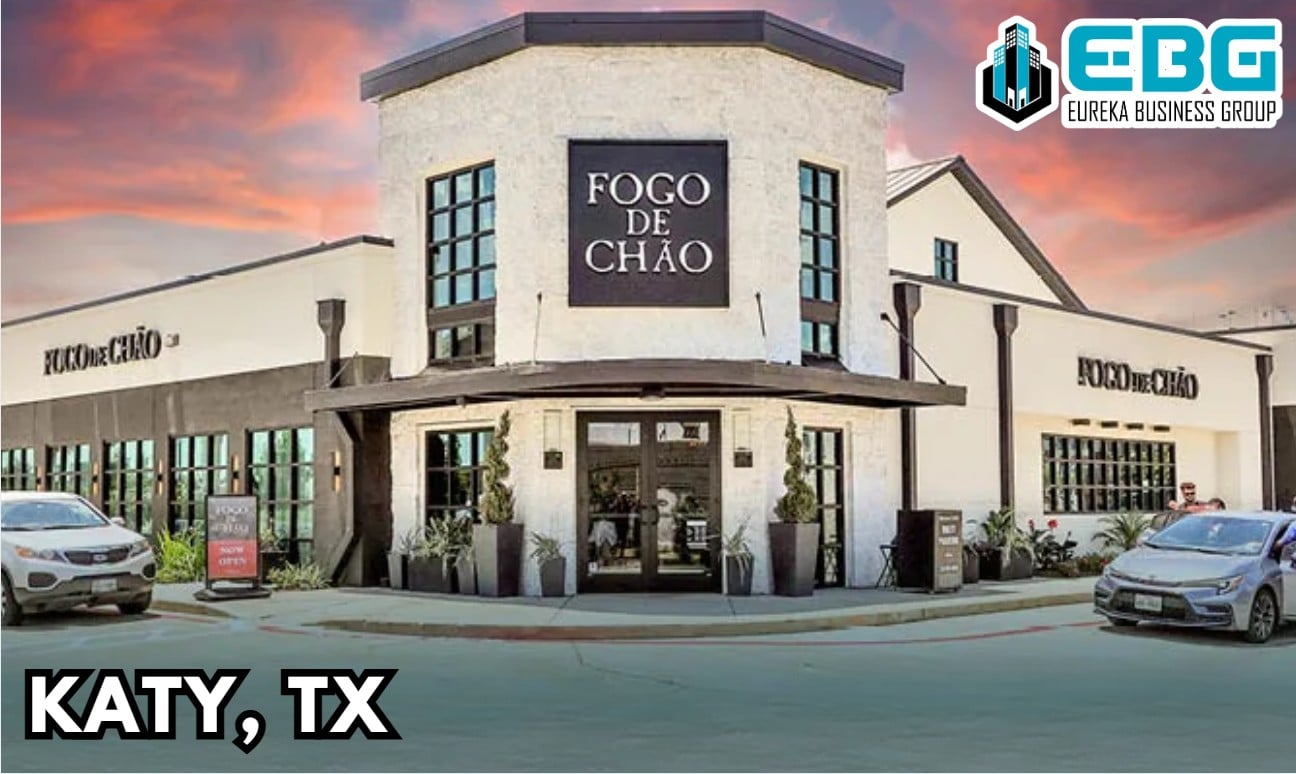
Read More

EBG Listings of The Week 12-06-2025

EBG Listings of The Week

December 6, 2025


This past week everyone were talking about Gold & Silver and how the prices of metals nearly doubled this year and the world is split about down the middle betting if these commodities will double again or cut in half in 2026. 

Crypto that dominated the conversation in Sep-Oct is now silent and trying to recover after dropping from a high of $125K per Bitcoin to a low of about $80K (currently hovering around $90K/BTC). 

The stock market is also recovering from a selloff and now inching back toward previous highs. 

Why am I talking about all these alternatives? Because while everyone were caught in the highs and lows, in the stress and anticipation (mainly anxiety), our commercial investments kept performing and kept increasing our net worth every month in a steady pace. 

I guess no one talks about the mental health aspect of owning commercial real estate 😀

But you already know that. Otherwise you wouldn’t be on this mailing list. In the past few months we got a surge of investors like you talking with us about taking some chips off the stock market table and moving it over to a more stable, generational wealth building commercial real estate. With the market expected rate cut in the coming Fed meeting (4 days from today) we expect demand to increase as we step into 2026

Our invitation for a complementary strategy call still stand. We’d love to connect in the next few weeks to discuss possible year-end tax saving actions and start planning your 2026 portfolio optimization. 

If you would like to set up a call, please, reply to this email or send an email to contact@ebgtexas.com and we will reach out. 

As we do every week, we took time and reviewed all the commercial listings that came on the market and curated this hand-picked list representing the top opportunities we identified as the best value.

If you wanted to keep up to date on retail real estate news, we have a LinkedIn Newsletter you can subscribe to.


Did you know you can LISTEN to this email?

Under $2M

Eureka Business Group: Your Retail Navigator; Charting the Course for Retail Growth!

2,900 Medical/Office

Why we like it:

* Two combined units
* Can lease part or all
* Selling well Below county assessed value!
* Owner financing available
* Exclusive EBG Listing

Eureka Business Group: Your Retail Navigator; Charting the Course for Retail Growth!

2.20 AC Mixed Use Land

Why we like it:

*Mixed-use zoning

* 320′ Gus Thomasson frontage
* Up to 84 apartments + retail possible
* City supports corridor redevelopment efforts
* Owner financing available

* Exclusive EBG Listing


$2M-$5M

Eureka Business Group: Your Retail Navigator; Charting the Course for Retail Growth!

37.807 AC Residential Land

Why we like it:

* CHISD Asset Sale
* Sealed Bid Opportunity
* Zoned Residential
* Exclusive EBG Listing

Eureka Business Group: Your Retail Navigator; Charting the Course for Retail Growth!

4,463 SF Veterinary Clinic

Why we like it:

* Corporate NNN lease
* 6 years remaining 
* 2.75% annual bumps
* Minimal landlord responsibilities

Eureka Business Group: Your Retail Navigator; Charting the Course for Retail Growth!

9,138 SF Retail Strip

Why we like it:

* 100% leased
*High-growth submarket with strong incomes
* Prime Preston Rd address
* Essential-service tenant mix (dental, ortho, restaurant)

Eureka Business Group: Your Retail Navigator; Charting the Course for Retail Growth!

4,000 SF Single Tenant Retail

Why we like it:

* Brand-new 2023 construction
* Zero landlord responsibilities
* 15-year corporate lease
* Top 25% most visited restaurants in Oklahoma

Eureka Business Group: Your Retail Navigator; Charting the Course for Retail Growth!

6,975 SF Retail Center

Why we like it:

* 100% Leased
* NNN leases
* Below-market rents 
* Direct visibility on SH-121 with 104,000+ VPD

Eureka Business Group: Your Retail Navigator; Charting the Course for Retail Growth!

22,016 SF Single Tenant Retail

Why we like it:

* Corporate NNN lease 
* Lease running through 2033
* 2020 construction with 20-yr transferable roof warranty
* Prime US-59 location with 156,740+ VPD traffic

Eureka Business Group: Your Retail Navigator; Charting the Course for Retail Growth!

7,500 SF Single Tenant Dental

Why we like it:

* Corporate lease backed by 200+ location dental chain
* Fully renovated in 2024
* 8+ years remaining
* Outparcel to Home Depot 

$5M-$10M

Eureka Business Group: Your Retail Navigator; Charting the Course for Retail Growth!

10,682 SF Retail Center

Why we like it:

* Corporate NNN lease guaranteed by Berkshire Hathaway affiliate
* Frontage on TX-121 with 75,300+ VPD
* Affluent trade area with $200K+ average incomes
* Potential future multi-tenant conversion upside

Eureka Business Group: Your Retail Navigator; Charting the Course for Retail Growth!

19,141 SF Retail Center

Why we like it:

* 100% leased 
* Avg rent below market
* $237K avg HH income (1-mile)
* Prime Stacy Rd frontage with 41,951+ VPD

$10M Plus

Eureka Business Group: Your Retail Navigator; Charting the Course for Retail Growth!

23,088 SF Vet Hospital

Why we like it:

* Corporate NNN lease 
* ±6 years remaining
* Annual Rent Increases
* Purpose-built flagship facility (2018) with $11M+ construction cost
* Prime Fort Worth freeway frontage with 120k+ VPD

Eureka Business Group: Your Retail Navigator; Charting the Course for Retail Growth!

CRE News 12/05/2025

Listen to this week’s hottest Commercial Real Estate News on our podcast

Featured Video

Eureka Business Group: Your Retail Navigator; Charting the Course for Retail Growth!

Investing Beyond Tomorrow

Available on Amazon Now

Eureka Business Group: Your Retail Navigator; Charting the Course for Retail Growth!

Joseph Gozlan, Managing Principal

Eureka Business Group

joseph@ebgtexas.com

(903) 600-0616

About Us

Eureka Business Group: Your Retail Navigator; Charting the Course for Retail Growth!

Established in 2008, Eureka Business Group is a full-service commercial real estate brokerage. We specialize in guiding retail investors, retail leaders, franchisees, and business owners through the complexities of retail commercial real estate in the Dallas-Fort Worth market. Whether you’re a seasoned investor, a franchisee ready to expand, or a first-time tenant, we provide expert solutions tailored to your unique goals.

Read More…

Eureka Business Group: Your Retail Navigator in DFW Commercial Real Estate

Sign Up Here

Be the first to learn about lucrative commercial real estate investment opportunities in the DFW market pre-vetted by our CRE experts!

Eureka Business Group: Your Retail Navigator, Charting the Course for Retail Growth!
Read More

Commercial Real Estate News – Week of December 05, 2025

Commercial Real Estate News – Week of December 05, 2025

Click below to listen: 

Transcript:

 Welcome to the Deep Dive. Our mission today is to really cut through the noise and give you the critical insights you need. On the evolution of commercial real estate. We’re focusing laser-like on the Dallas-Fort Worth market, and specifically we’re tracking these really dramatic shifts in retail and mixed use development, drawing entirely from the news you’ve provided.

It’s clear from these sources that DFW is. It’s really the epicenter of two foundational trends that are intersecting. Okay. First, you’re seeing suburban geography get completely redefined by these massive multi-billion dollar mixed use developments. They’re essentially creating new cities overnight, and the second trend.

The second is that national retailers are adopting these highly innovative right-size formats. They’re not just occupying space anymore. They’re curating experiences to survive and really to thrive within these new environments and to anchor this whole discussion. Let’s start right in the heart of all that growth, right?

Frisco, Texas, a perfect place to start. It’s right here that Belk a retailer with what 136 years of history is launching. Its brand new, smaller concept Belk market. The fact that one of their two debut locations is right here at the center of Preston Ridge in Frisco. That tells you everything you need to know about where the smart money is heading.

It absolutely does. Okay, so let’s unpack this transformation and look at the sheer scale involved here. When we talk about DFW transformation, you really have to grasp the scope. This isn’t just about building a new shopping center. Yeah, it’s about establishing entirely new economic centers. You look at the PGA Frisco, the Fields Project, this is anchoring a.

$10 billion, 2,500 acre development. The city within a city. It’s built around the PGA headquarters, 500 room omni resort, the golf courses. And what’s interesting there is the driving force. It seems Frisco secured this through a very aggressive public private partnership. They did and they leveraged their brand identity, a sports city, USA, to do it.

They weren’t just selling land, they were selling a tailored destination. Very. And the numbers are just staggering. The ultimate aim is 10 million square feet of commercial space and 15,000 residences. Wow. That level of density, both residential and commercial, it fundamentally changes traffic patterns and consumer behavior for decades.

And Frisco’s not alone in this, we’re seeing a nearly identical narrative playing out in Denton, Texas with the Landmark Master Plan community. Yeah. That project is also valued at $10 billion at full build out, spread across 3,200 acres. Okay, so this is the new model. It seems to be the future suburban community model.

It’ll have 6,000 single family homes, 3000 apartments, and 5 million square feet of mixed use space. And the first phase, what does that tell us? It confirms the strategy. The first phase alone has 600 apartments and a major anchor, like an HEB grocery store. Ah, the grocery anchor. When you introduce grocery and housing at the same time, you are immediately creating a self-sustaining ecosystem.

So if we look at those two massive developments, Frisco and Denton is DFW. Essentially creating competition for its own downtown course. These are self-sufficient environments. That’s precisely the challenge, and it’s a strategic one. They’re attracting high value residents and businesses, but that success, it raises an important planning question for the existing established corridors, which brings us to McKinney, right?

While these huge projects are building on new land, an existing artery like SH five needs some guidance to stay competitive. Exactly. Which is why McKinney City staff pitched a small area plan. They recognize the risk of just unplanned growth. So what’s the goal of the plan? The goal is to examine redevelopment opportunities and then guide the creation of a specific tailored development code.

A council member said it explicitly, they wanna avoid ending up with the same product type over and over again. And when we look at suburban history, yeah, what is that generic product they’re trying to prevent? It’s the standard big box strip mall, or the outdated power center that lacks density, lacks connectivity, and just has zero pedestrian.

They want walkability. They want walkable mixed use environments that hold long-term property value. And the city staff estimate the third party consultant to create this plan will cost between two and $300,000, a pretty small investment to guarantee long-term asset quality, a tiny investment for that kind of return, that focus on quality curation and connectivity.

Whether it’s in a $10 billion new build or a $200,000 redevelopment plan, it reflects a total paradigm shift in real estate management. It absolutely does, and this change is why you see a company like JLL promote Paul Chase to lead their US lifestyle property management division. His focus is entirely on this rapidly expanding mixed use sector.

So how is lifestyle property management fundamentally different? What’s the practical change for our listener? It’s a move from being a landlord to being a community curator. Traditional management focuses on rent and maintenance, right? The basics. Lifestyle management focuses on anticipating what tenants and crucially what consumers need Next.

It means budgeting for events, for programming, unique retail mixes that attract high income residents. You’re managing a destination, not just a static building. That concept of curation brings us perfectly back to the retailer side of this equation. If the property managers are acting as curators, the retailers have to match that energy with their space.

Exactly. And Belk Market is a perfect case study. They are taking the traditional sprawling department store footprint, which might be 150,000 square feet and shrinking it down to a highly efficient 25,000 to 30,000 square foot format. And the advantage isn’t just saving on rent, is it? Not at all. It’s about eliminating inventory fatigue.

They can offer a curated assortment of brands that are specifically tailored to the demographics of that Frisco community, so the selection feels fresh. It can change quickly, which forces repeat visits, and we see this pattern elsewhere too. You have h and m and Urban Outfitters debuting smaller formats that focus heavily on customized assortments.

This adaptation is clearly driven by the bottom line, even for successful companies. We saw great financial news from Kohl’s in their Q3 report. A third consecutive quarter of outperformance that even raised their full year guidance. And even though net sales were down slightly, the improvement in traffic, particularly among their cardholders, shows that efficiency and appealing to that core loyal customer is working.

Meanwhile, Abercrombie and Fitch. Also topped Q3 estimates, but the story inside those numbers is really telling. They were bailed out frankly by Hollister sales surged 16% with comparable sales, up 15%. That strong youth-focused performance just completely offsets the 2% drop in the legacy Abercrombie brand.

Does that suggest that DFW developers need to look harder at segmenting their space? To maybe capture concepts targeting younger demographics over some legacy brands? Absolutely. The success of Hollister, which is focused on Gen Z, proves that relevance is perishable. The real estate strategy has to align with brands that know how to continually refresh their identity and their space.

Speaking of brands with a clear identity, while some are right sizing, other hyper-growth companies are betting big on the physical experience. Skims is a phenomenal example. A digitally native brand, completely reversing course. Oh yeah, Kim Kardashian’s, $5 billion brand is laying the groundwork. To become a predominantly physical business.

Predominantly physical. So from online to brick and mortar, right? They have 18 stores now, including one in Austin, and they plan to accelerate that expansion rapidly. So how does a brand like that transition? What are they optimizing for in their site selection that a traditional retailer might miss?

They’re optimizing for brand visibility and a high touch experience, not necessarily inventory density. They know their customer profile perfectly, so they’re only placing stores in class, a high traffic spots where the store acts as a marketing tool, not just a warehouse. And this growth is across sectors?

Yes. Shipley Donuts, for instance, is on track to open a record setting number of new shops in Q4, and it’s heavily weighted toward Texas expansion. Okay. Let’s turn our attention from brand growth to asset transformation when you’re dealing with older, high potential assets like Class A malls.

Repositioning is everything. And veterans like Sandid, Mathani, and Steven Levin have a clear playbook. They target high potential centers that just need a shock to the system. Take the play, they acquire them and deploy significant front loaded capital. We’re talking a hundred million dollars to $150 million upfront to create density and new traffic drivers.

Immediately, that’s a massive capital investment. Is that level of upfront cash even realistic? For most traditional mall owners, it’s largely limited to institutional players. The risk is high, but the reward is higher. Look at the Annapolis Mall case study. Yeah, they acquired it and quickly drove occupancy from around 70% to 92% leased POW by converting dormant anchor boxes into experiential retail, like a Dick’s house of sport, and adding a 500 unit multi-family residential building where the old Sears used to sit.

The residential part is the density secret weapon, and this strategy is playing out directly in our backyard. Stephen Levin’s Company, Centennial. Is doing a major project at the shops at Willow Bend in Plano, correct. They are intentionally demising or shrinking nearly half of that 1.4 million square foot mall to make room for a mixed use destination.

It’ll have apartments, a hotel offices, new outward facing retail. It’s a calculated move to inject new capital and foot traffic, which the traditional mole format just couldn’t sustain it anymore. The lesson seems to be invest massive capital to create density. But what about driving traffic immediately through low cost, high impact innovation?

The Franklin Park Mall in Toledo gave us a fascinating nugget on ROI. They leveraged localized marketing using five University of Toledo student athletes under the name, image and likeness, or NIL policy. The hometown Heroes approach. Exactly. And the investment was shockingly small. He was tiny, $2,500 for the NIL contracts and $1,400 in gift cards, a total of $3,900.

And for that $3,900, it generated a reported 1500% ROIA 1500% return. That’s incredible. It suggests that Hyperlocal Celebrity Trust just works. Exponentially better than generic national ad spend. Absolutely. The results showed it. Direct retailer sales tied to the marketing hit $26,000. JD Sports exceeded its month one sales projection by a hundred thousand dollars after an athlete appearance, and that’s not all.

No Footlocker’s. August sales increased 17% year over year. The impact was so significant that Abercrombie and Fitch renewed its lease because of the campaign’s success. It just proves that strategic community embedded marketing is critical. Now, let’s pivot slightly and address the other macro force shaping retail real.

Technology. It’s changing how consumers order, how companies build, and where they locate, right? This convergence of efficiency and automation is best seen in the food service sector. Sweet Grain is debuting its first infinite kitchen suite lane location. Okay, what is that? It blends automated kitchen tech with a drive through, but crucially, its exclusively for digital orders placed in advance.

So the physical store is being re-engineered for quick pickup, making site selection, less about impulse foot traffic, and more about accessibility for the digital consumer. Correct. And AI is moving rapidly into the consumer facing shopping journey, influencing the path to purchase before a shopper even thinks about going to a store.

We see that with Shipley Donuts rolling out an AI powered ordering assistant. But the biggest shift is coming from external platforms like chat, GPT. Definitely. OpenAI introduced a new shopping research feature designed to build personalized product guides. You can tell it I need durable trail running shoes under $150, and it instantly researches, compares reviews, and delivers a curated buyer’s guide.

It bypasses the traditional discovery process entirely. It does, and this directly influences the need for physical retail. If consumer research is done by ai, does the physical store risk becoming merely a fulfillment center instead of a discovery space? It forces the physical store to double down on what AI can’t deliver.

That immediate, high touch experience and the retail giants are already reacting. Target is launching a beta version of a chat GPT shopping experience in their app. Finally we have to touch on the broader financial context. A-K-P-M-G 2026 forecast predicts acute refinancing challenges for both retail and office sectors.

This is a major headwind everyone needs to acknowledge. The forecast suggests that 30% of maturing loans in these sectors are at risk of defaulting or needing restructuring. So we should anticipate a period of loan workouts and distress sales, especially through 2026. Yes. So if 30% of loans are at risk nationally, how should that translate into thinking?

For the DFW market, it translates directly into opportunity for institutional capital. When highly leveraged class B and C assets need to be offloaded, that creates a window for well-capitalized investors, like the Mathen 11 playbook to acquire and reposition assets at attractive valuations right here in DFW.

But the sources also show a silver lining here. Unlike office, the retail sector is stabilizing particularly for necessity or experiential retail. That’s the key. Cap rates for high quality retail are averaging a steady 6.5% in transaction volume is up 10% from 2023 lows. So while the sector faces risk, quality assets, and high growth areas like DFW remain highly desirable targets.

So what does this all mean for you as you navigate DFW retail real estate? The core insights are pretty powerful. DFW is defined by massive scale in new mixed use developments like the $10 billion projects in Frisco and Denton. And at the same time, existing cities like McKinney are proactively spending capital to guide that strategic redevelopment.

And retailers are adapting aggressively. The right sizing like we see with Belk Market, while simultaneously betting big on the physical experience like skims, aiming to be a predominantly physical business, and the success stories, from the phenomenal 1500% ROI on that local NIL marketing to the rapid turnaround of assets like Annapolis Mall.

They confirm that strategic investment and deep market insight are what’s separating the winners from the losers. The future is about marrying community relevance with operational efficiency and strong targeted capital investment. And given the rise of AI assistance like chat, GPT influencing what we buy and the move toward highly curated physical spaces like bulk market and automated concepts like the Sweet Green Infinite Kitchen.

This raises an important question for you to consider. Yeah. How rapidly will this push for automation and AI driven personalization influence the ideal physical store layout and drive-through strategy in the DFW retail market in just the next 12 months? That’s something to mull over as you play in your next move in these complex, rapidly evolving markets.

** News Sources: CoStar Group 
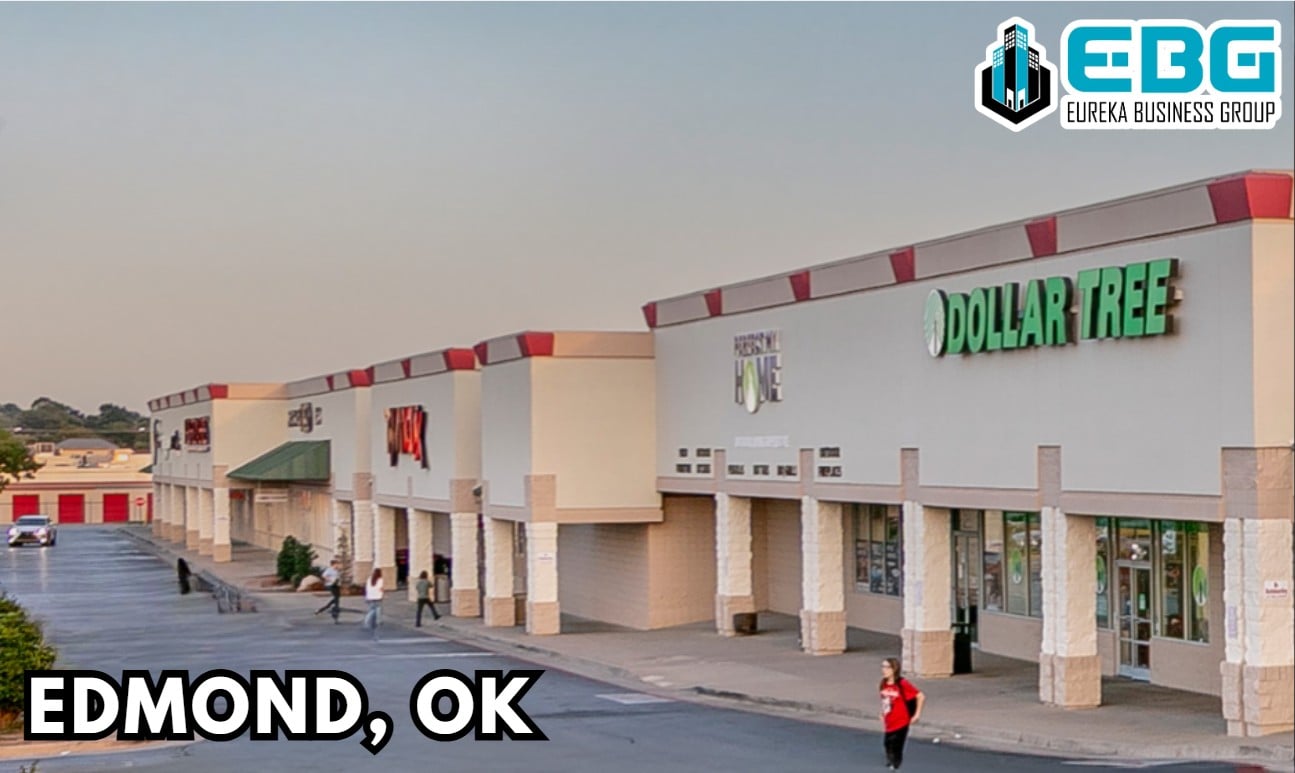
Read More

Commercial Real Estate News – Week of November 28, 2025

Commercial Real Estate News – Week of November 28, 2025

Click below to listen: 

Transcript:

 Welcome to the Deep Dive for this analysis. Our surveillance period was November 19th through the 27th, 2025, and we were really focused on a couple of things. First, the big shifts in the national capital investment climate, and second, how those macro trends are, actually playing out on the ground, specifically in the Dallas-Fort Worth retail market.

And if we had to just boil it all down for you, the high level takeaway is pretty clear. Commercial real estate. CRE it is definitely past its effective trough. So the bottom is behind us. The bottom is behind us. Capital is coming back and it’s coming back fast. But, and this is big, but this isn’t a rising tide that’s gonna lift all boats.

The recovery is demanding highly and highly selective investment. Okay, so let’s start there. Let’s unpack this national capital inflection point first. The the sentiment shift is. It feels pretty real. The institutional consensus we saw in our sources is almost unanimous, that the market’s really bottomed out at the end of 2024, and that consensus is now backed by hard numbers.

This is where it gets really interesting. CRD prices, they’re now rising at the fastest pace we’ve seen in three years. We’re talking a 4.2% annual gain. A solid number. It’s a very solid number. And crucially, that valuation disconnect we’ve been talking about for so long, that gap between a seller’s asking price and what a buyer was actually willing to pay has reportedly.

Just evaporated. And that evaporation is everything. It’s what allows deals to finally close. It unlocks the whole pipeline. Exactly. And we’re seeing debt liquidity as the main catalyst here that easier access to financing is driving a a 28% surge in overall CRE transaction activity, 28%. And it seems like it’s being powered by midsize deals, which suggests, it’s the regional players and private equity leading the charge back in.

It’s not just the volume either. It’s the character of the lending itself. The environment is now being described as. Highly competitive. That means banks who can see the troughs in the rear view mirror are getting aggressive. Again, about CRE debt. I saw that permanent financing volume was up 36% in Q3 alone, a massive number.

And what that tells you is that smart investors aren’t just taking out bridge loans, they’re actively locking in today’s rates. They’re trying to reduce future volatility risk. Okay. But let me push back a little on highly competitive. Isn’t that kind of aggressive lending? What got some sectors into trouble in the first place?

What’s different this time around? That’s a fair question. Yeah. I’d say the difference is the selectivity and the cost of capital banks are competitive, yes. But they are really prioritizing asset quality and sponsor strengths. And because of that rising confidence, we’re seeing risk premiums shrink, which we can track by looking at cap rates.

Exactly. For anyone listening, when we talk about cap rates declining, it’s a direct reflection of investor confidence. A lower required return means equity buyers believe the underlying risk of the asset has gone down, and we expect to see more of that into 2026. Okay, so the capital markets feel healthier, but what are the red flags?

What should we be monitoring? Despite all this confidence, the cost of capital and elevated interest rates are still the top macroeconomic risks for the next 12 to 18 months. No doubt about it. But the really surprising thing we found was on the operational side. Cool. There’s this disconnect.

Surveys show that general worry about cyber risk is declining. But real world events last week completely contradicted that. We saw huge banks, JP Morgan City, get hit by a cyber attack on a key mortgage software vendor. So it wasn’t an attack on a single bank, it was an attack. On the infrastructure precisely.

It moves cybersecurity from an IT problem to a top tier systemic risk for any firm in the CRE space. It just shows how interconnected everything is through these third party vendors. And that kind of macro risk actually reinforces the appeal of defensive assets. Which brings us to retail, right?

Shifting to retail, this sector has been surprisingly strong. Analysts are calling it a new equilibrium. Net absorption is positive, which means more tenants are expanding than contracting. The fundamentals there are just exceptionally robust. We saw retail investment volume hit $49.5 billion through the third quarter.

That’s an 8% increase year over year. But the expansion isn’t random. It’s surgical. It’s very surgical. It’s focused on core locations. Yeah. And necessity retail. Think grocery anchored centers. And why the selectivity? Because the consumer outlook is still a bit murky. Analysts are citing very real headwinds heading into 2026.

So retailers are hedging. They’re only committing to the safest, most demand driven locations. That selectivity really highlights the need for operational excellence. We saw that Simon’s takeover of an upscale mall operator led to 105 layoffs. So even in luxury, they’re focused on efficiency. And then you have the flip side, a huge cautionary tale.

Implosion of the PropTech unicorn sonder. Their model is all about high risk strategies, master leases, and a growth at all costs mentality. Okay. For our listeners, what’s the core risk with that master lease model? Essentially, you sign a very long, very expensive lease on a whole building, and then you have to cover that massive fixed cost with short-term rentals if occupancy dips, or if your management is sloppy.

Those liabilities become crushing. The market is now severely punishing those models. It’s a return to more conservative traditional structures. Exactly. But property owners are getting creative too. We saw some interesting things about using vacant retail spaces as quote a blank canvas. For artists, a savvy move, it turns a negative into a positive.

It generates some buzz while you wait for the right long-term tenant. That kind of adaptation is what modern retail is all about. So let’s bring this home to DFW retail because the market here shows this fascinating split that you really need to understand if you’re putting capital to work. In Texas, we know DFW retail rents are strong.

We’re hearing numbers over $25 a square foot, right? Strong fundamentals, strong rent growth. That should mean a ton of investment activity. But, and this was a major finding, Dallas retail investment activity was reportedly cut in half. That’s a huge contradiction. If consumer demand is pushing rents that high, why isn’t capital following it’s extreme selectivity?

It illustrates that capital is very cautious about deploying outside of that established core necessity. Retail investors will pay a premium for a stable grocery anchored center, but they are holding back on almost everything else until that consumer picture gets clearer. So you have to be laser focused.

Yeah. And we saw a perfect example of what is getting funded. Whitestone REIT acquired the World Cup Plaza Shopping Center in Dallas, 90,000 square feet. A prime example, core convenience oriented, that’s the priority. And looking forward, DFW is baking retail into his major mixed use plans. Just look at the groundbreaking for the Valley View Mall redevelopment now branded as premier at Dallas Midtown.

That’s it. And phase one is a six story building, 296 luxury apartments, but with 13,500 square feet of ground floor retail. They’re calling it the activator piece for the whole Dallas International District. It shows retail is absolutely integral to their future plans. All this development is supported by massive infrastructure projects.

The dark silver line, a $2.1 billion rail project is underway. It’s gonna connect DFW airport to seven different municipalities. That’s the logistical backbone. It lifts everything. Industrial office and yes, retail. And speaking of industrial. Holt Lunsford is building a massive 1 million square foot park in Fort Worth to meet that constant demand for distribution space, which all confirms the long-term demographic health that supports the retail consumer base.

Okay, but let’s briefly touch on the other big sectors in DFW. What’s the story with Office? I keep hearing this term. Y’all street. Y’all street, right? DFW office is really a tale of two cities. It’s still in the state’s weakest link for older Class B and C properties. Those are really struggling, but Class A is a different story, a completely different story.

Private capital is actively targeting momentum in the Class A office sector, and it’s all being fueled by that growth and financial services. Hence y’all street and the plans for the new Texas Stock Exchange. We saw TPG acquire four class A office towers in the Harwood District. That’s nearly 900,000 square feet.

That’s not a small bet. That is a massive institutional vote of confidence. Yeah, but what’s really fascinating is the value at play. We’re seeing private equity firms buying decade old buildings for as low as 60 to $80 a square foot, 60 to $80 a foot. That sounds like a fire sale. It is a deep undervaluation.

But they’re betting that after repositioning those assets, they’ll trade for two 40 to $300 a square foot within 24 months. It signals they see a huge temporary mispricing in certain submarkets. And really quickly on multifamily, we know Texas has been dealing with oversupply. DFW vacancy is what, 11.8%?

It’s high, no doubt, but the forward-looking news is good. New supply is projected to decline significantly in 2026 as construction pipelines finally slow down. So the current situation is viewed more as a temporary glut that needs to be absorbed, not a fundamental flaw in demand. Finally, there was a big regulatory development.

The software company, RealPage, which is based in Texas, settled antitrust claims over its AI rent setting software. This is a landmark shift that affects every landlord using this kind of tech. RealPage has to stop using competitors’ non-public data. And crucially, they have to remove auto accept features for rents unless they’re manually approved.

So it injects human oversight back into the process. Exactly. It completely changes how AI can influence rent setting for landlords and DFW. It means immediate software adjustments and probably a little more administrative overhead. Okay. That is a huge shift. So to summarize our deep dive for you, the capital markets are back, the trough of late 2024 is confirmed.

Absolutely. That capital is surgical. For DFW retail, you need a laser focus on necessity retail and high quality mixed use spots. The long-term confidence in DFWs office and infrastructure, like those Harwood district deals reinforces the overall health of the metroplex. The key then is distinguishing between the health of the DFW consumer and the short-term hesitation of capital to invest in anything but the absolute best retail asset.

Right, and if you connect this to the bigger picture. We saw $10 billion allocated nationally to AI infrastructure. This month alone, you have DFWs massive growth. You have the infrastructure, you have all these financial and tech jobs move to Wall Street. So the final provocative thought for you is this.

What specific piece of specialized retail real estate, whether it’s a convenience center or ground floor mixed use, do you think is best positioned to capture the immediate spending power of that new affluent wave of professionals arriving in 2026? Think about that precise location and that asset class as you plan your next move.

** News Sources: CoStar Group 

Read More

EBG Listings of The Week 11-22-2025

EBG Listings of The Week

November 22, 2025


Next week is Thanksgiving and I’m sure you will be traveling, hanging with family or busy recovering from Black Friday shopping… 

I wanted to take this opportunity and thank all of our clients, investors, referral partners and vendors for an amazing year (still going strong!) and for being a part of our world!

As a token of my appreciation I’d like to invite you for a strategy call in the next few weeks to discuss possible year-end tax saving actions and start planning your 2026 portfolio optimization. 

If you would like to set up a call, please, reply to this email or send an email to contact@ebgtexas.com and we will reach out. 

As we do every week, we took time and reviewed all the commercial listings that came on the market and curated this hand-picked list representing the top opportunities we identified as the best value.

If you wanted to keep up to date on retail real estate news, we have a LinkedIn Newsletter you can subscribe to.


Did you know you can LISTEN to this email?

Under $2M

Eureka Business Group: Your Retail Navigator; Charting the Course for Retail Growth!

2,900 Medical/Office

Why we like it:

* Two combined units
* Can lease part or all
* Selling well Below county assessed value!
* Owner financing available
* Exclusive EBG Listing

Eureka Business Group: Your Retail Navigator; Charting the Course for Retail Growth!

1,340 SF Single Tenant Retail

Why we like it:

* Absolute NNN lease
* 14.5 years remaining
* Top-tier operator
* Strong US-59 retail corridor

Eureka Business Group: Your Retail Navigator; Charting the Course for Retail Growth!

9,316 SF Retail Center

Why we like it:

* 100% leased
* Walmart shadow anchored
* New TPO roof installed 2021
*1.5 miles from University of Oklahoma

Eureka Business Group: Your Retail Navigator; Charting the Course for Retail Growth!

2.20 AC Mixed Use Land

Why we like it:

*Mixed-use zoning

* 320′ Gus Thomasson frontage
* Up to 84 apartments + retail possible
* City supports corridor redevelopment efforts
* Owner financing available

* Exclusive EBG Listing


$2M-$5M

Eureka Business Group: Your Retail Navigator; Charting the Course for Retail Growth!

37.807 AC Residential Land

Why we like it:

* CHISD Asset Sale
* Sealed Bid Opportunity
* Zoned Residential
* Exclusive EBG Listing

Eureka Business Group: Your Retail Navigator; Charting the Course for Retail Growth!

12,963 SF Retail Strip

Why we like it:

* Brand-new 2025 construction
* Hard corner signalized intersection
* Adjacent to US-380 high traffic corridor
* Strong demographics
* 100% leased

Eureka Business Group: Your Retail Navigator; Charting the Course for Retail Growth!

 6,000 SF Freestanding Retail

Why we like it:

* Prime Plano Location
* 4,000 SF available + drive-thru capability (Value Add)
* Strong demographics: $125K median income (1-mile)
* Two tenants in place

Eureka Business Group: Your Retail Navigator; Charting the Course for Retail Growth!

8,000 SF Single Tenant NNN

Why we like it:

* New 7-year corporate net lease
* Annual rent bumps
* Across from major employers and new rooftops

Eureka Business Group: Your Retail Navigator; Charting the Course for Retail Growth!

3,500 SF Single Tenant Retail

Why we like it:

* Brand-new 10-year lease
* Corporate guarantee
* High-traffic corridor Hwy-31W
* Across from Walmart with 2.39M annual visits

$5M-$10M

Eureka Business Group: Your Retail Navigator; Charting the Course for Retail Growth!

16,752 SF Retail Strip 

Why we like it:

* 100 percent leased
* 2025 construction
* 23,600 VPD on Basswood plus 159,803 VPD on I-35
* Strong income over $110k within 2 miles

Eureka Business Group: Your Retail Navigator; Charting the Course for Retail Growth!

28,850 SF Retail Center

Why we like it:

* Value add – $18.95/SF avg! 
* Anchored by Baylor Scott & White tenant
* Neighboring Tom Thumb + Walmart with 1.69M annual visits

Eureka Business Group: Your Retail Navigator; Charting the Course for Retail Growth!

CRE News 11/21/2025

Listen to this week’s hottest Commercial Real Estate News on our podcast

Listen Now

Featured Video

Eureka Business Group: Your Retail Navigator; Charting the Course for Retail Growth!

Investing Beyond Tomorrow

Available on Amazon Now

Eureka Business Group: Your Retail Navigator; Charting the Course for Retail Growth!

Joseph Gozlan, Managing Principal

Eureka Business Group
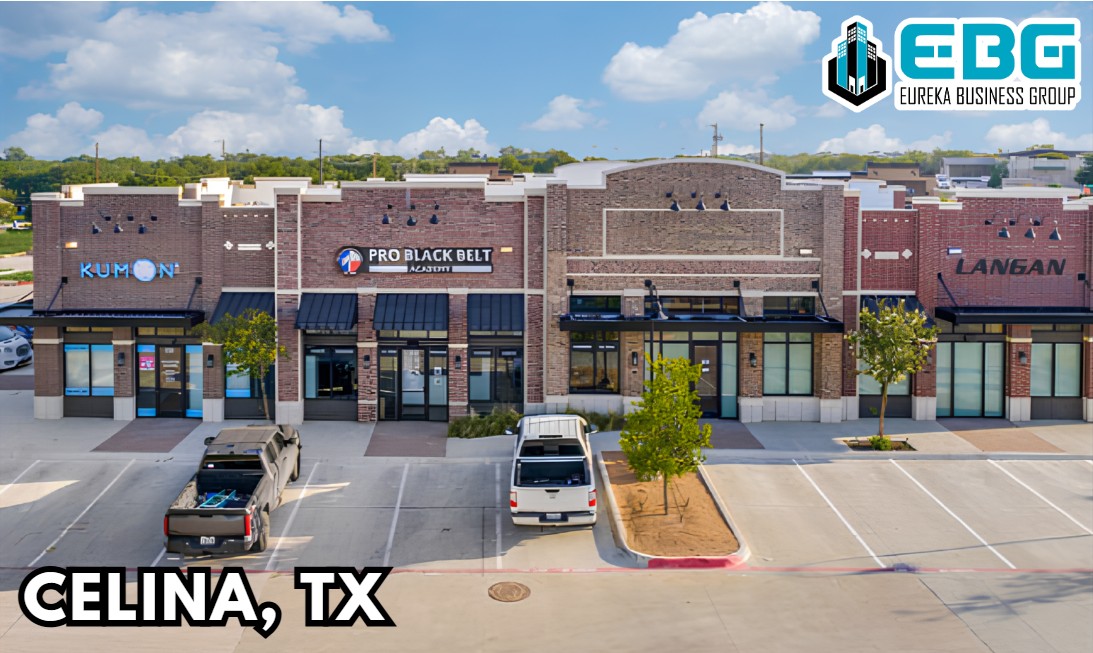
joseph@ebgtexas.com

(903) 600-0616

About Us

Eureka Business Group: Your Retail Navigator; Charting the Course for Retail Growth!

Established in 2008, Eureka Business Group is a full-service commercial real estate brokerage. We specialize in guiding retail investors, retail leaders, franchisees, and business owners through the complexities of retail commercial real estate in the Dallas-Fort Worth market. Whether you’re a seasoned investor, a franchisee ready to expand, or a first-time tenant, we provide expert solutions tailored to your unique goals.
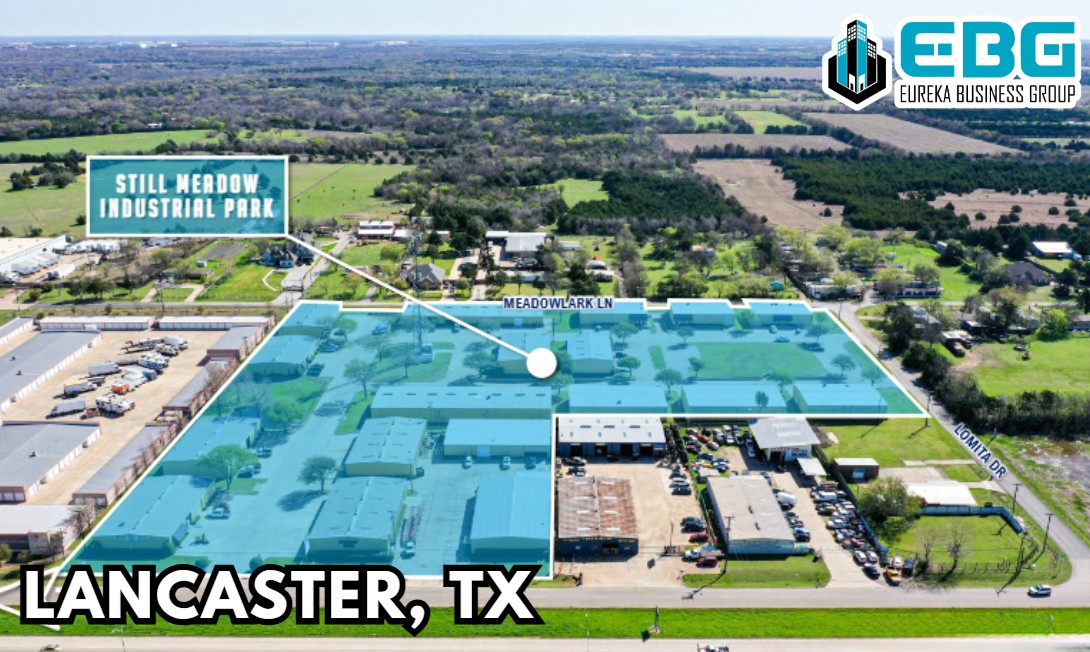
Read More…

Eureka Business Group: Your Retail Navigator in DFW Commercial Real Estate

Sign Up Here
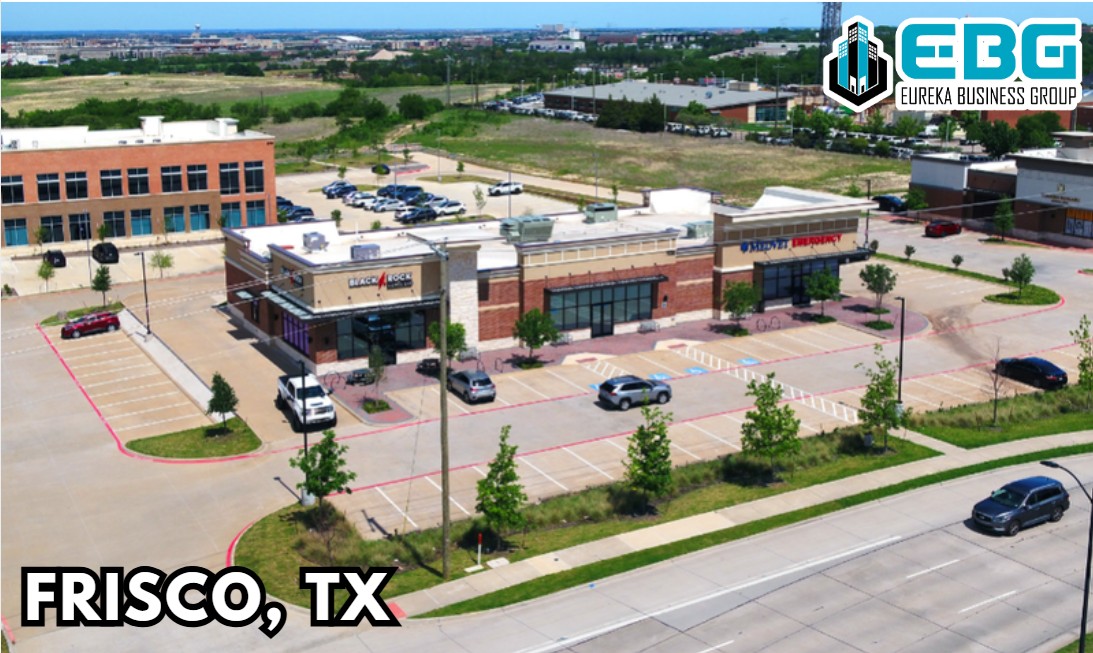
Be the first to learn about lucrative commercial real estate investment opportunities in the DFW market pre-vetted by our CRE experts!

Eureka Business Group: Your Retail Navigator, Charting the Course for Retail Growth!
Read More